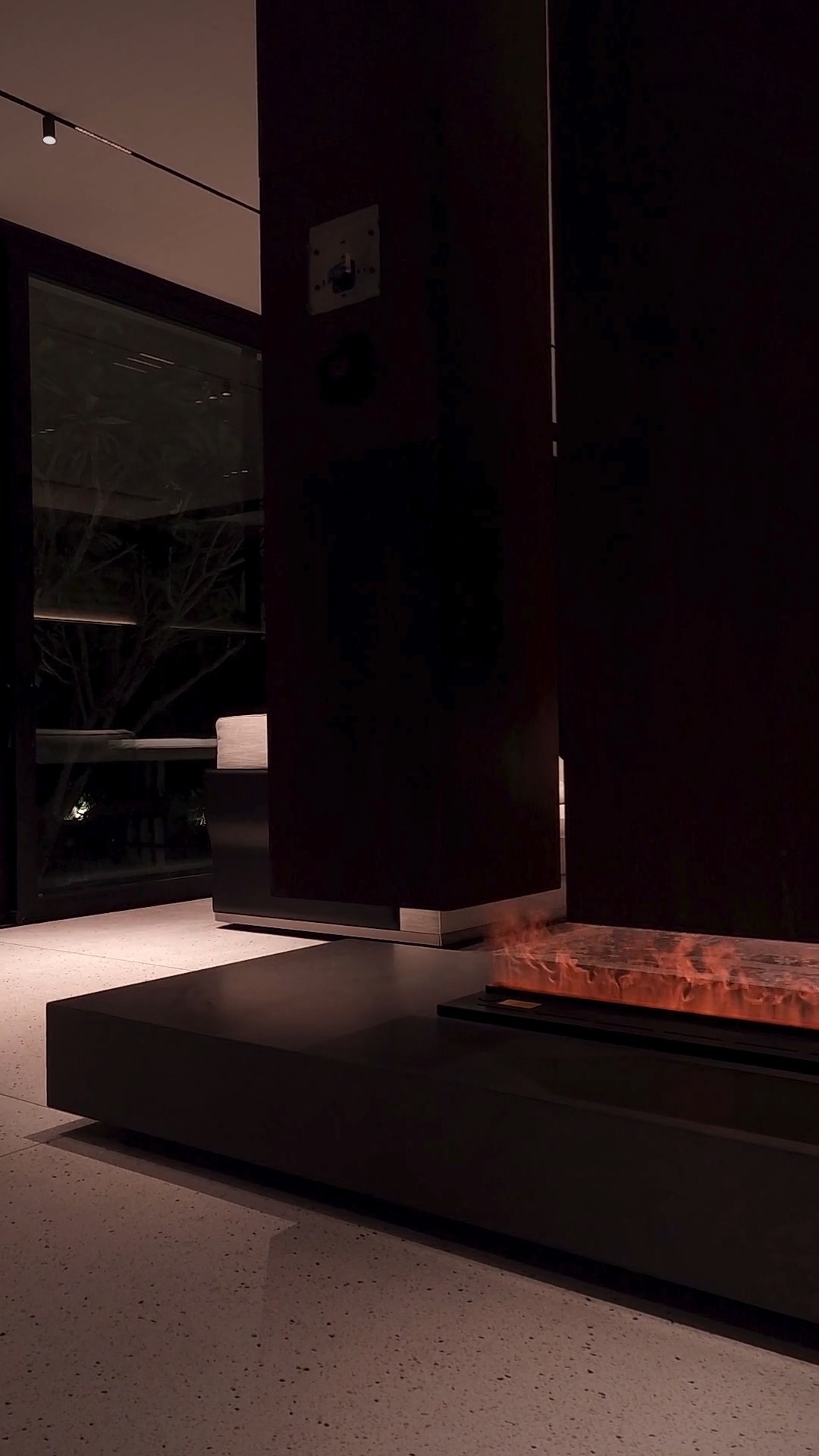
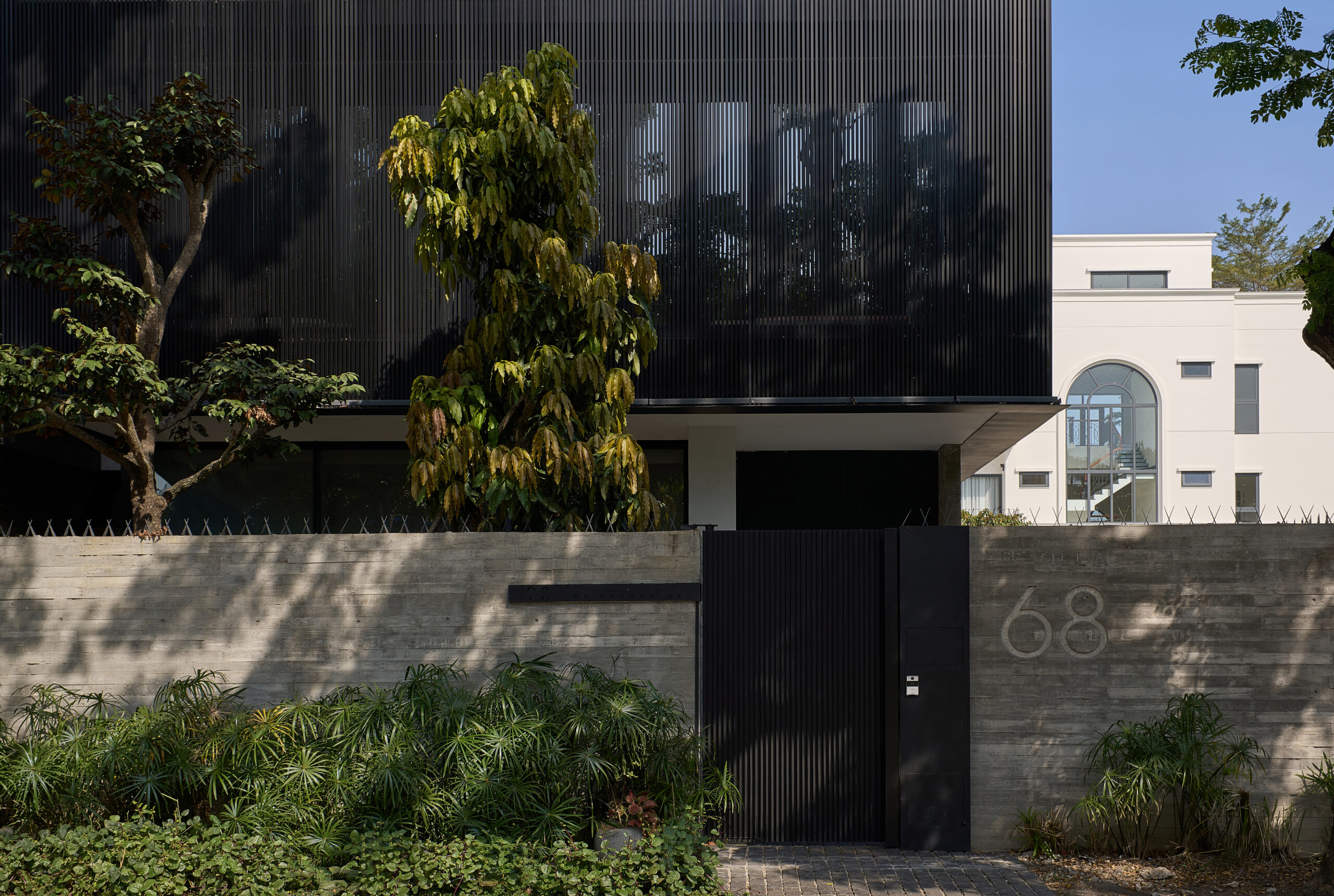
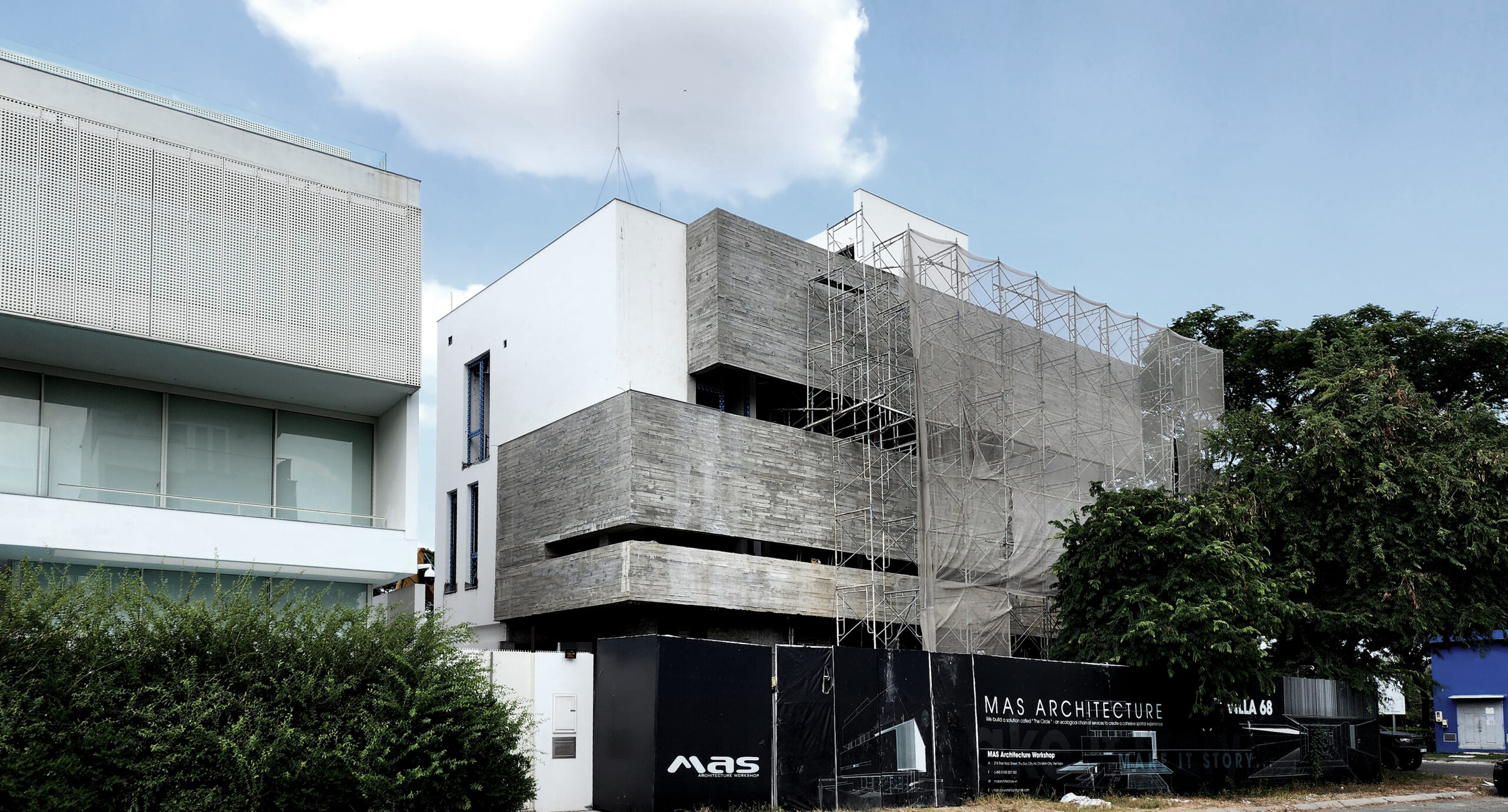
The Villa 68 is located in a new urban area in Ho Chi Minh City, Vietnam. It is originated from the needs of a young family wishing to settle in the city while ensuring privacy, convenience, and an open living environment. The 500m² plot of land is situated at a road intersection, surrounded by planned large apartment buildings and public amenities. Although accessing to the house is convenient from multiple directions, creating privacy, avoiding noise pollution, and personalizing the interior presents a significant challenge.
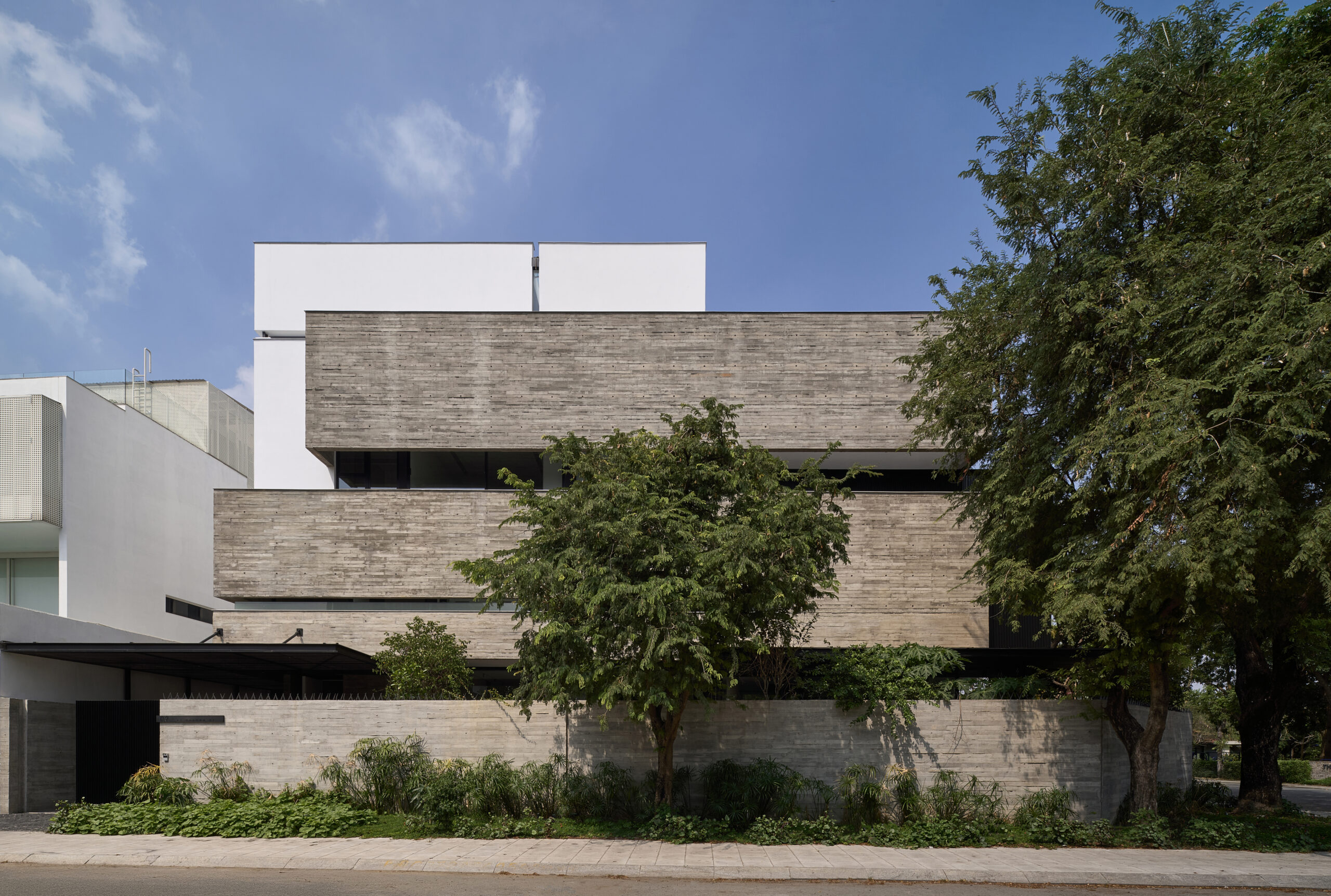
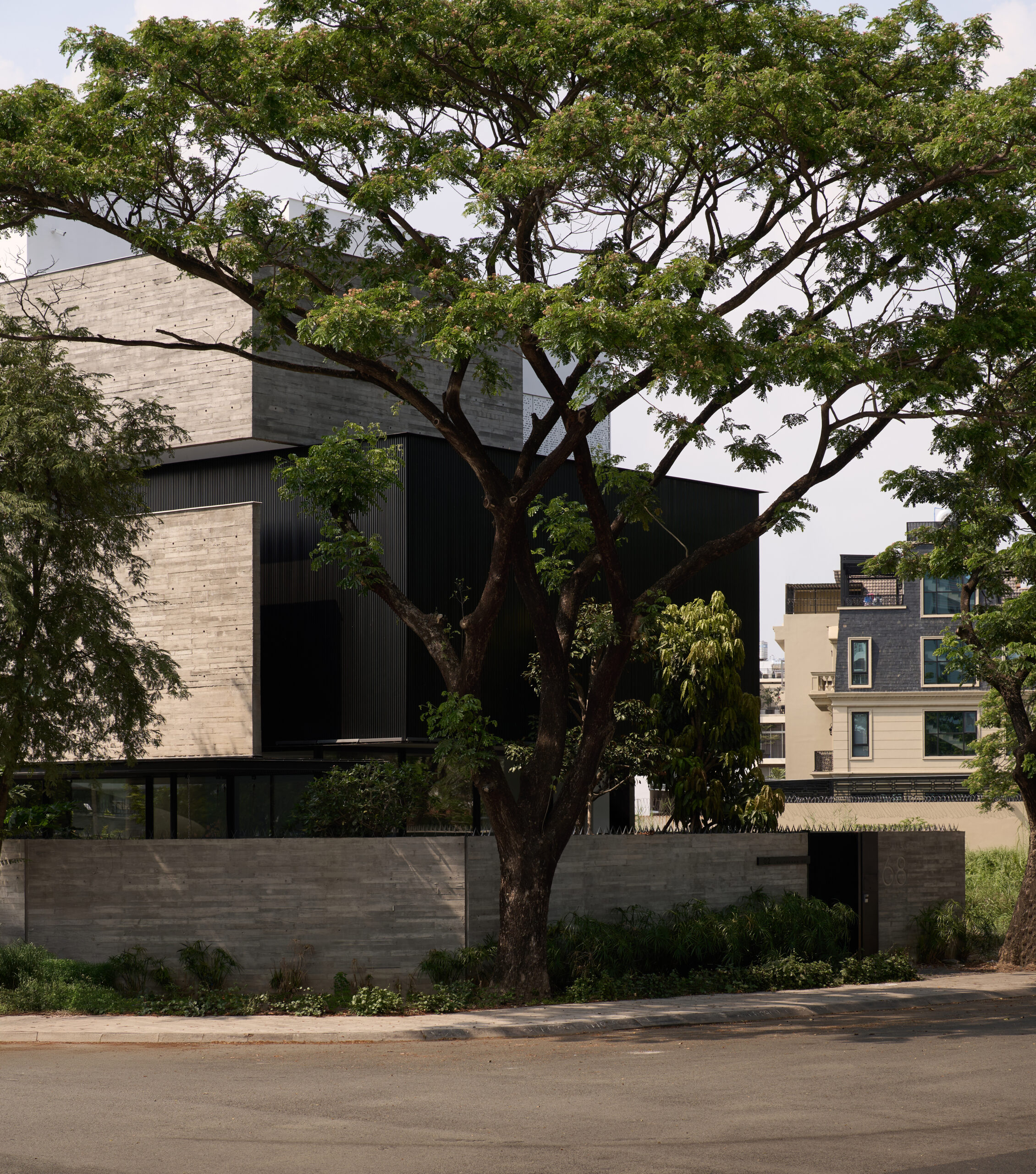
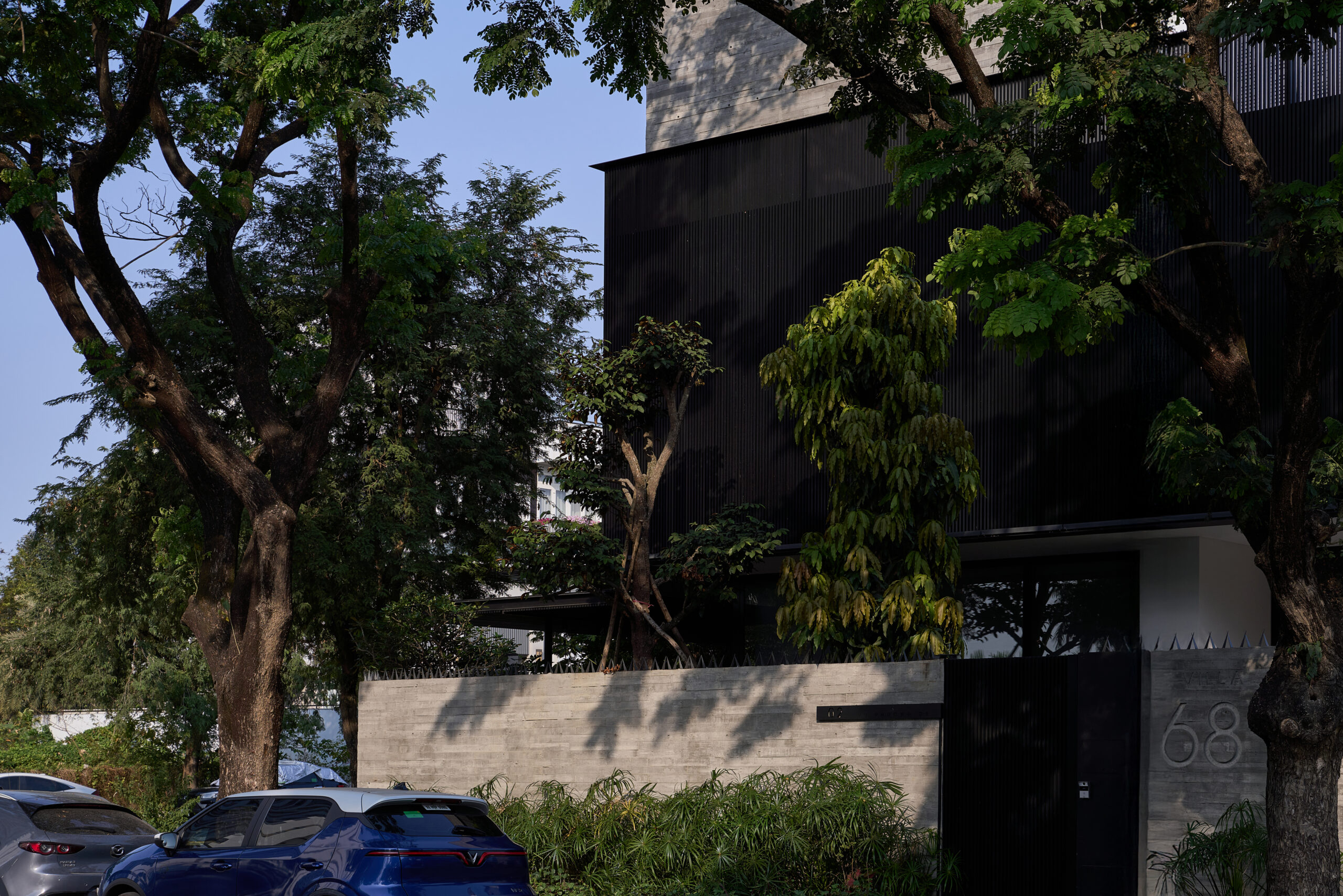
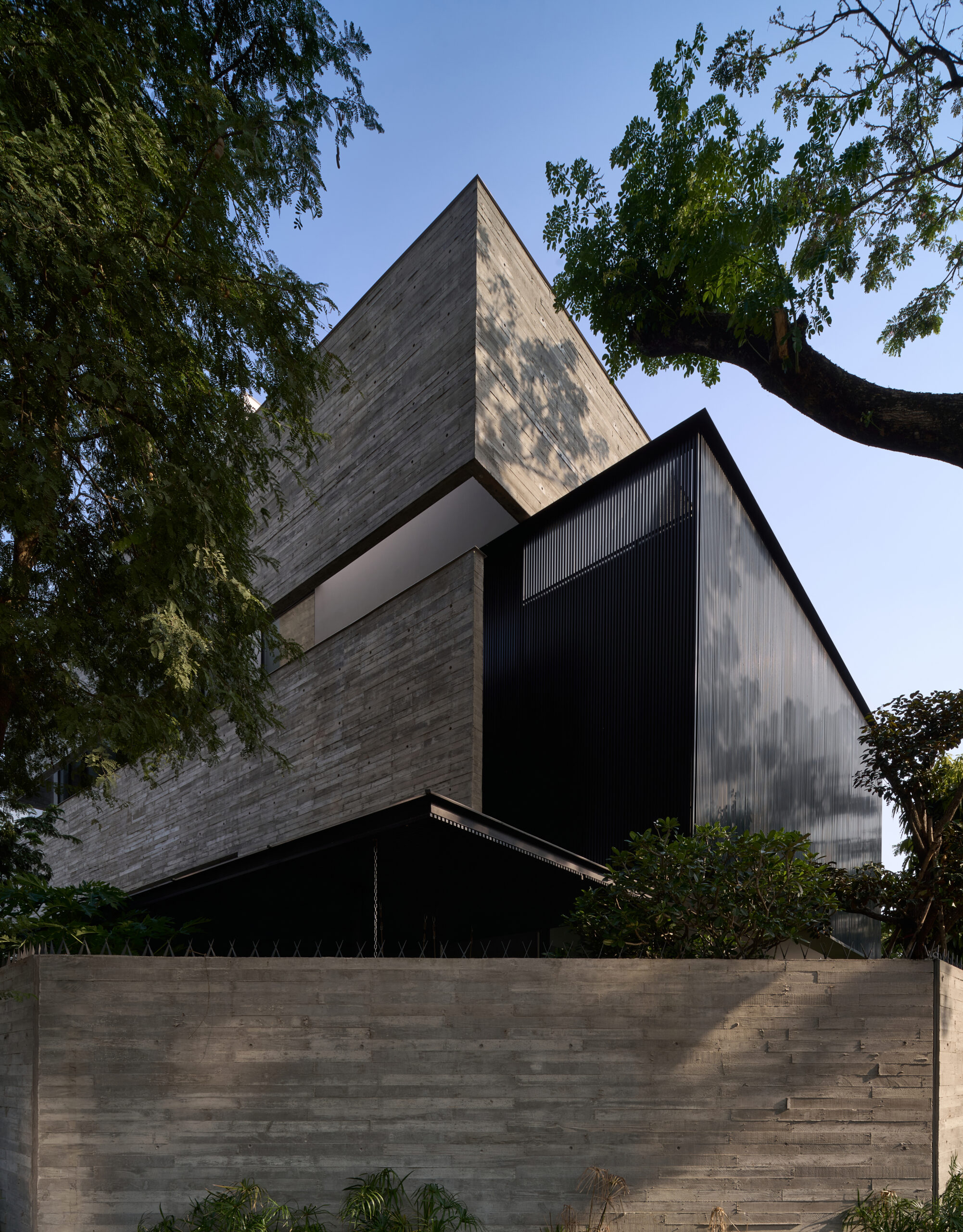
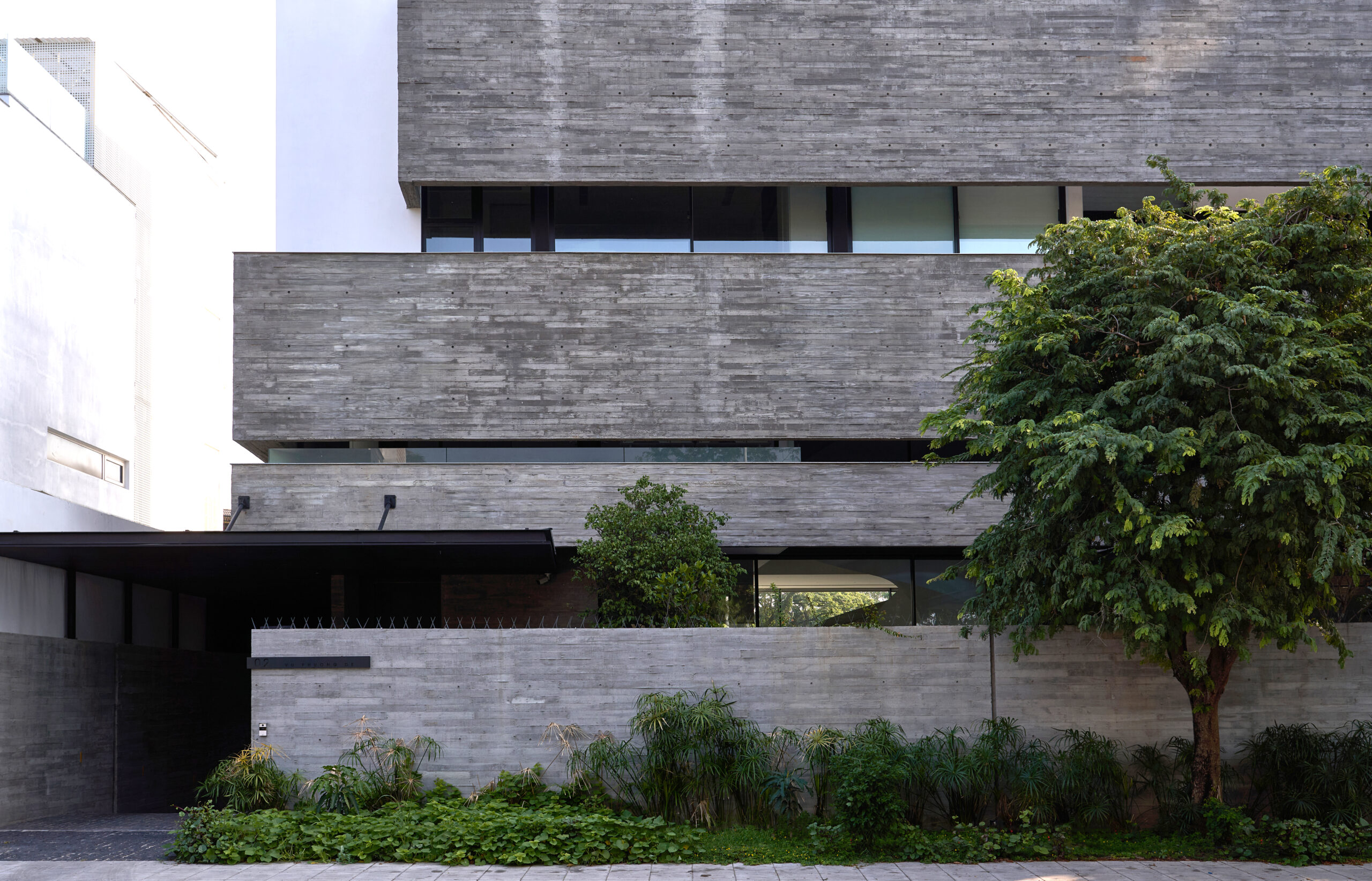
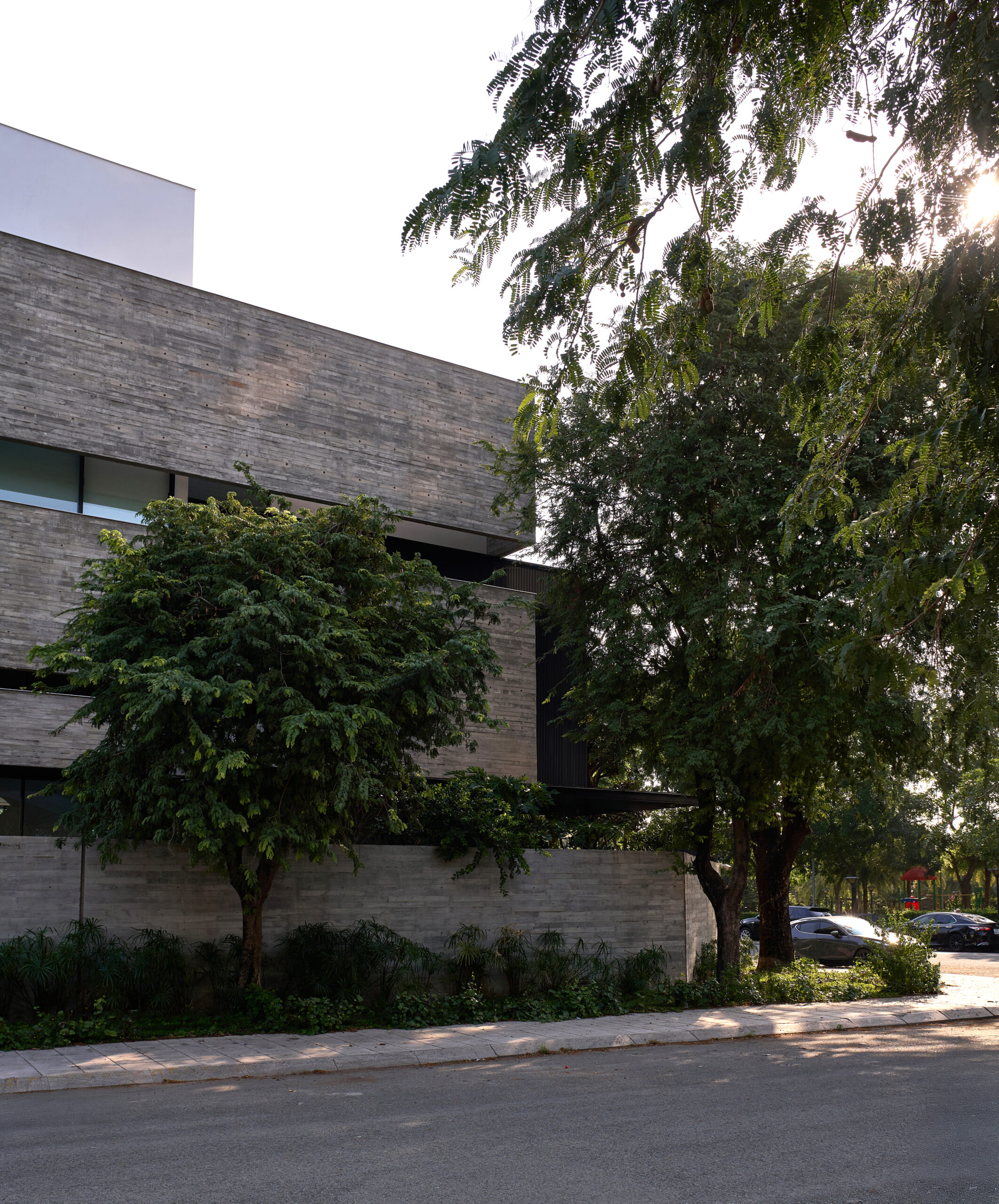
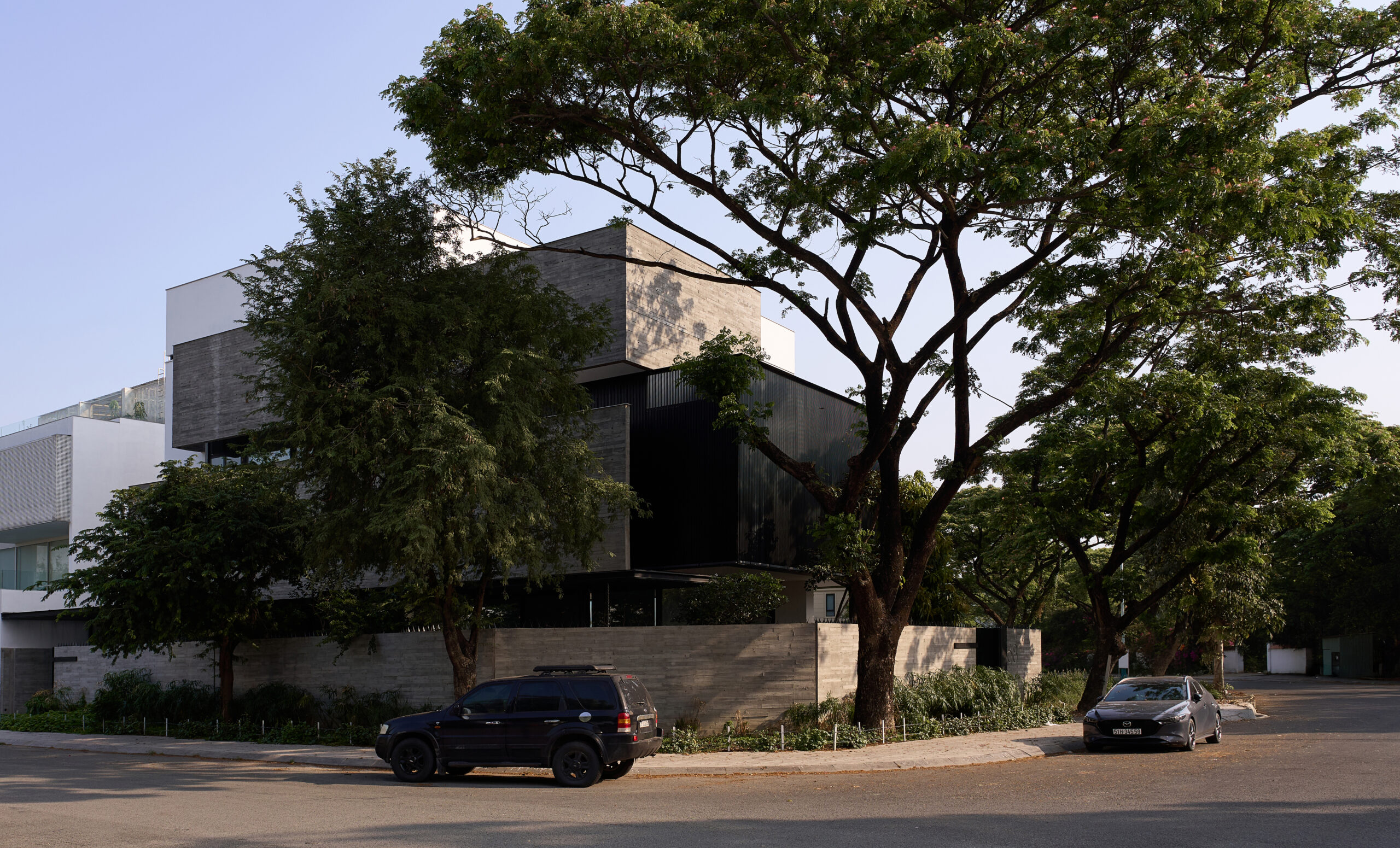
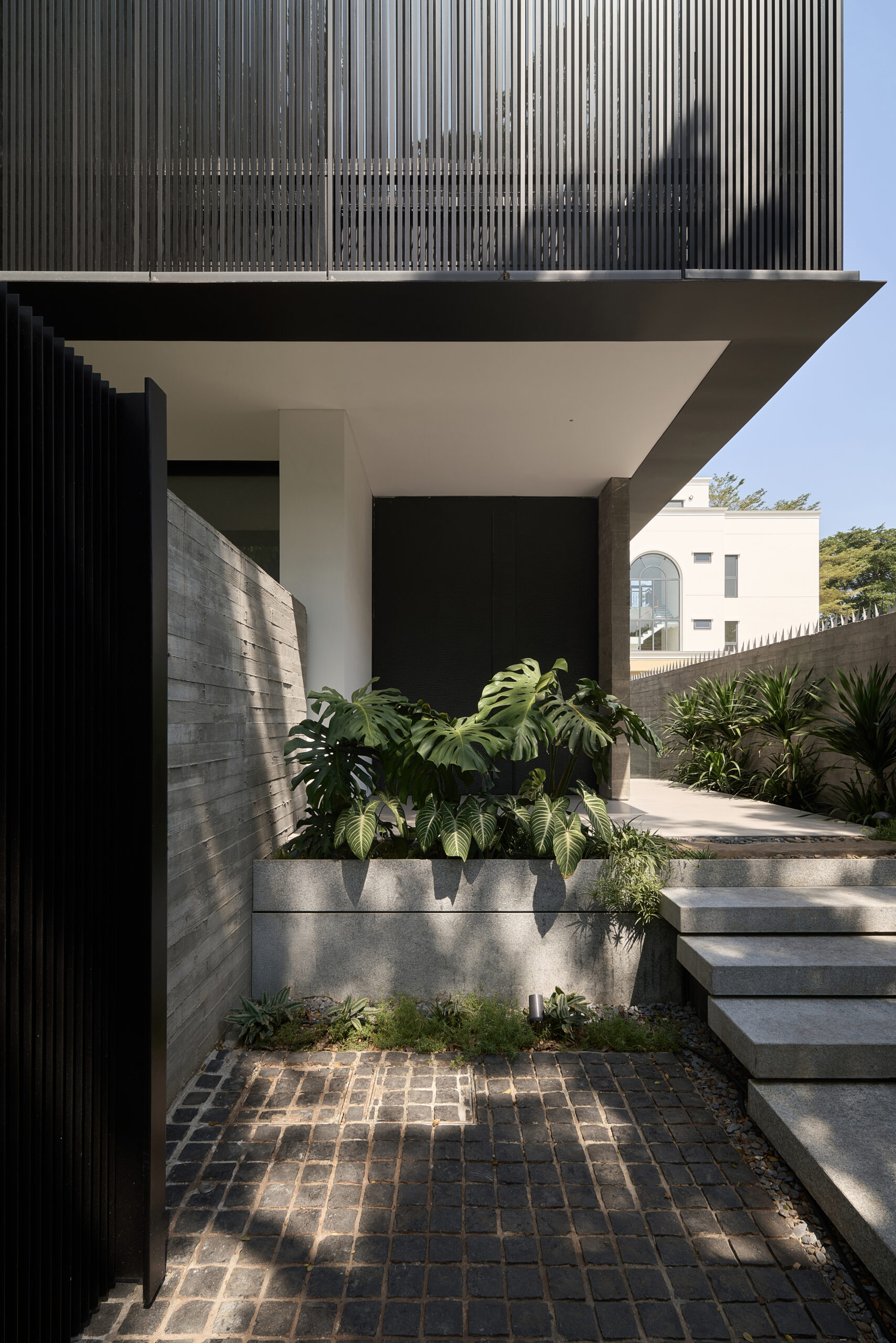
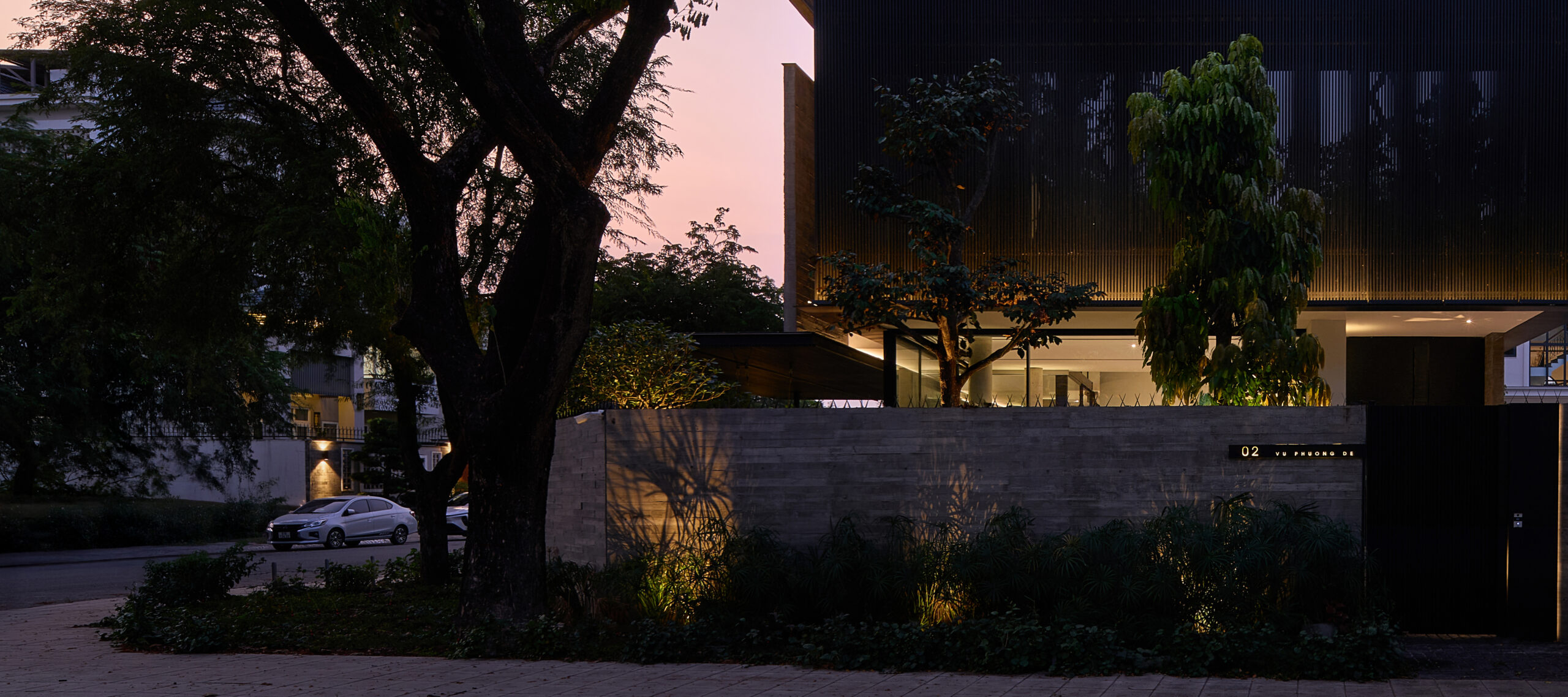
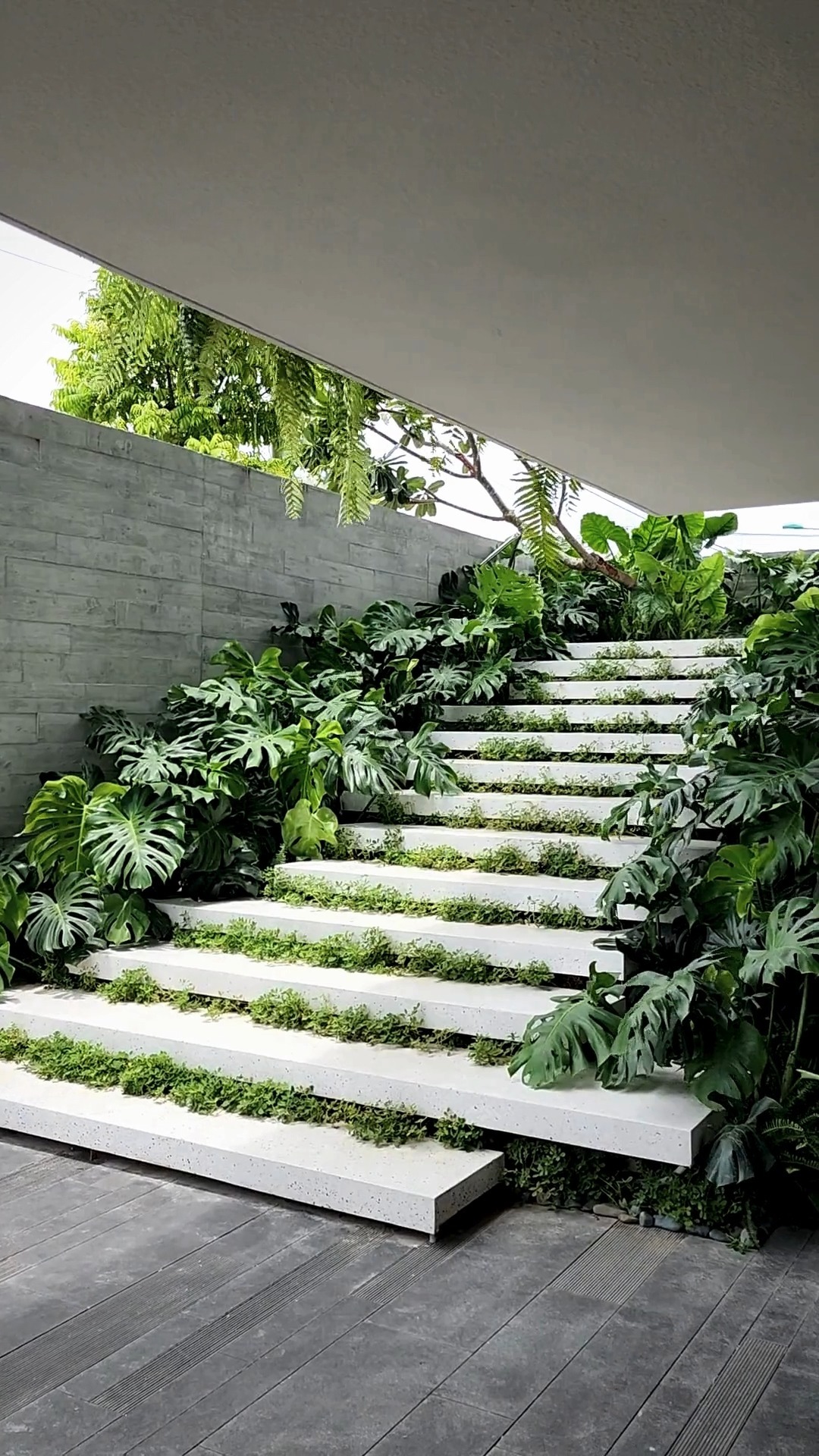
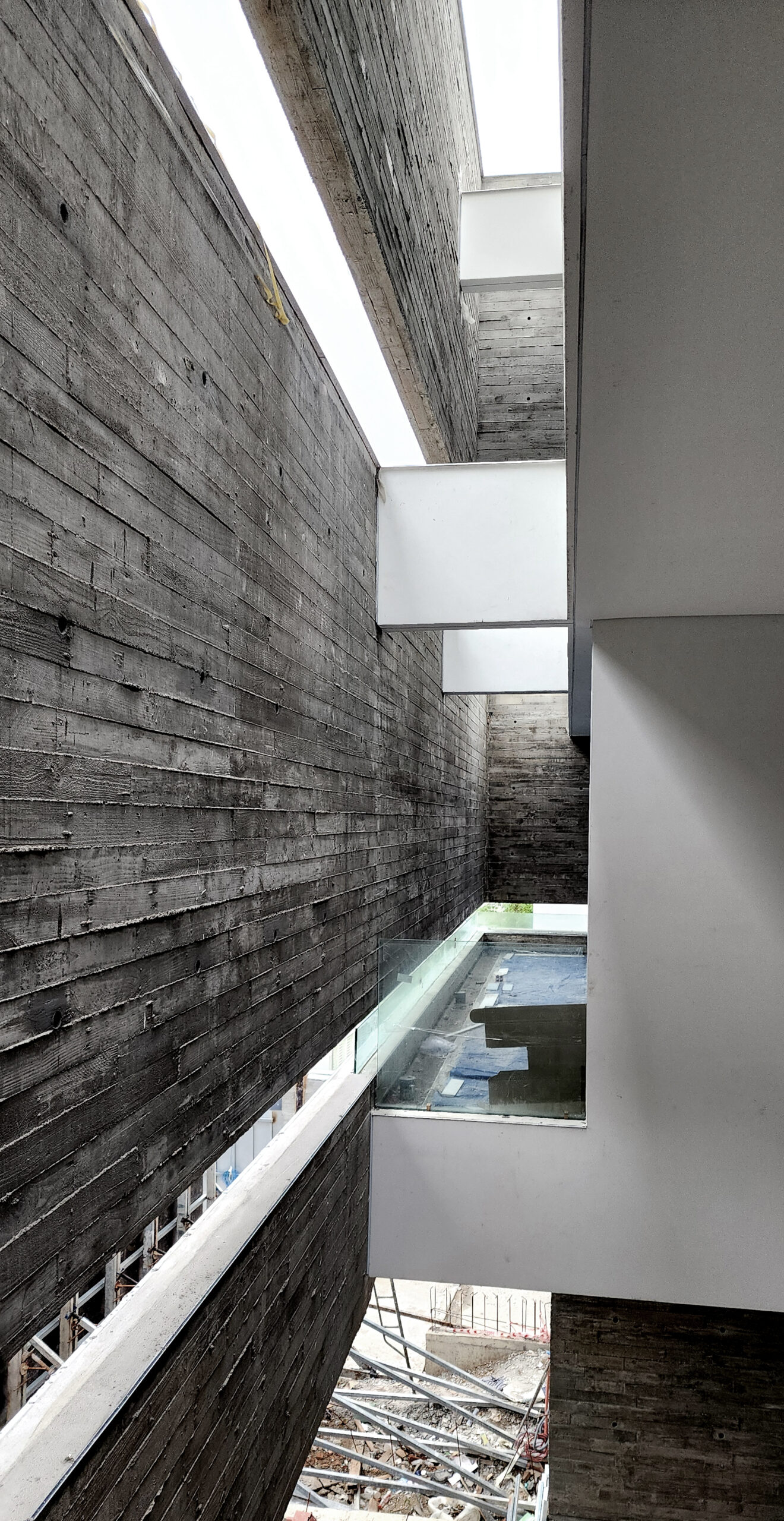
The first solution is raising the entire ground floor and landscaping up 1.5m above the sidewalk. It creates a separation between indoor and outdoor activities without restricting the view from inside by surrounding walls. Simultaneously, a semi-basement space is created for vehicle access, separating family living from vertical access. The ground floor and first floor are considered the family’s living center that emphasize the connection among family members and focusing on the main functions: living room, dining room, dry kitchen area, children’s play area, and children’s bedrooms. All are connected via a central atrium combined with a spiral staircase. From there, all family members can observe and converse directly with each other, and connect with the surrounding garden landscape in the most open way. The second floor is oriented toward privacy with a large master bedroom and independent, personalized amenities. From here, the large loggias are created using a spatial arrangement that seamlessly blend personal living space with high-altitude natural landscape layers.
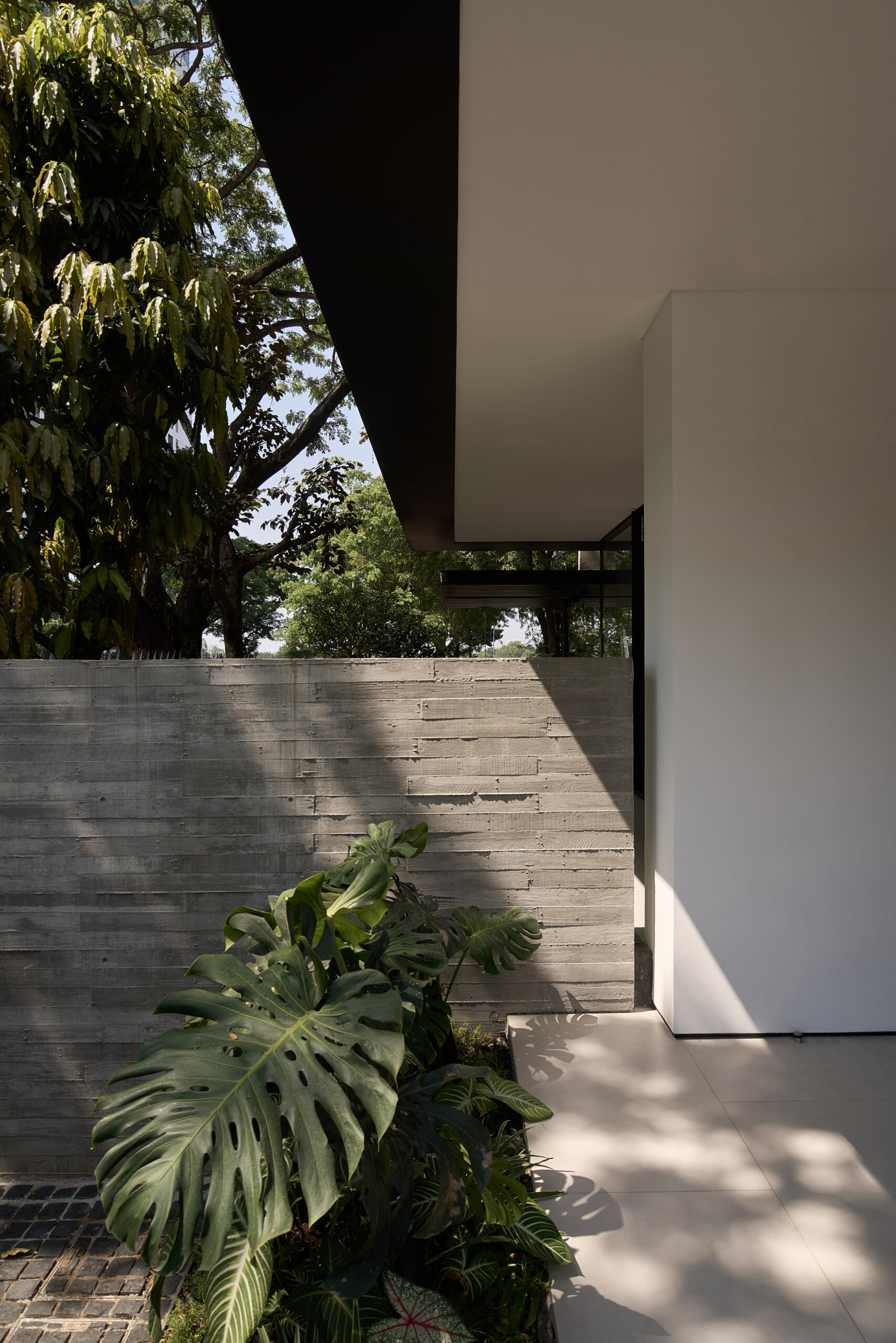
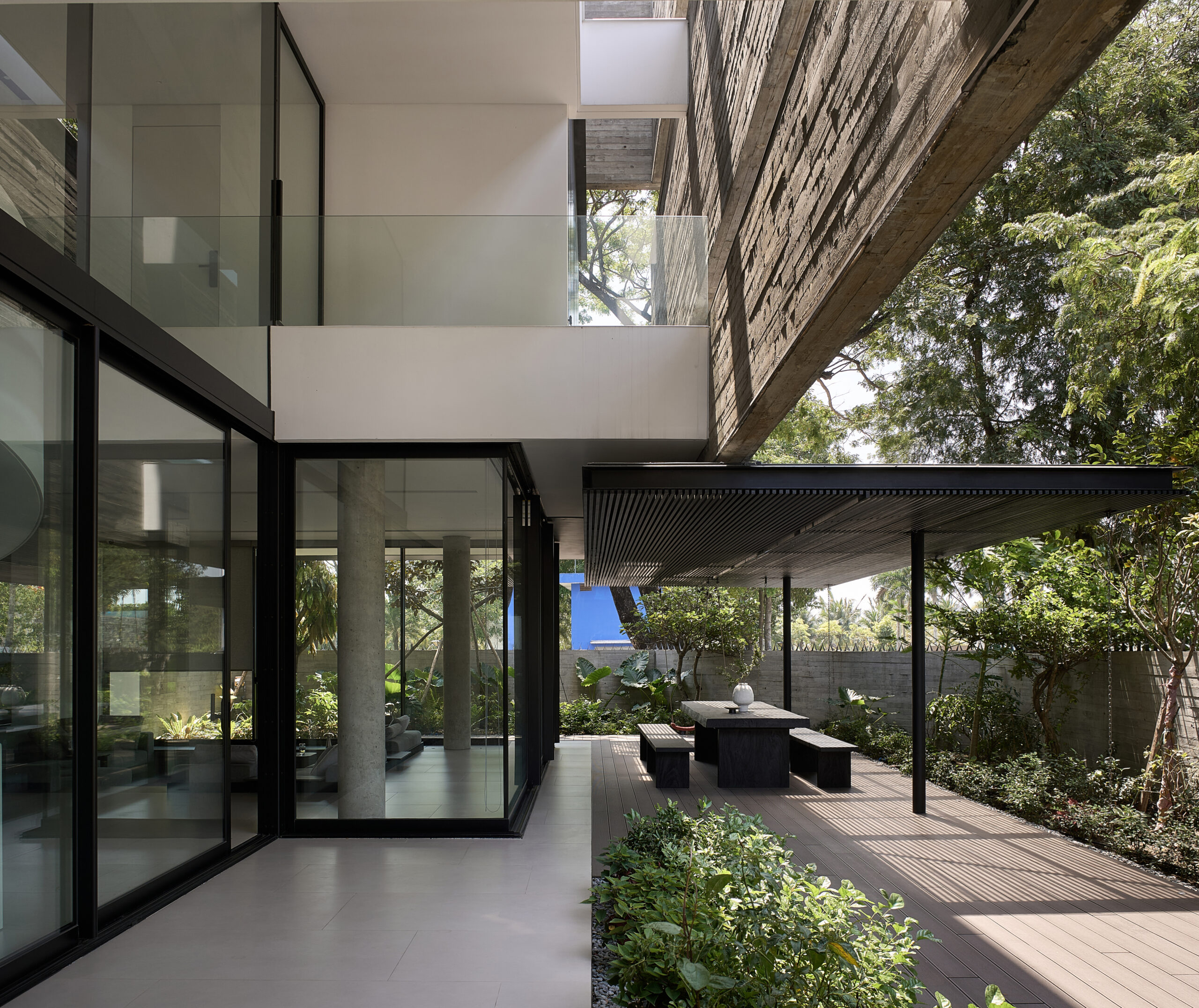
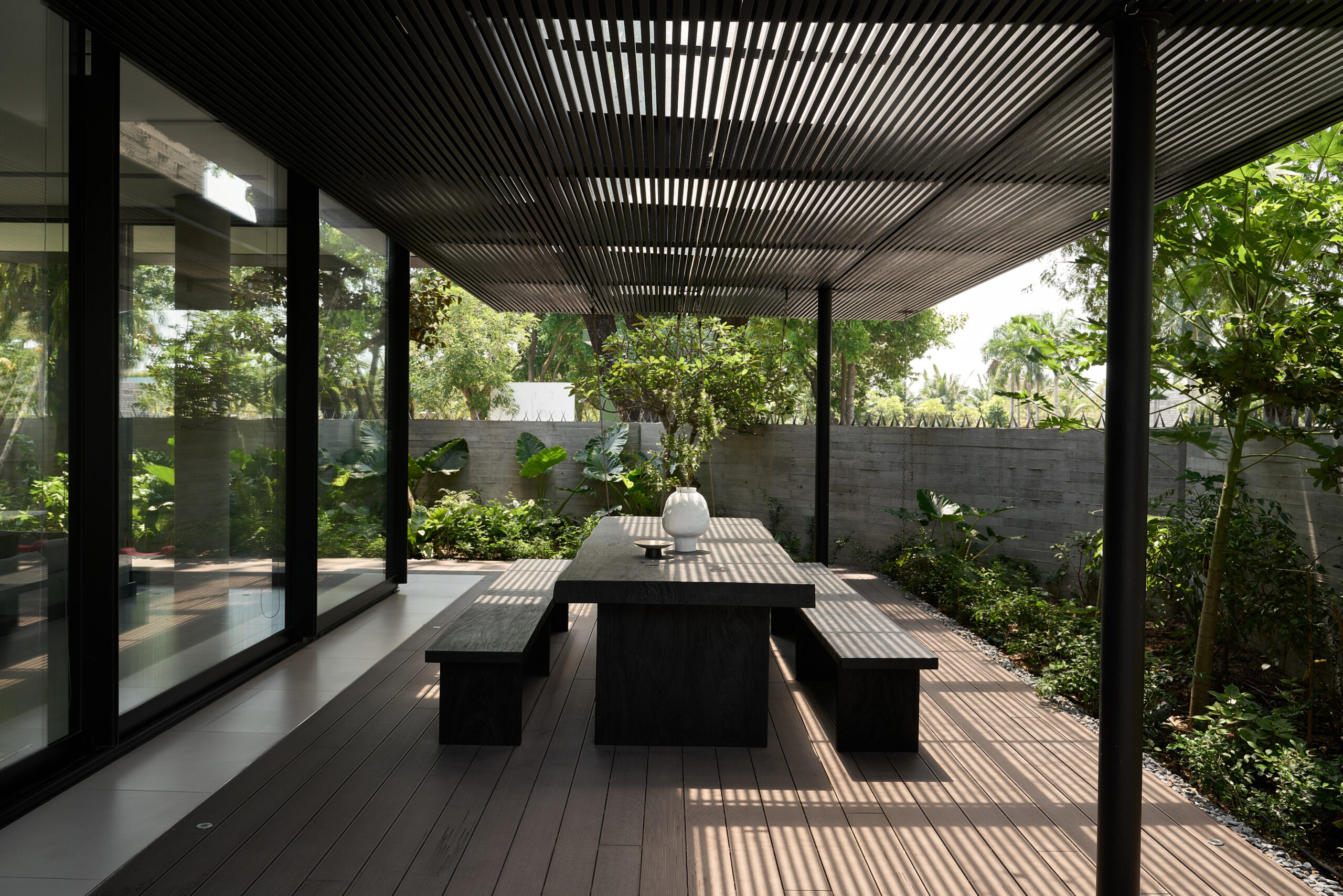
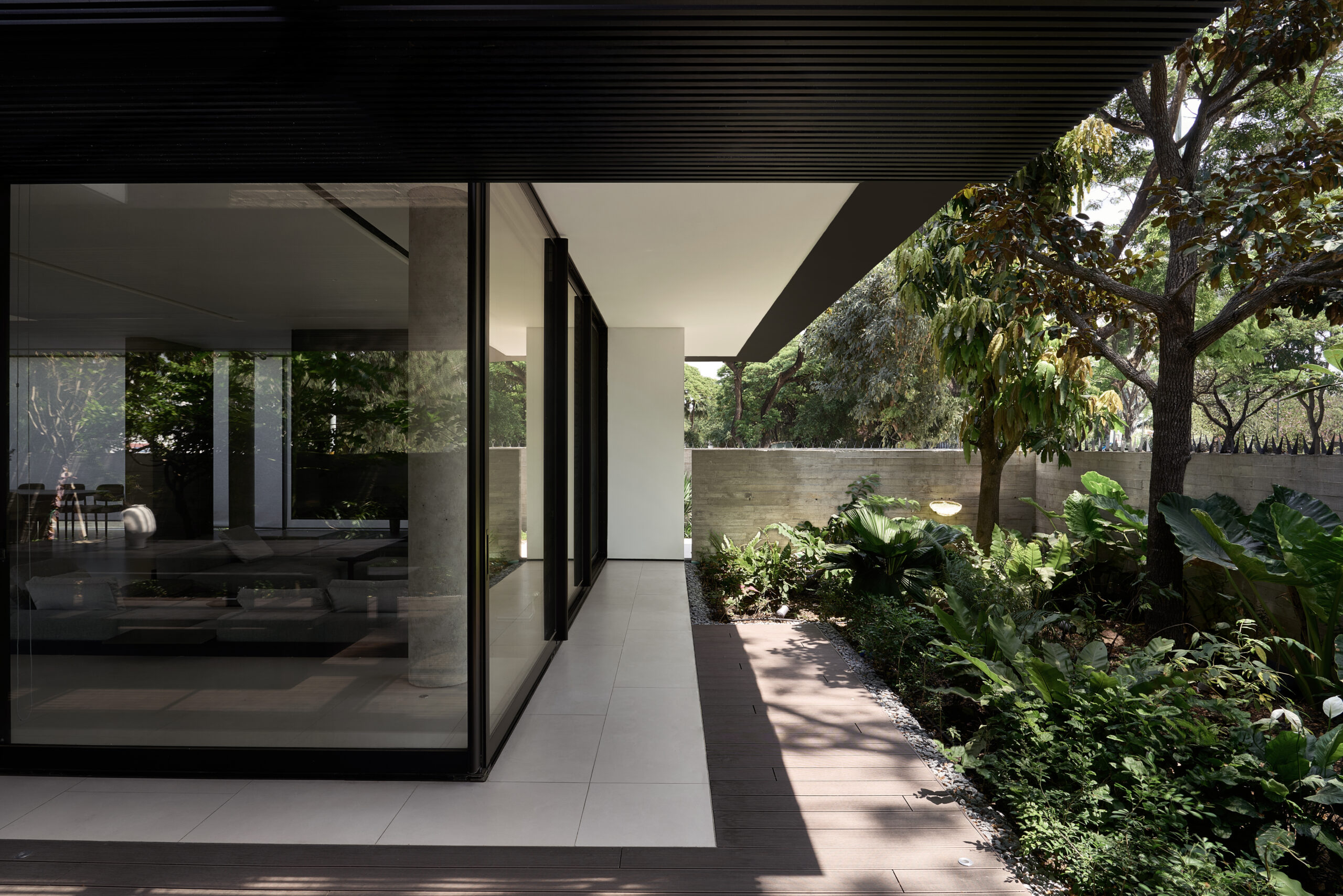
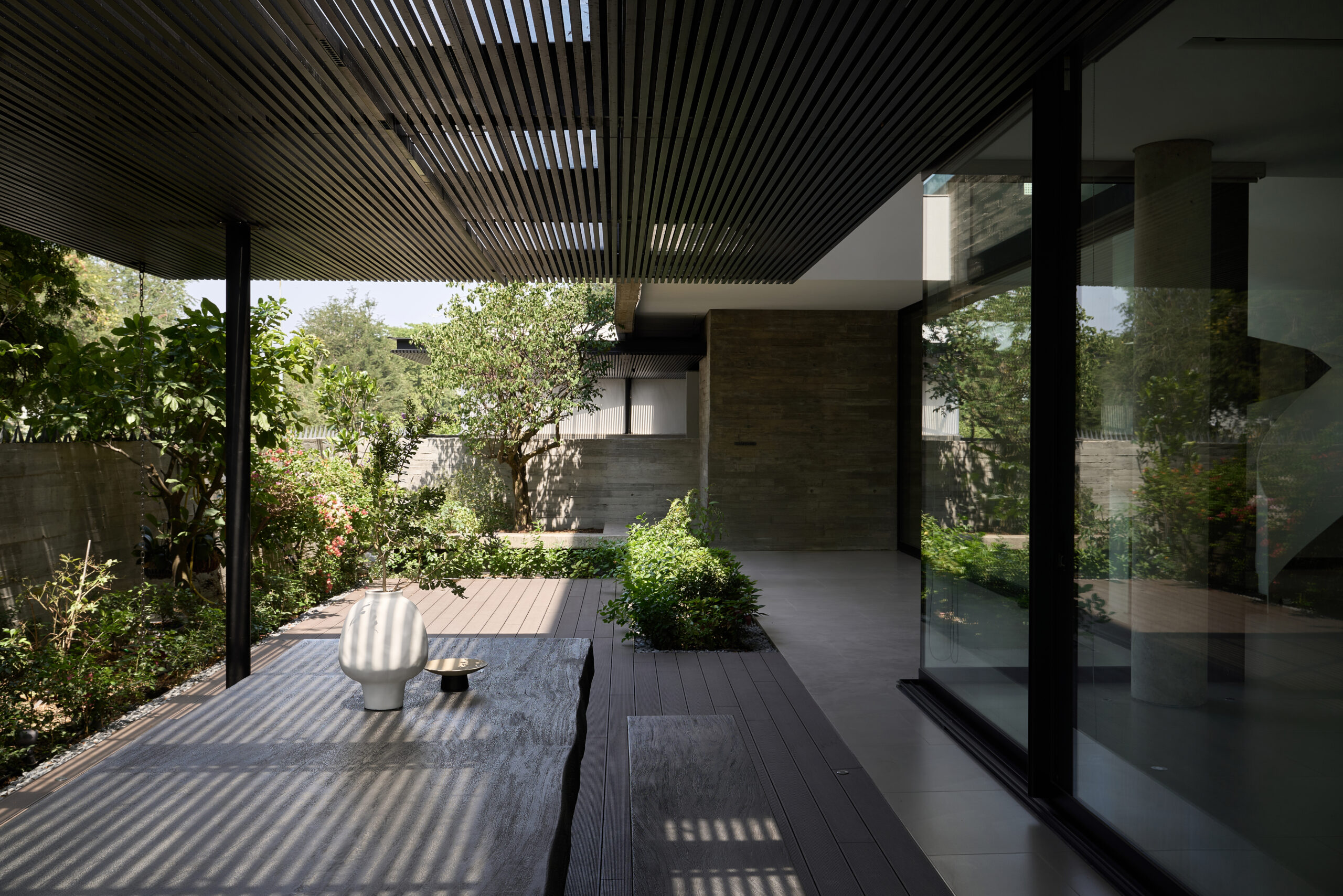
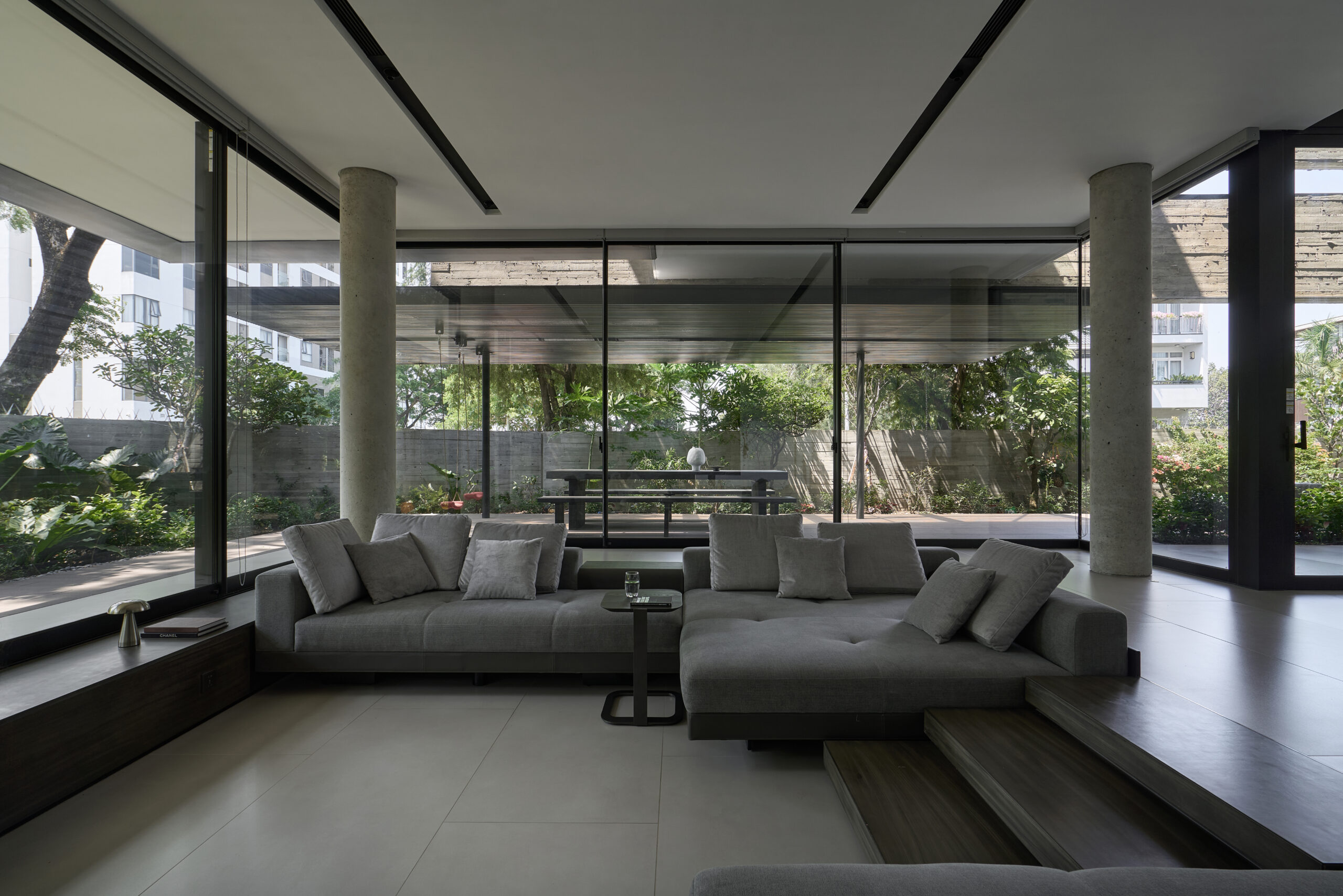
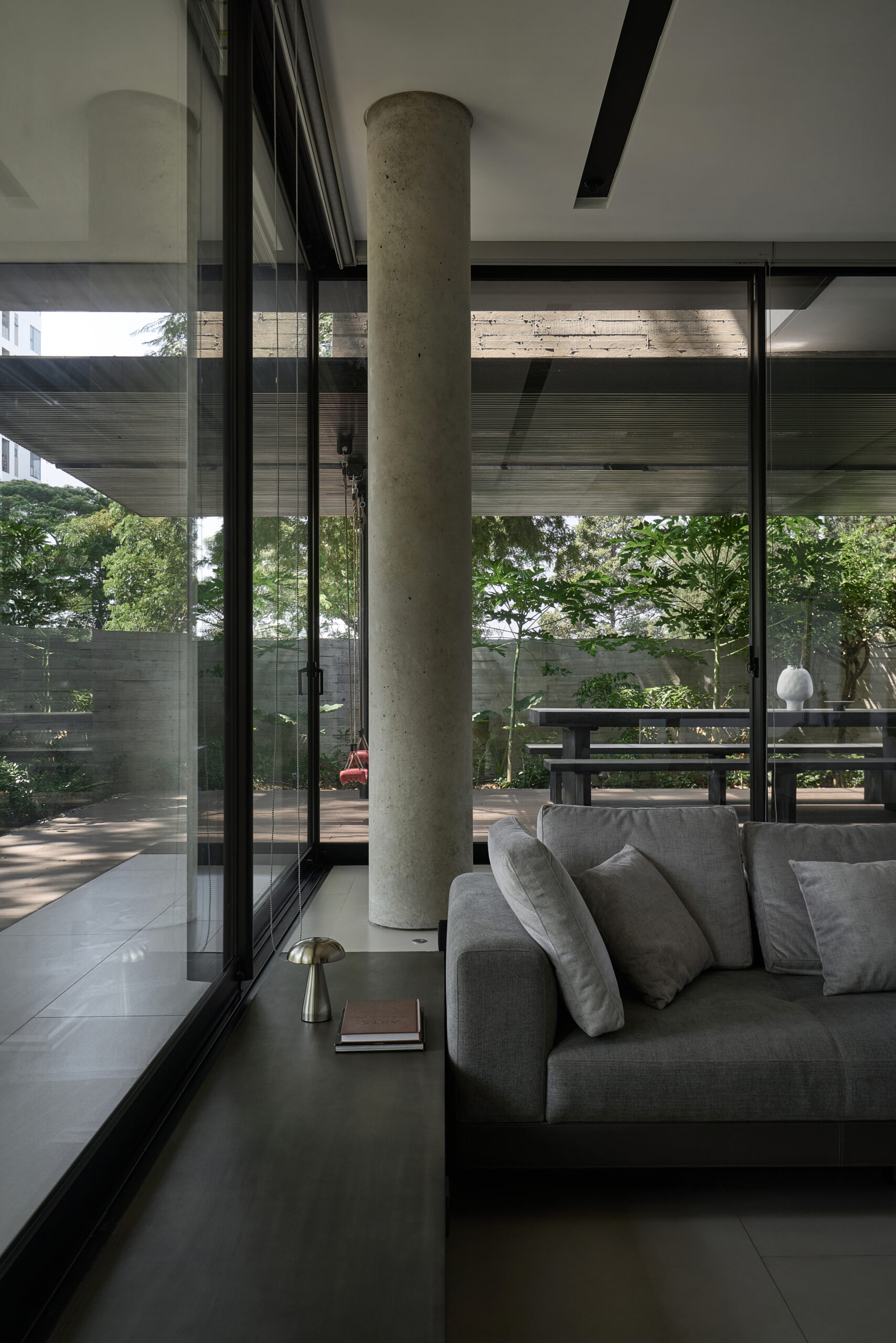
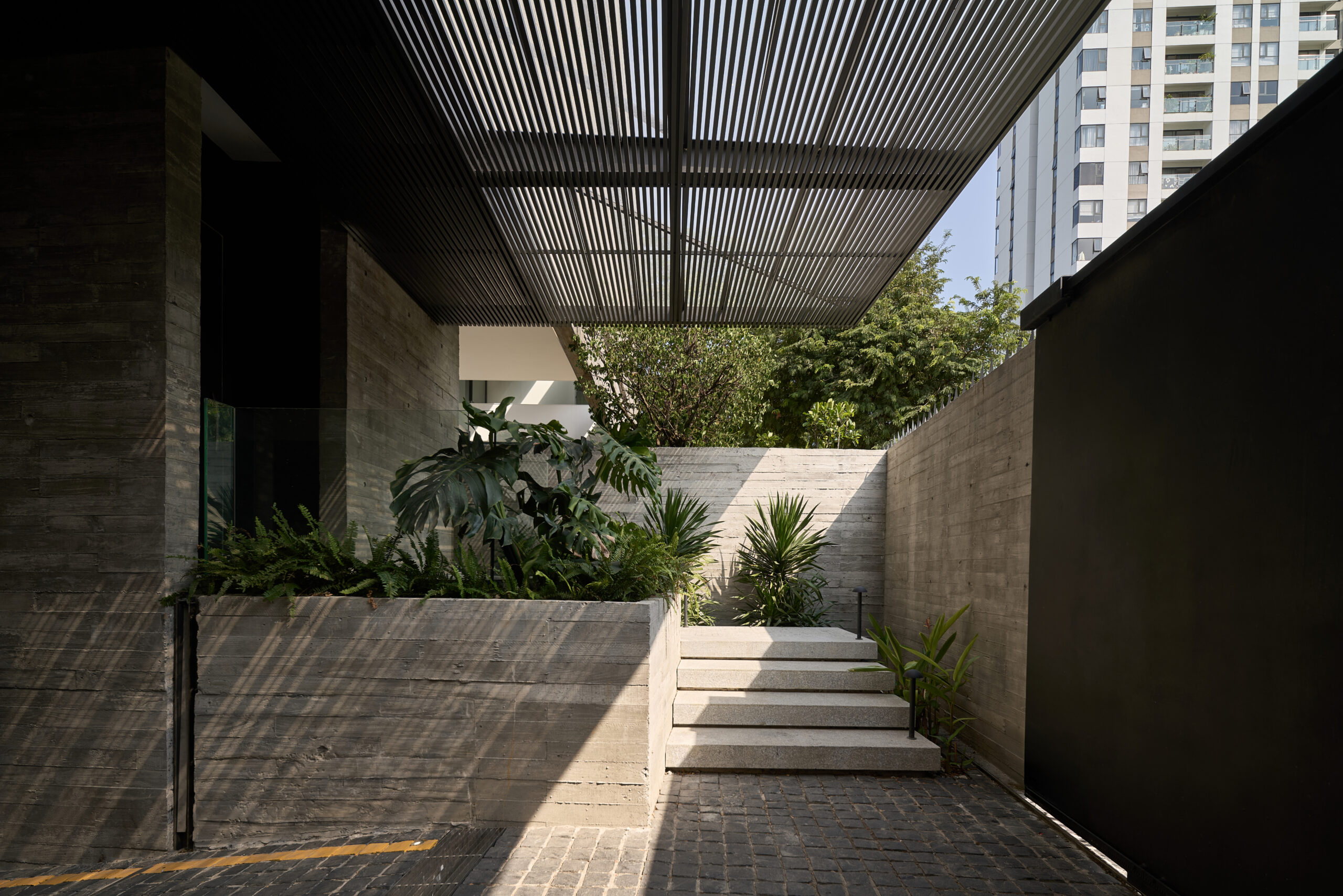
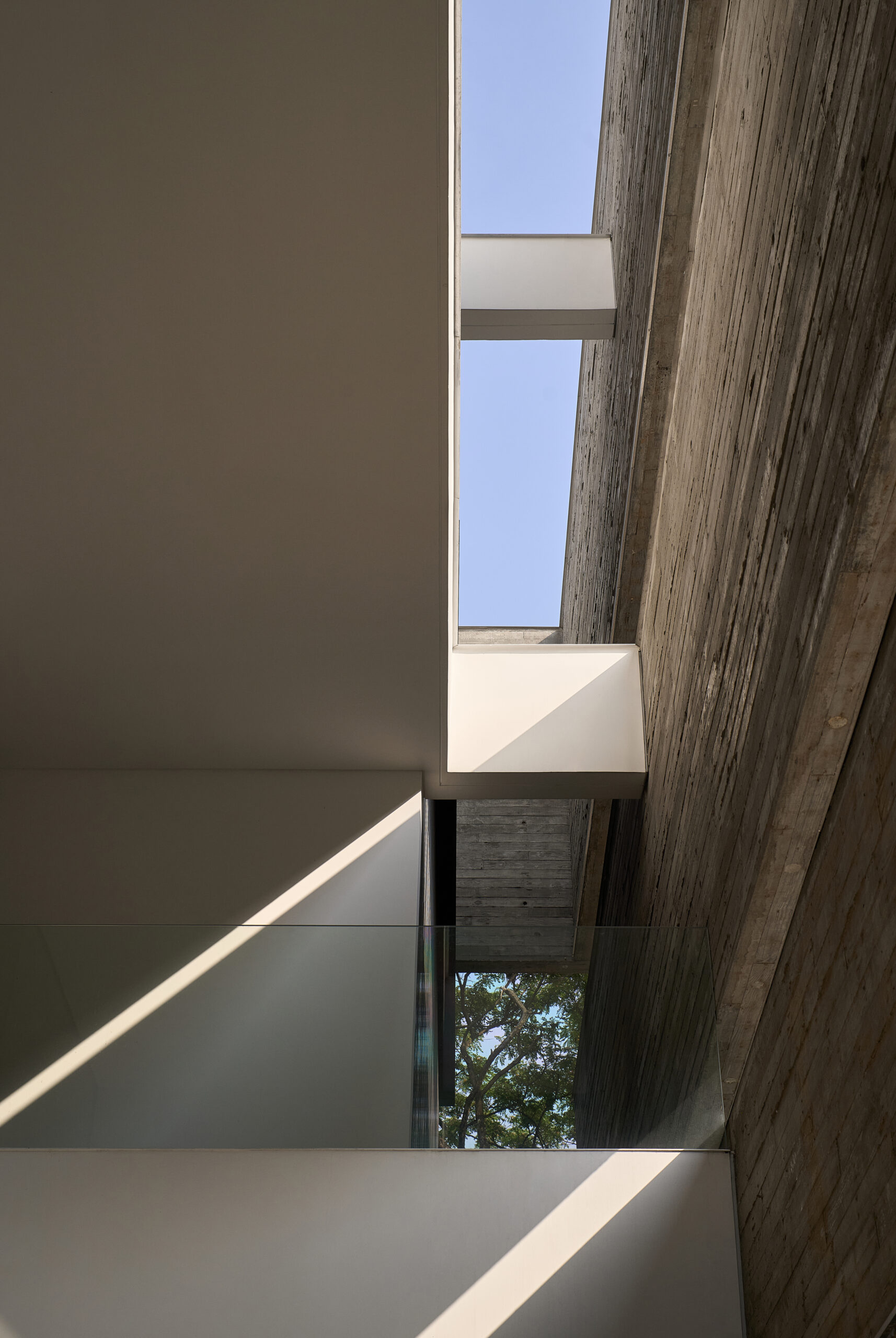
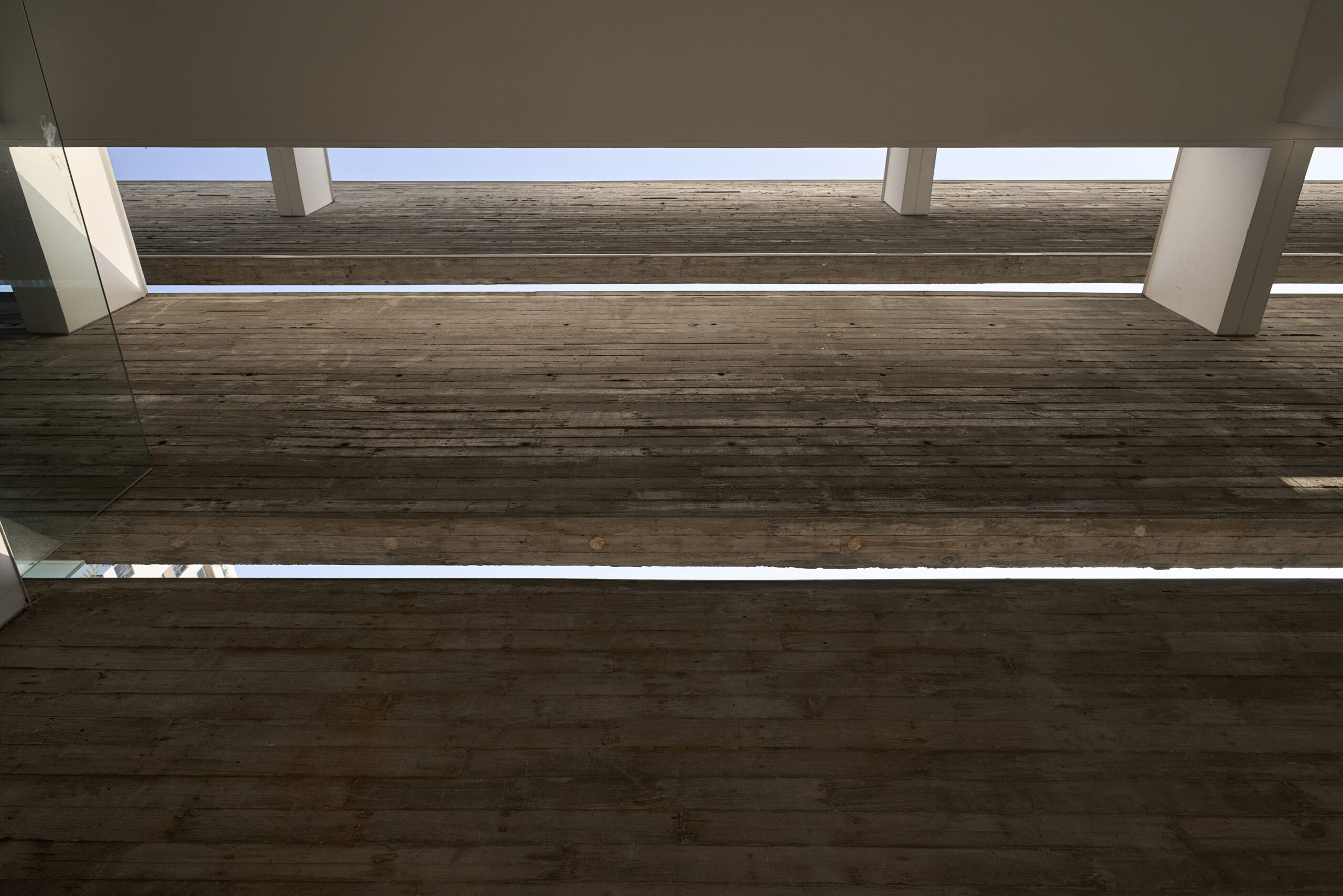
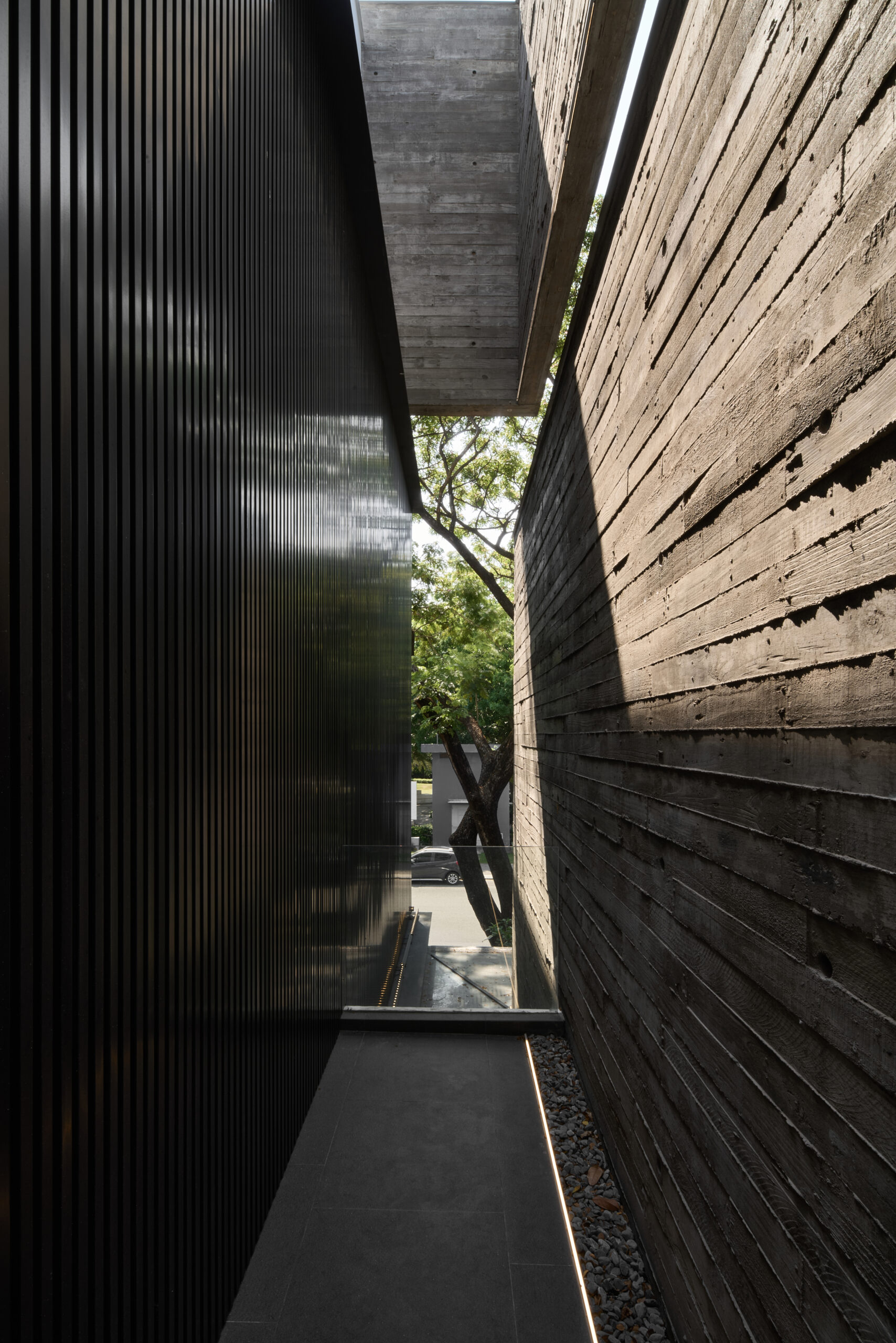
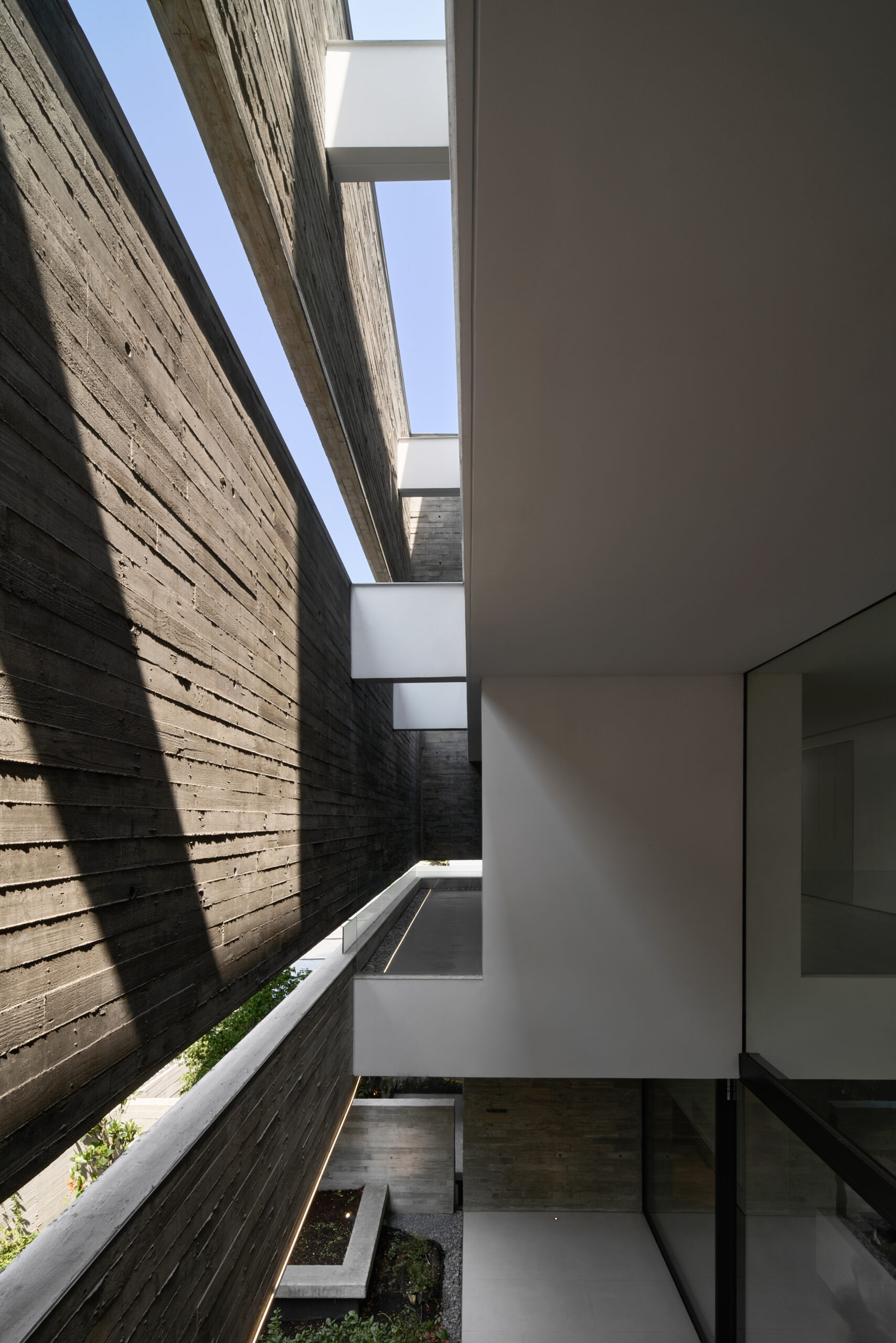
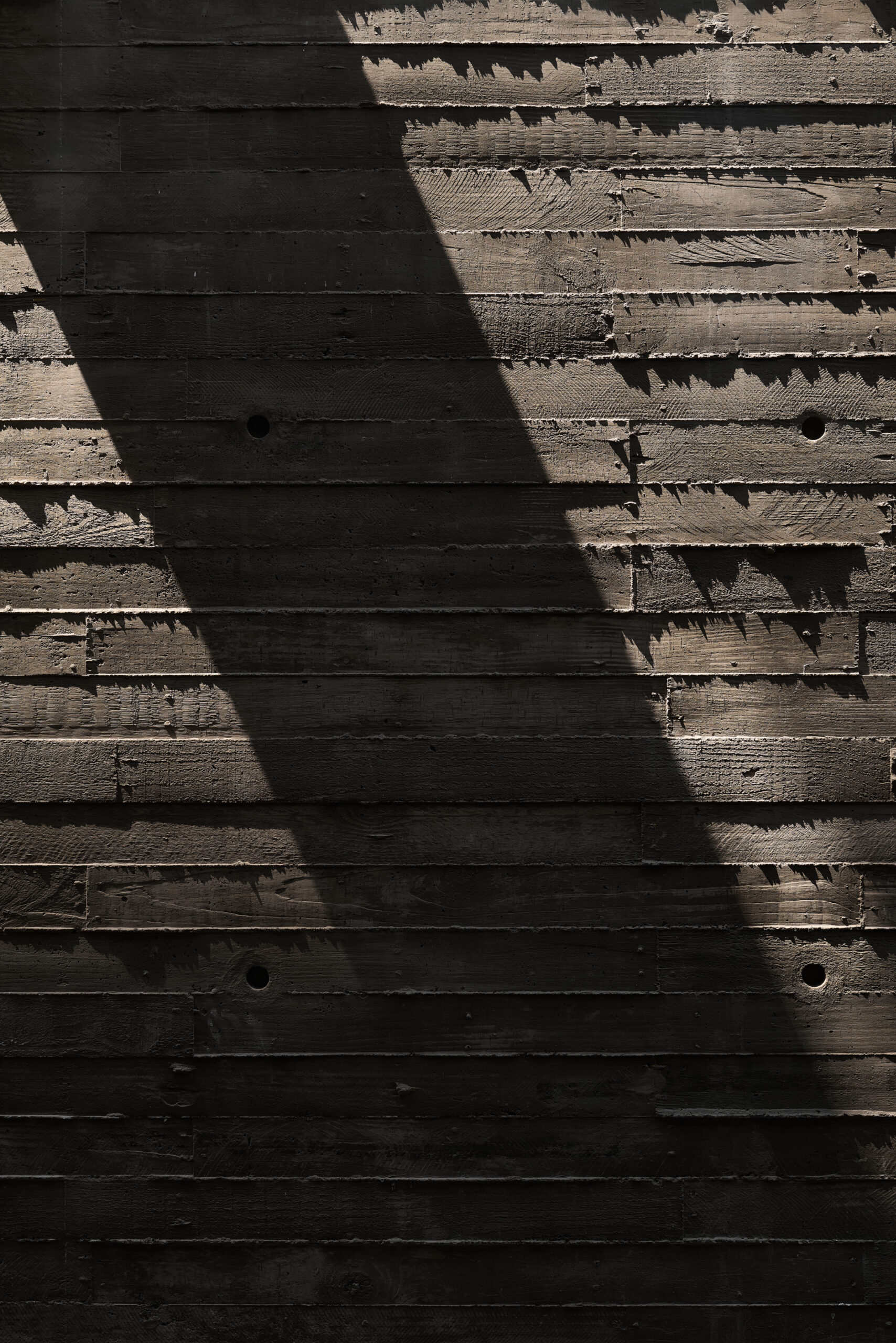
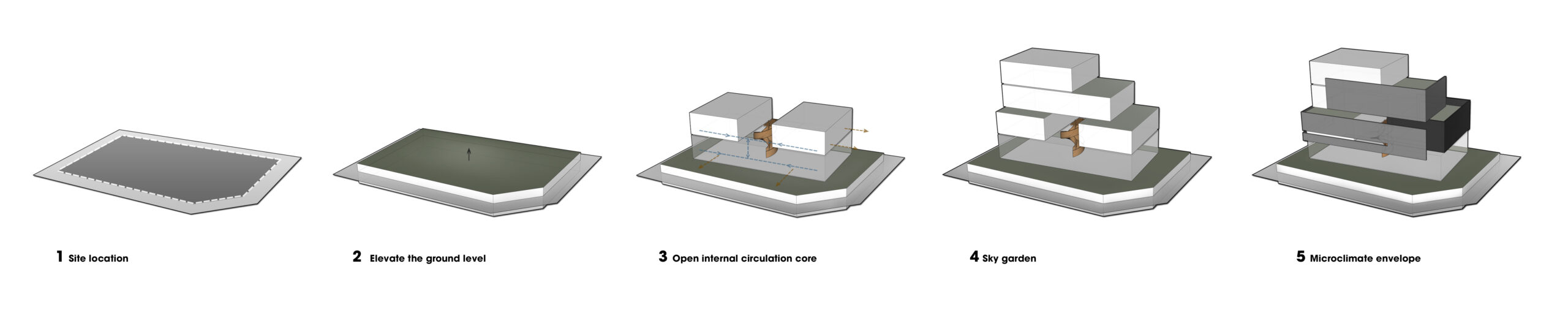
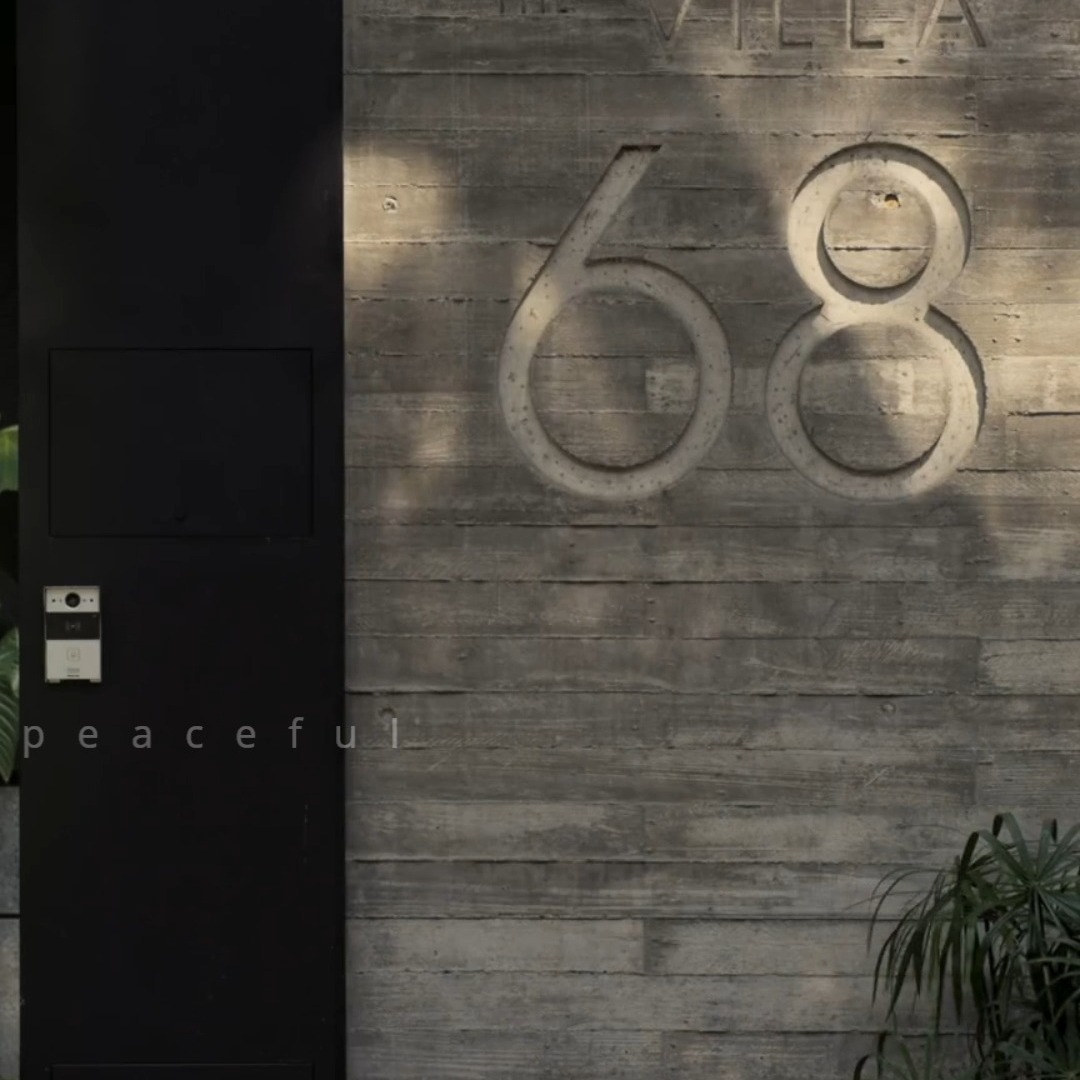
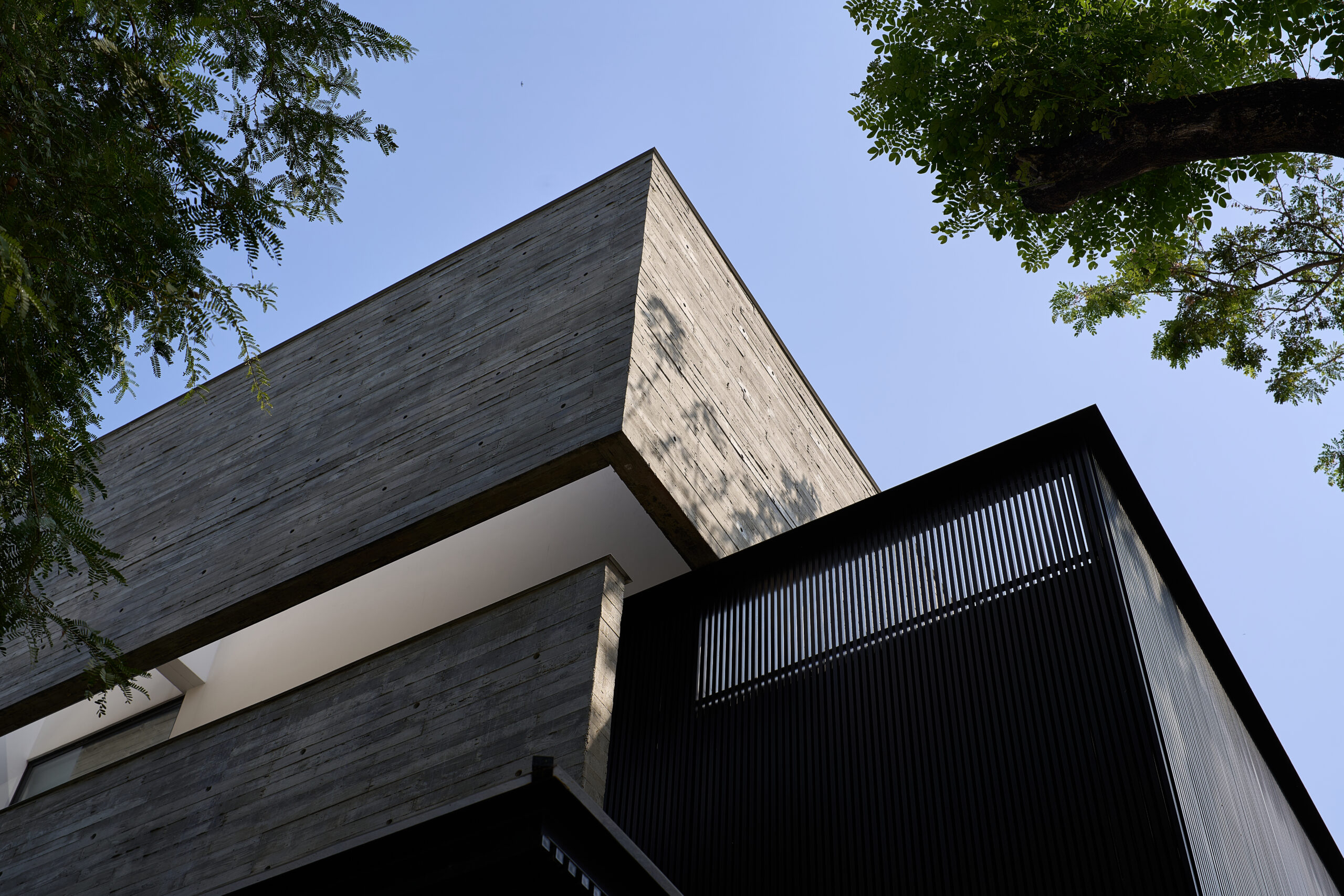
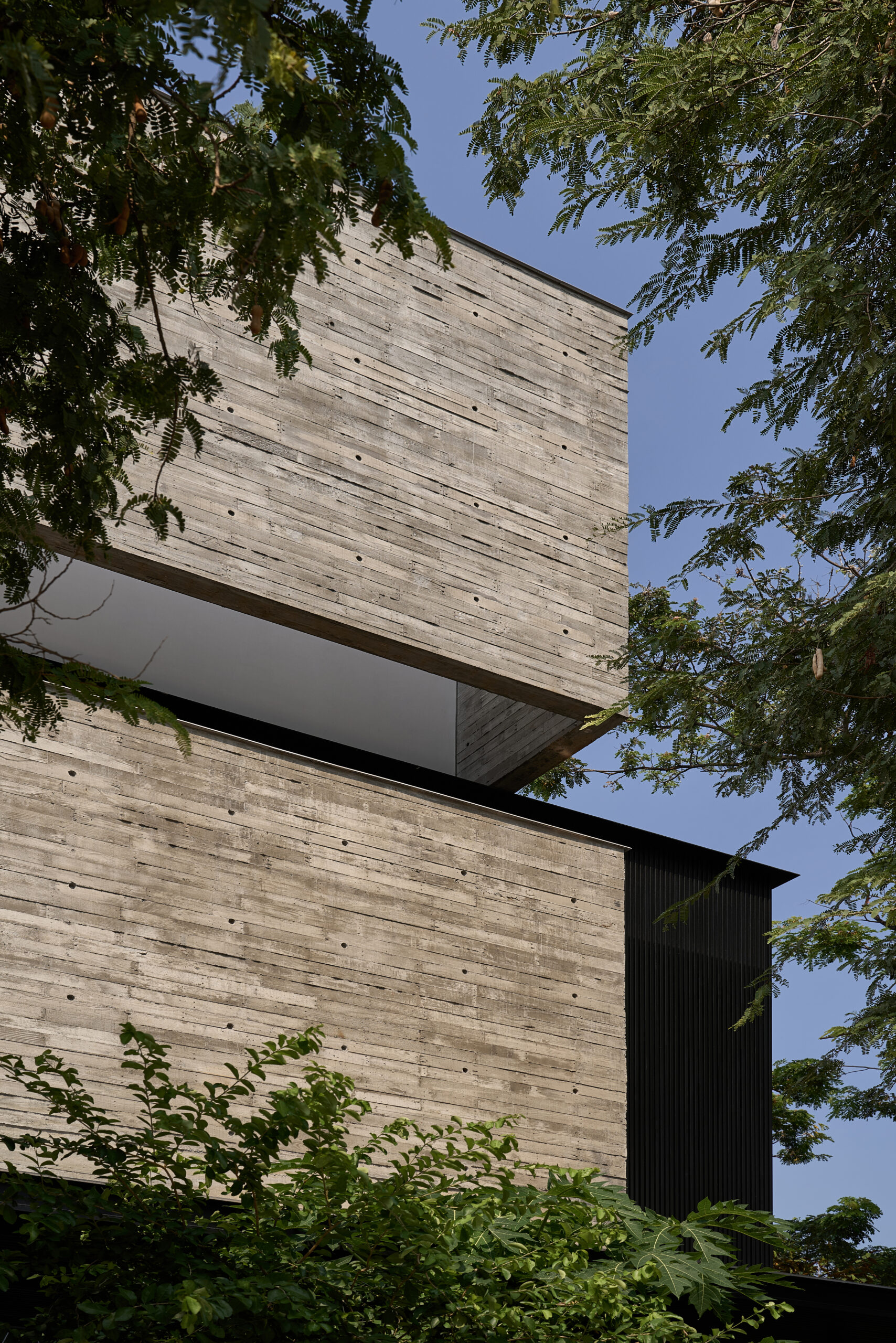
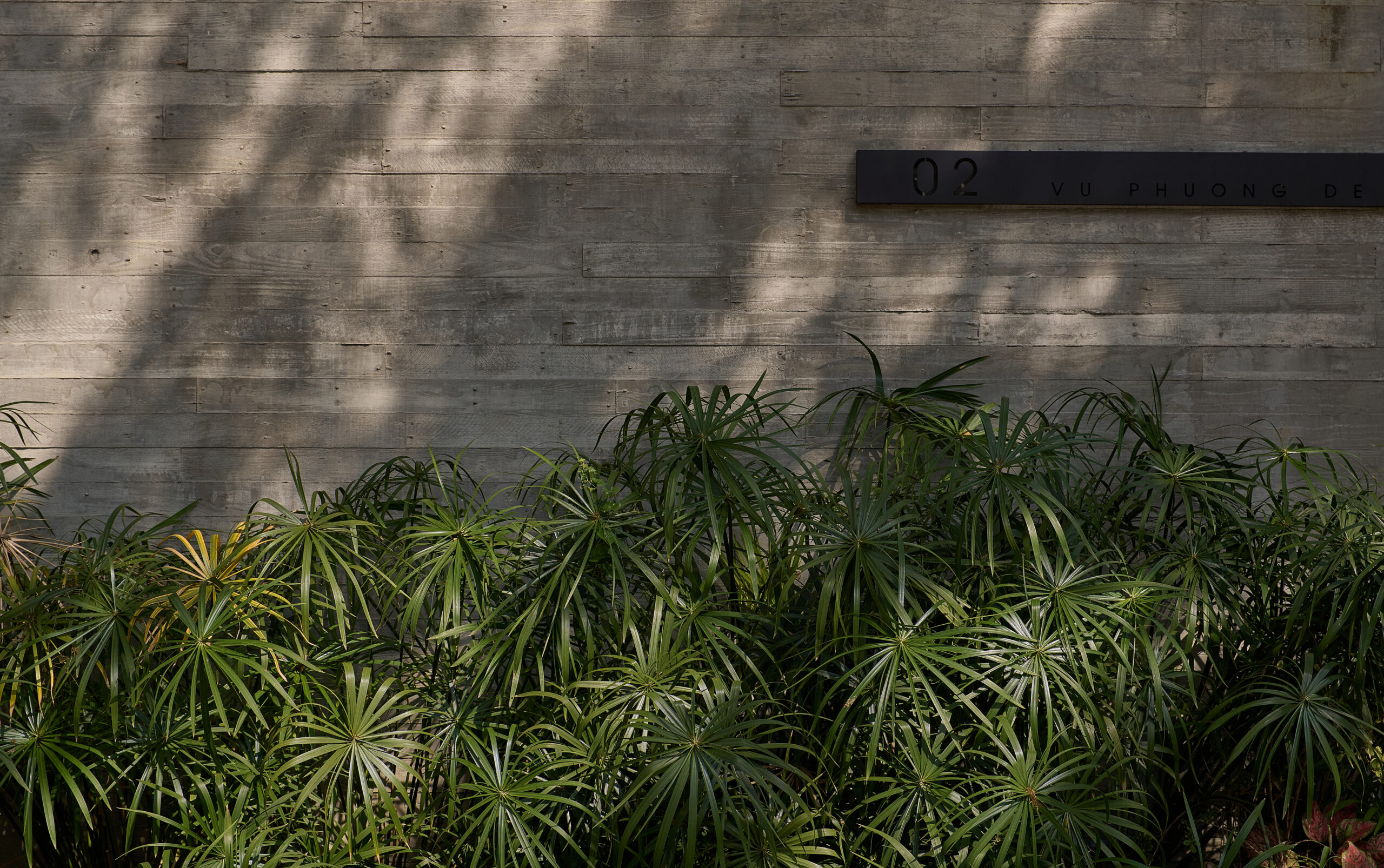
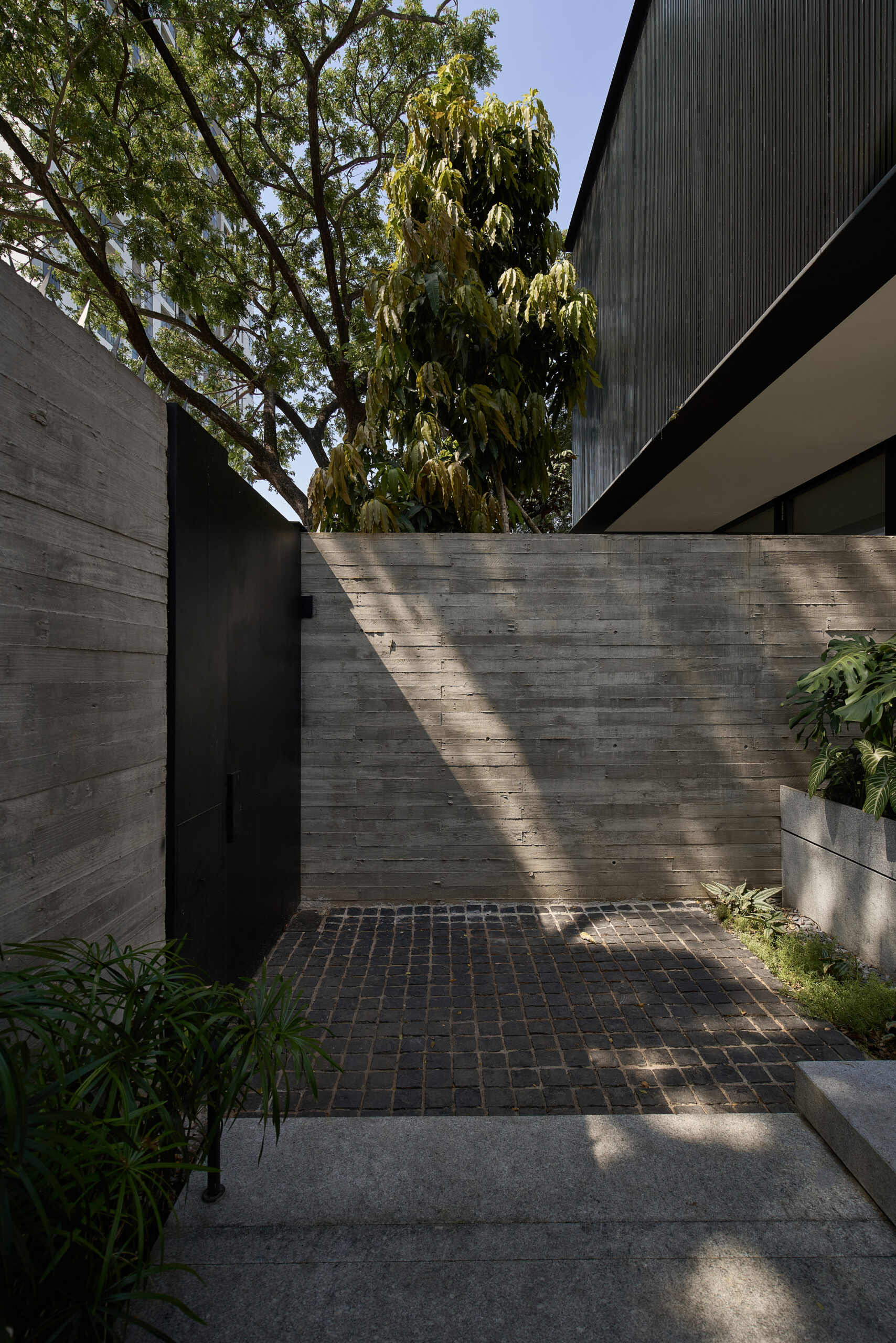
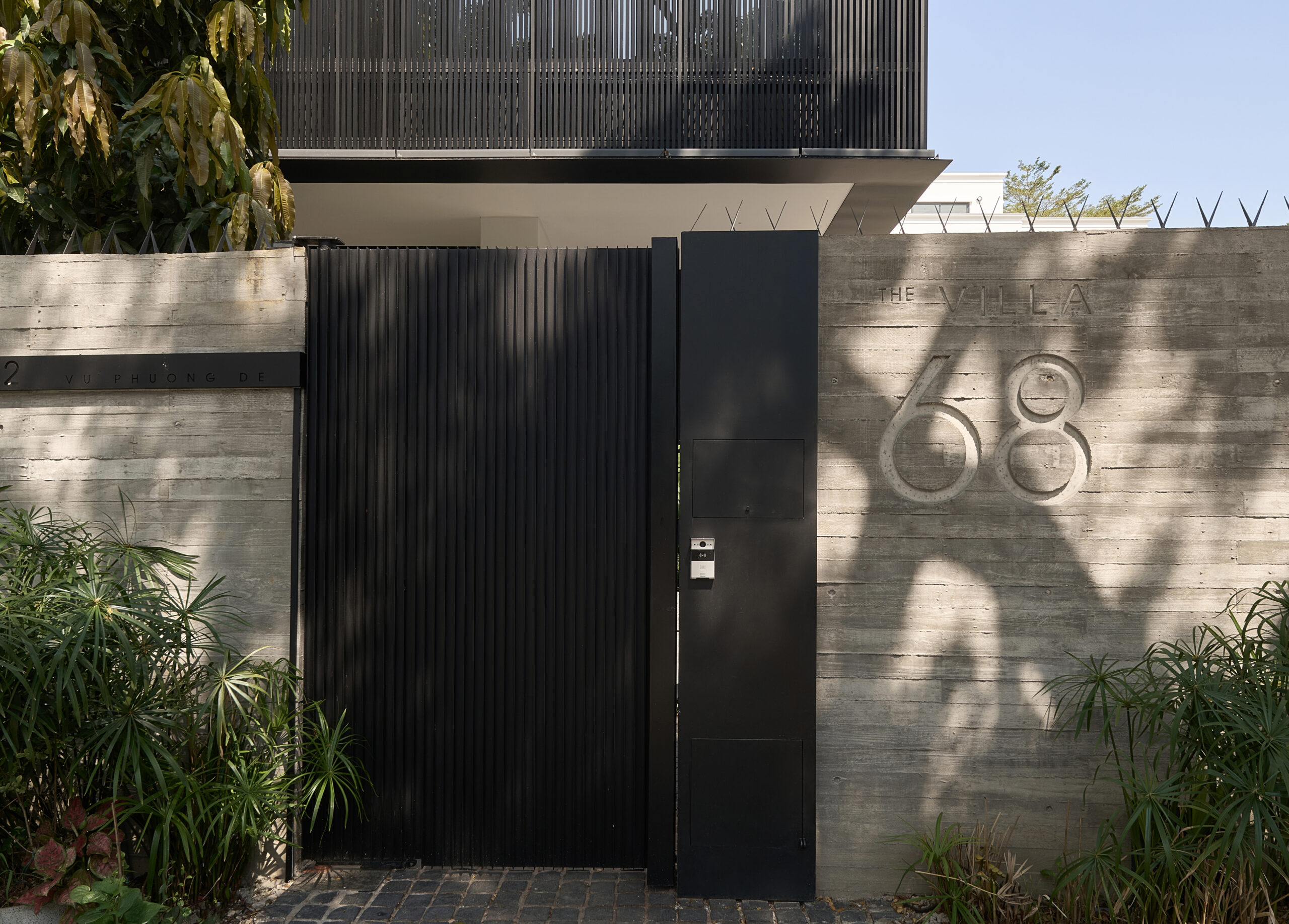
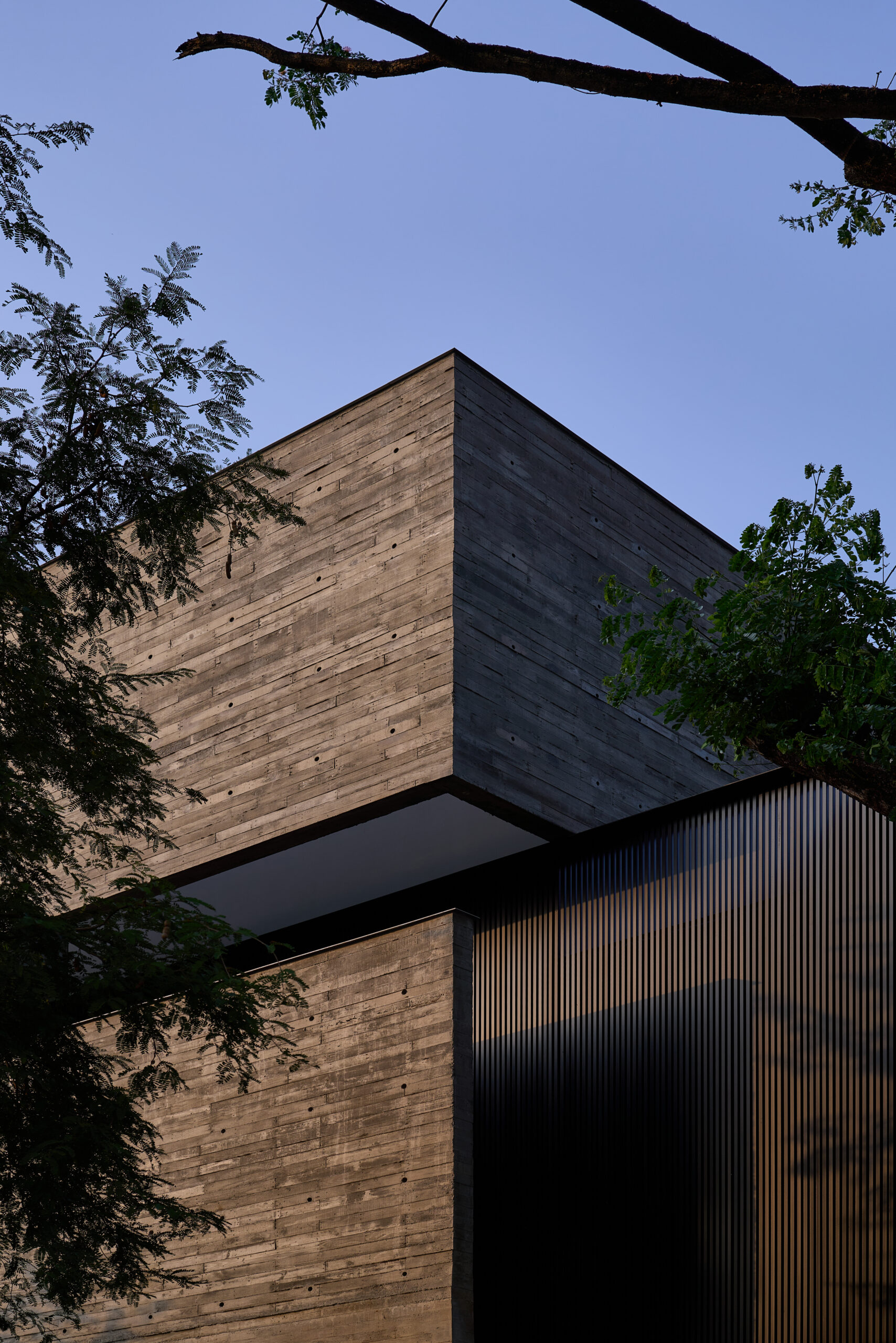
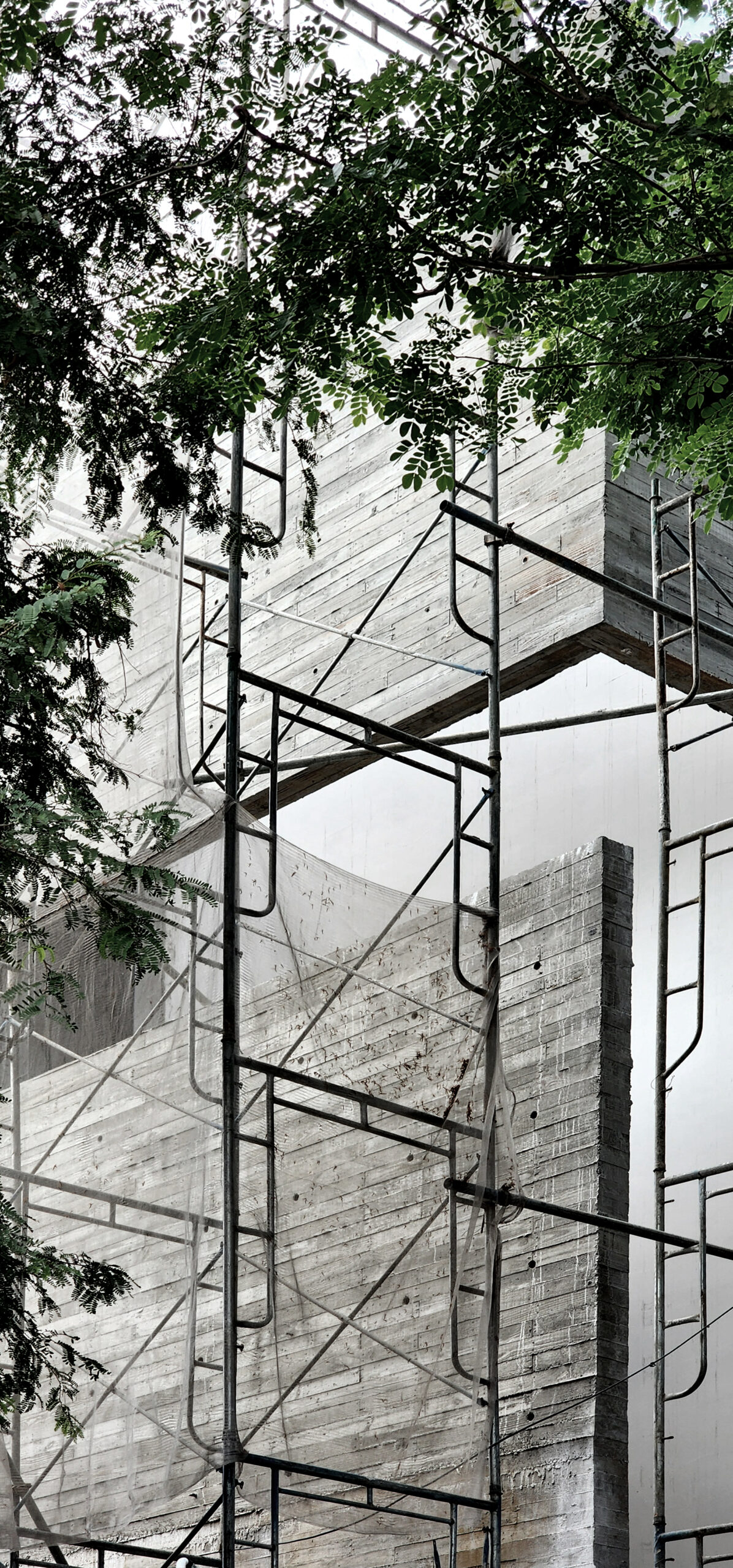
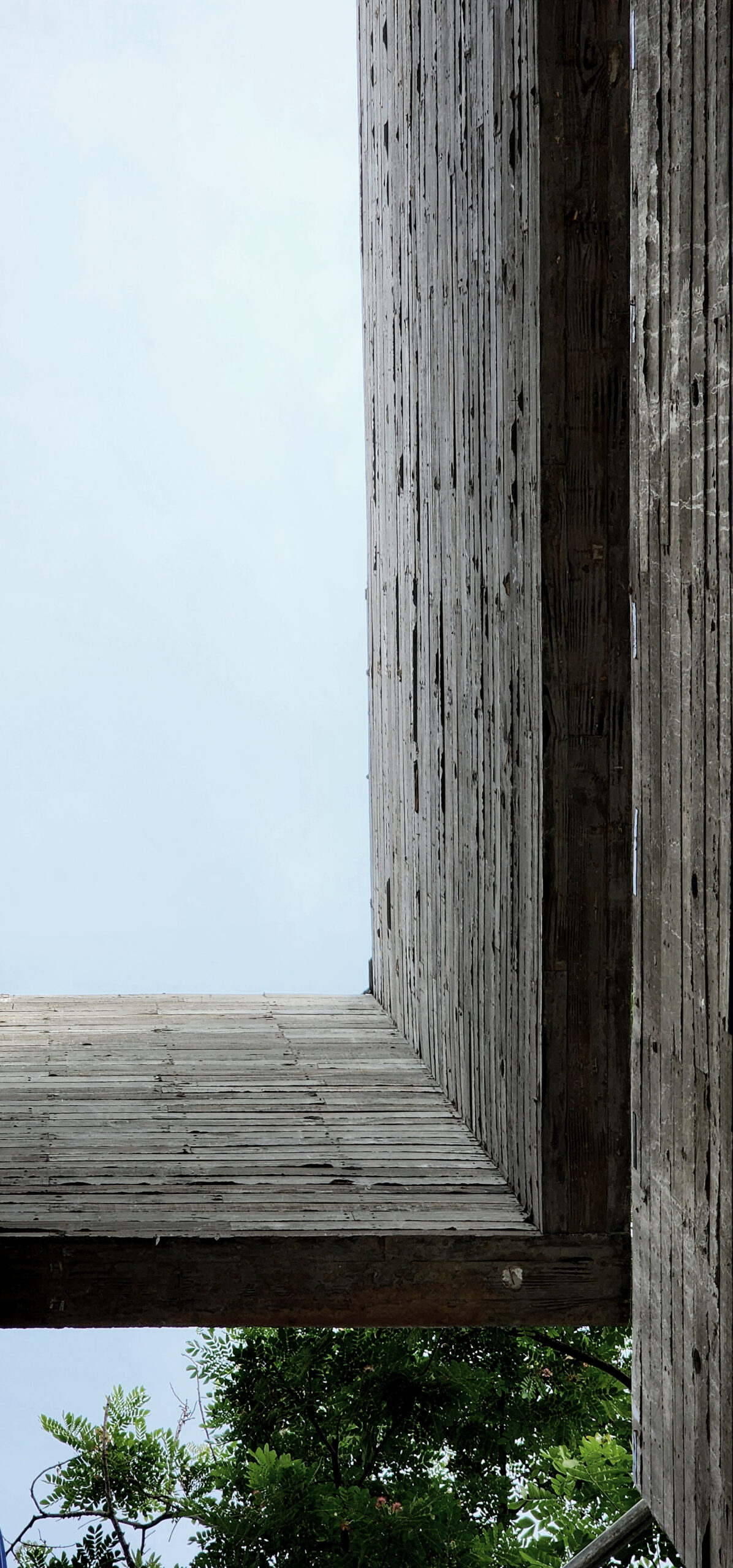
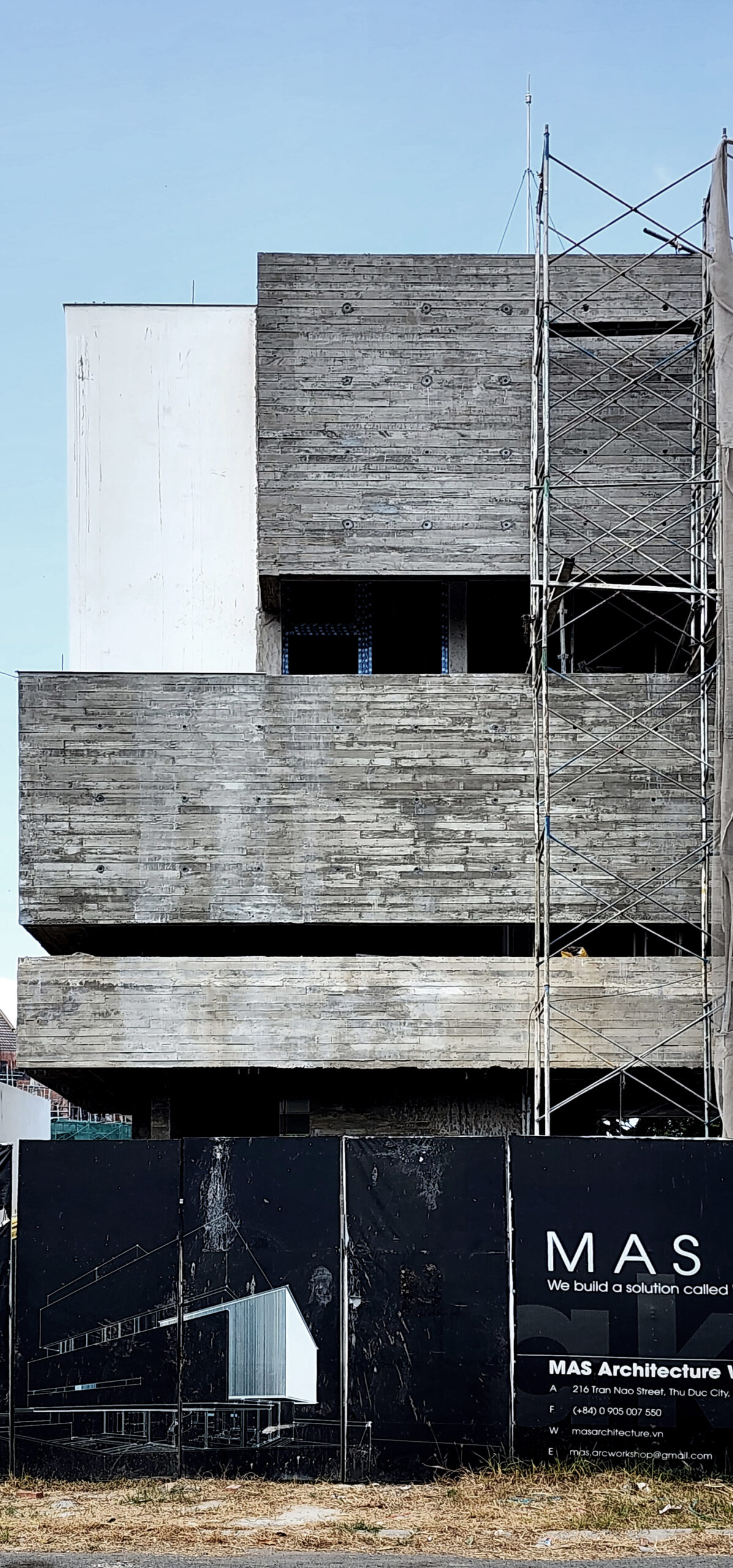
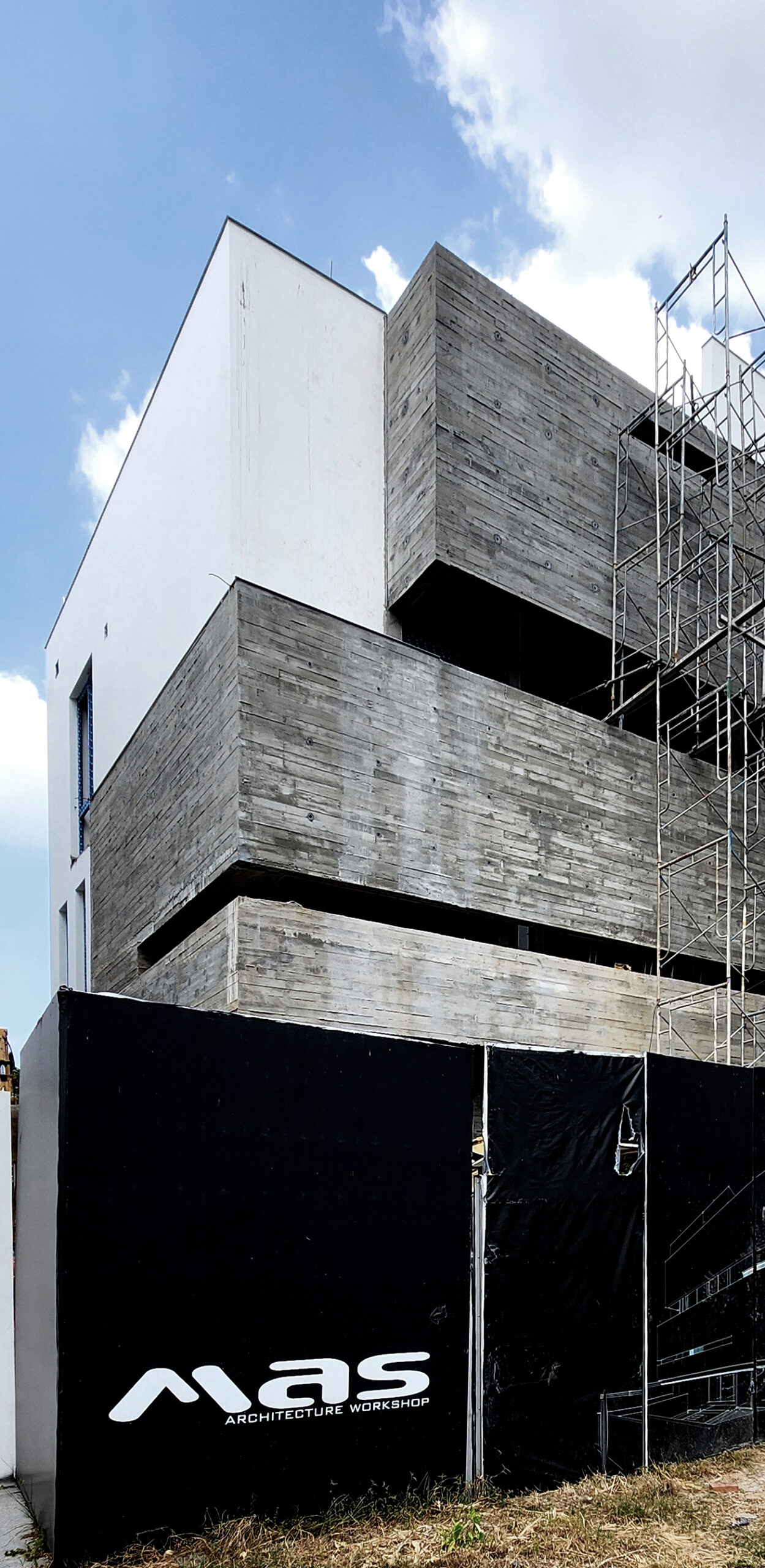
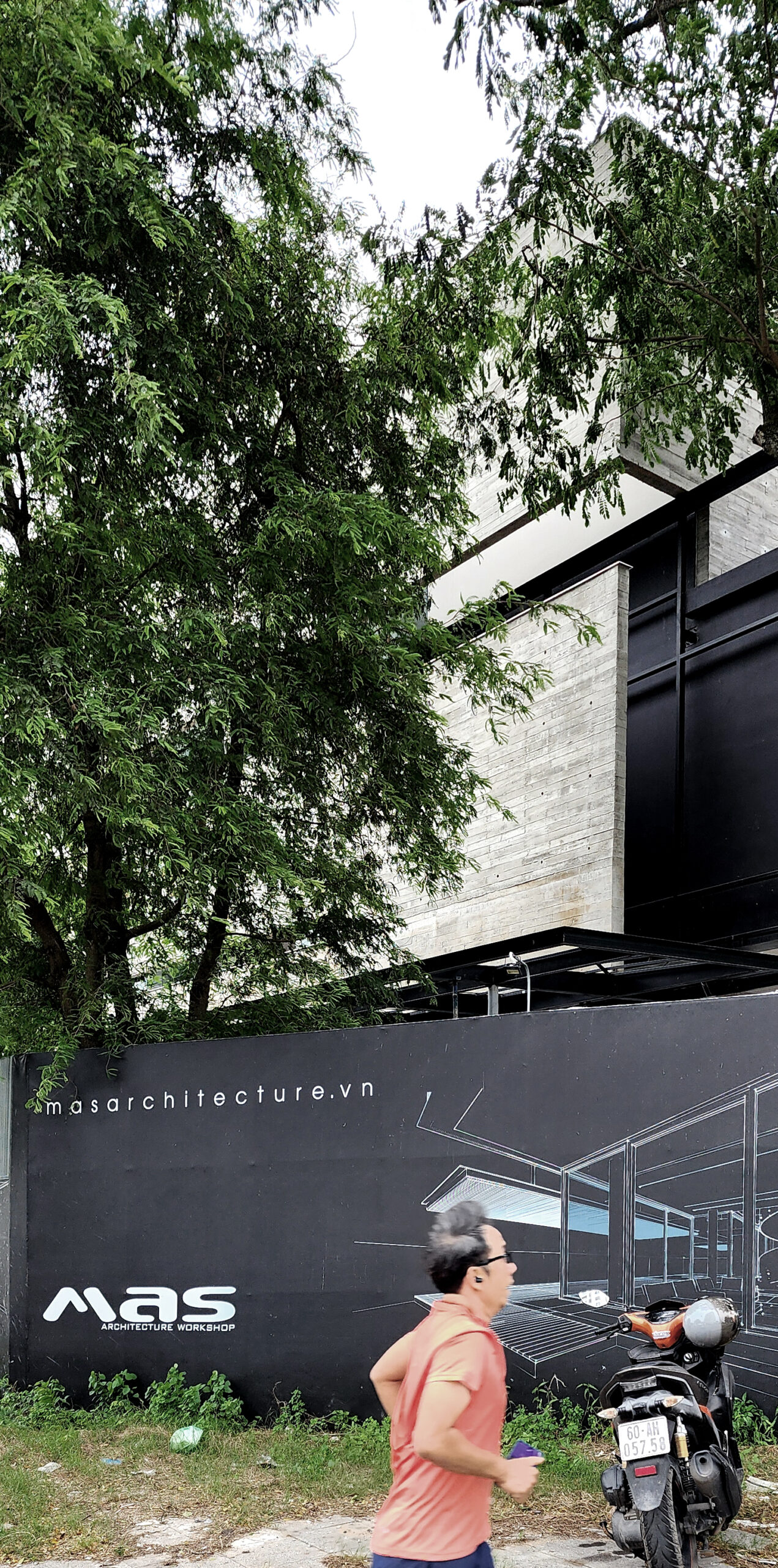
The most striking architectural solution is the creation of a nearly enclosed exterior shell made of rough concrete walls. These walls are not continuous but layered and lowered to the surrounding fence. This strategy is calculated based on blocking external views from impacting the house, not only horizontally but also vertically from above, from the surrounding high-rise buildings. On the other hand, this protective wall is separated from interior space, with intermediate buffer zones consisting of balconies extending along the west-facing side, preventing heat absorption through the concrete that affect the interior living space, while simultaneously creating natural air circulation in this buffer zone.
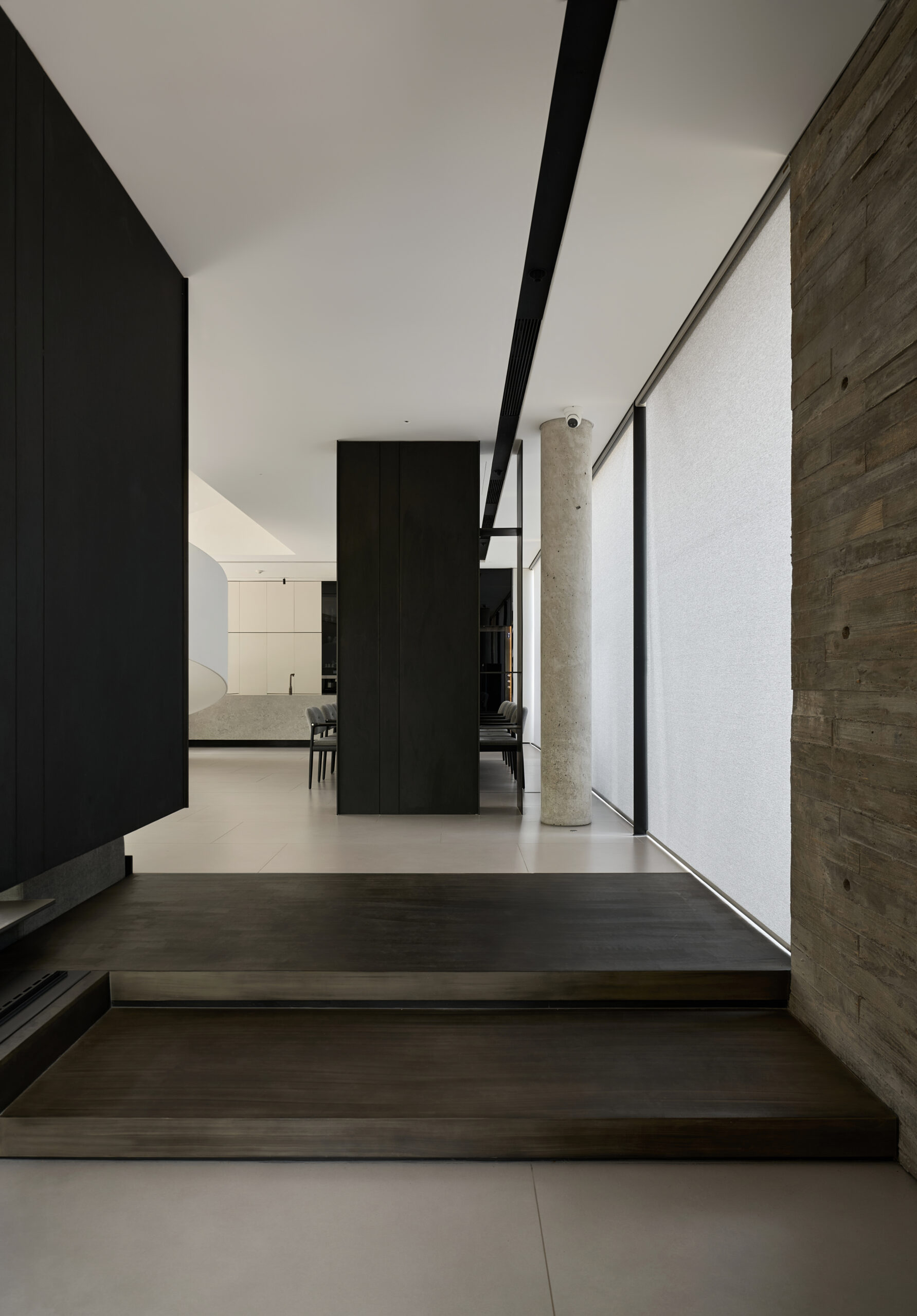
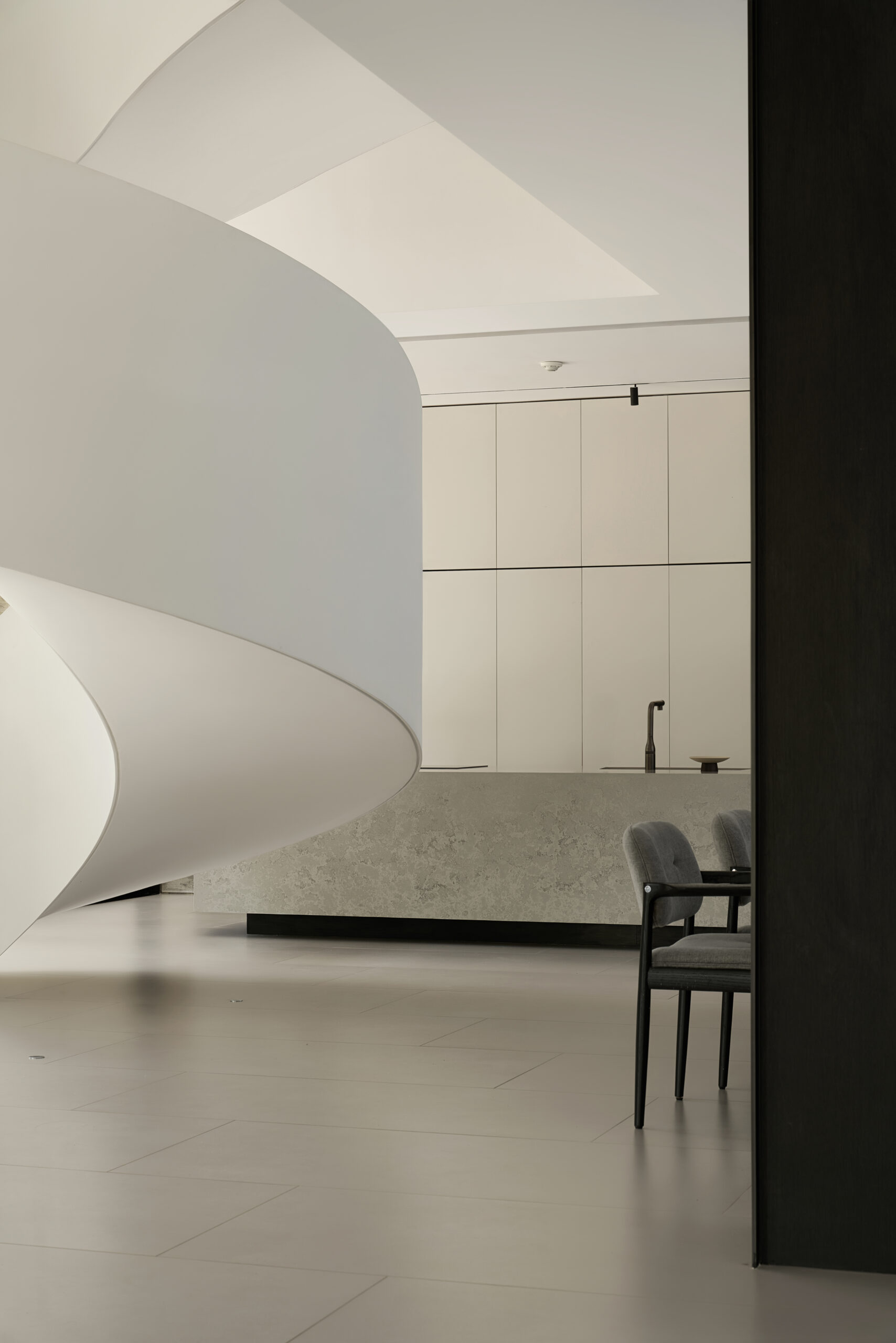
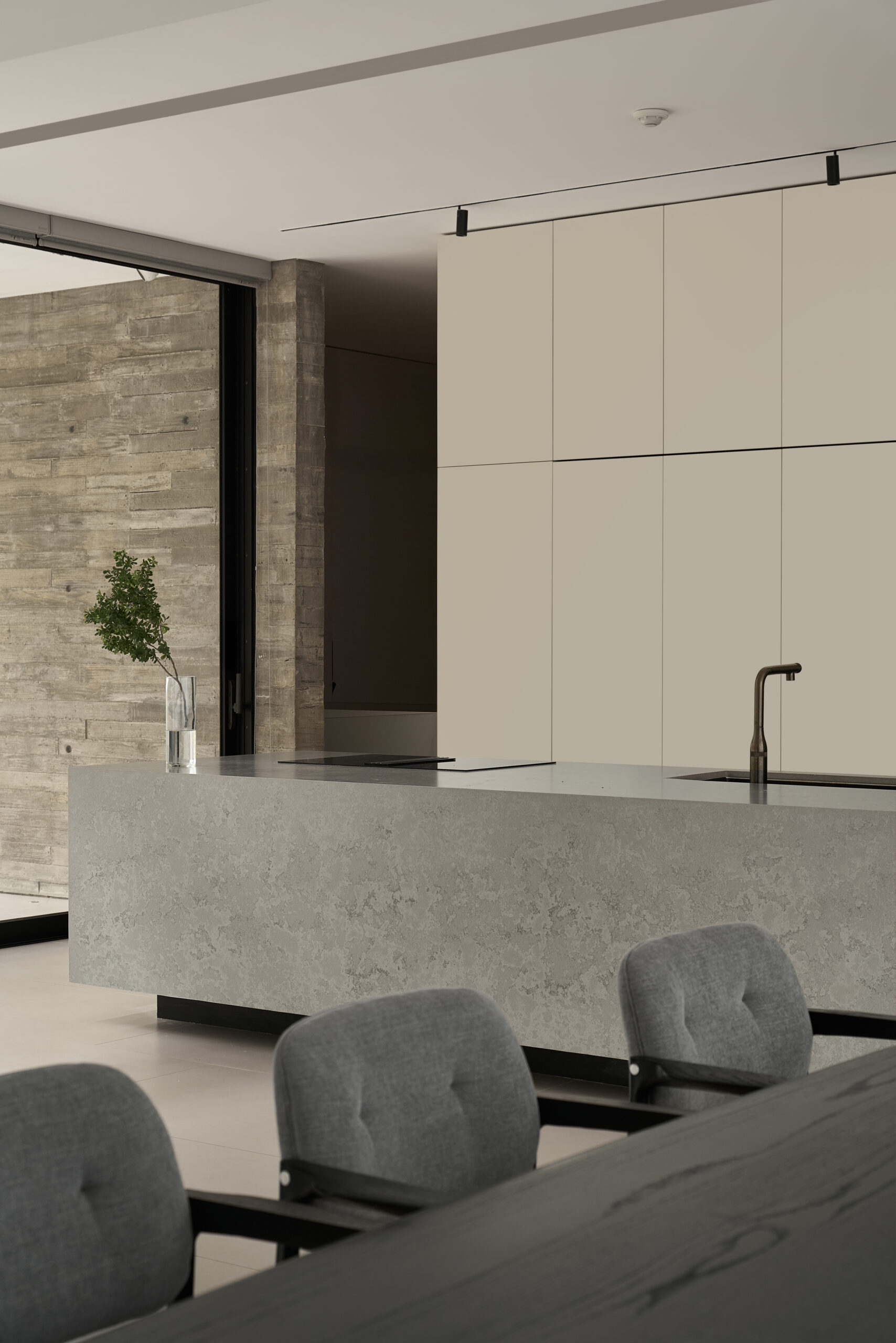
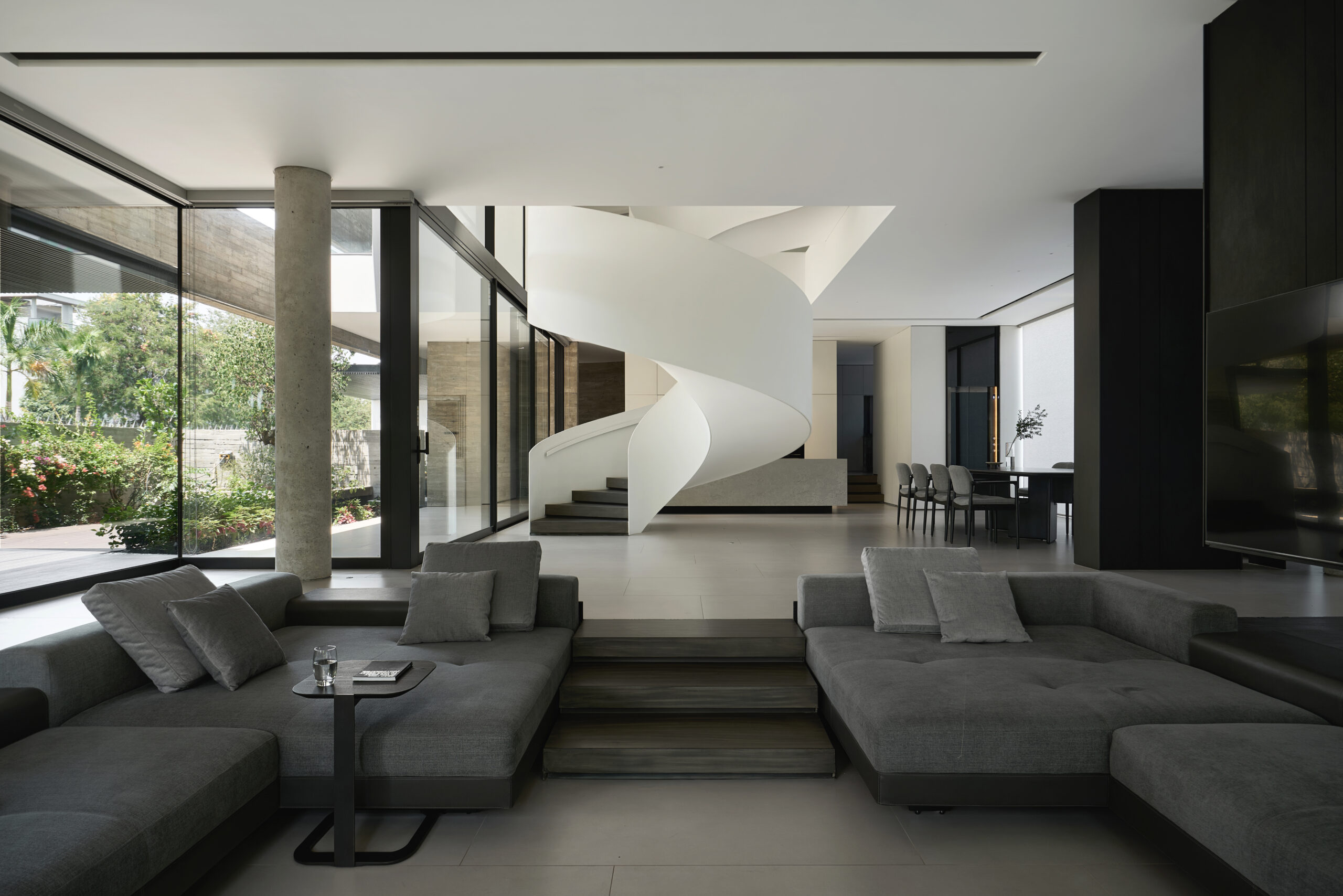
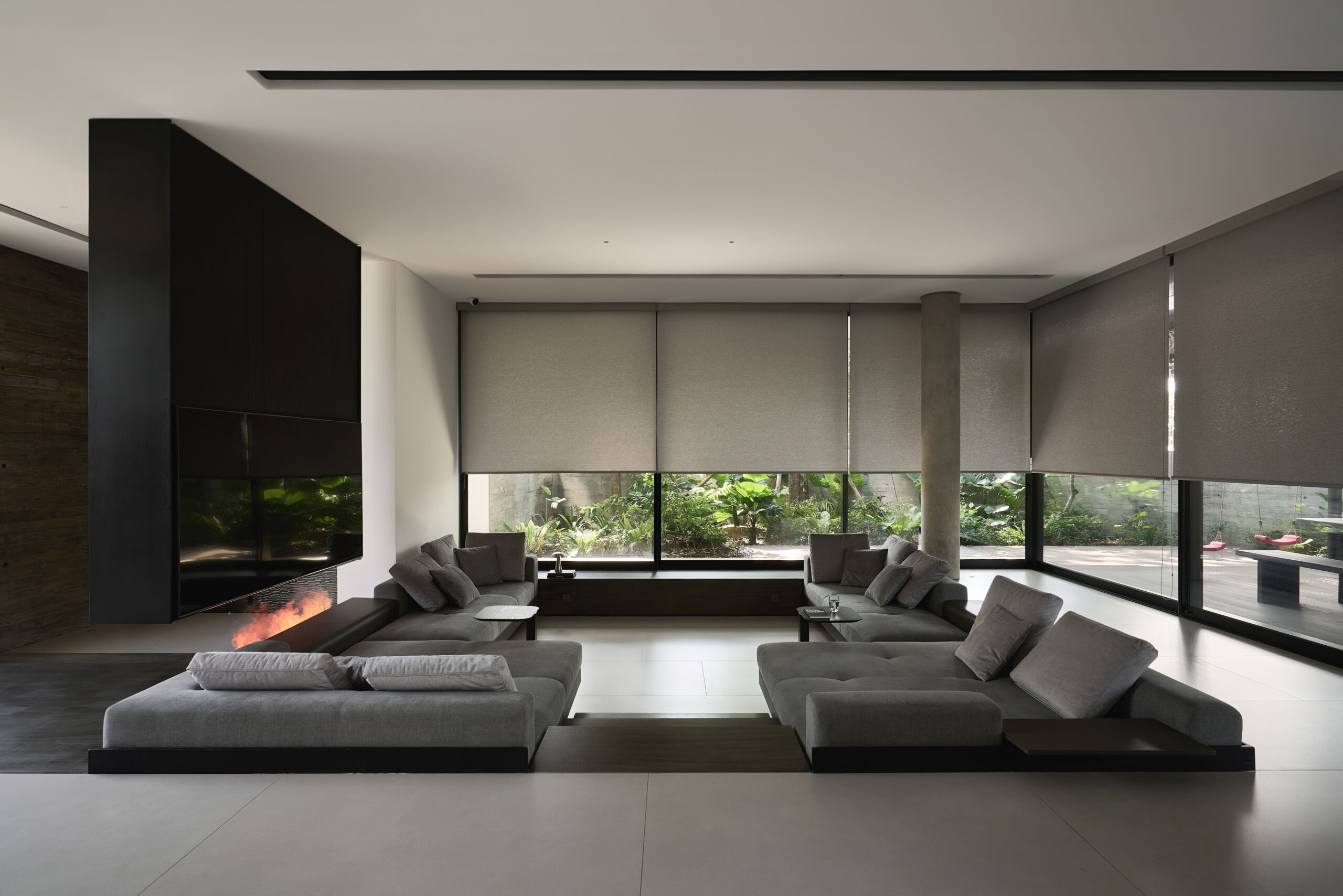
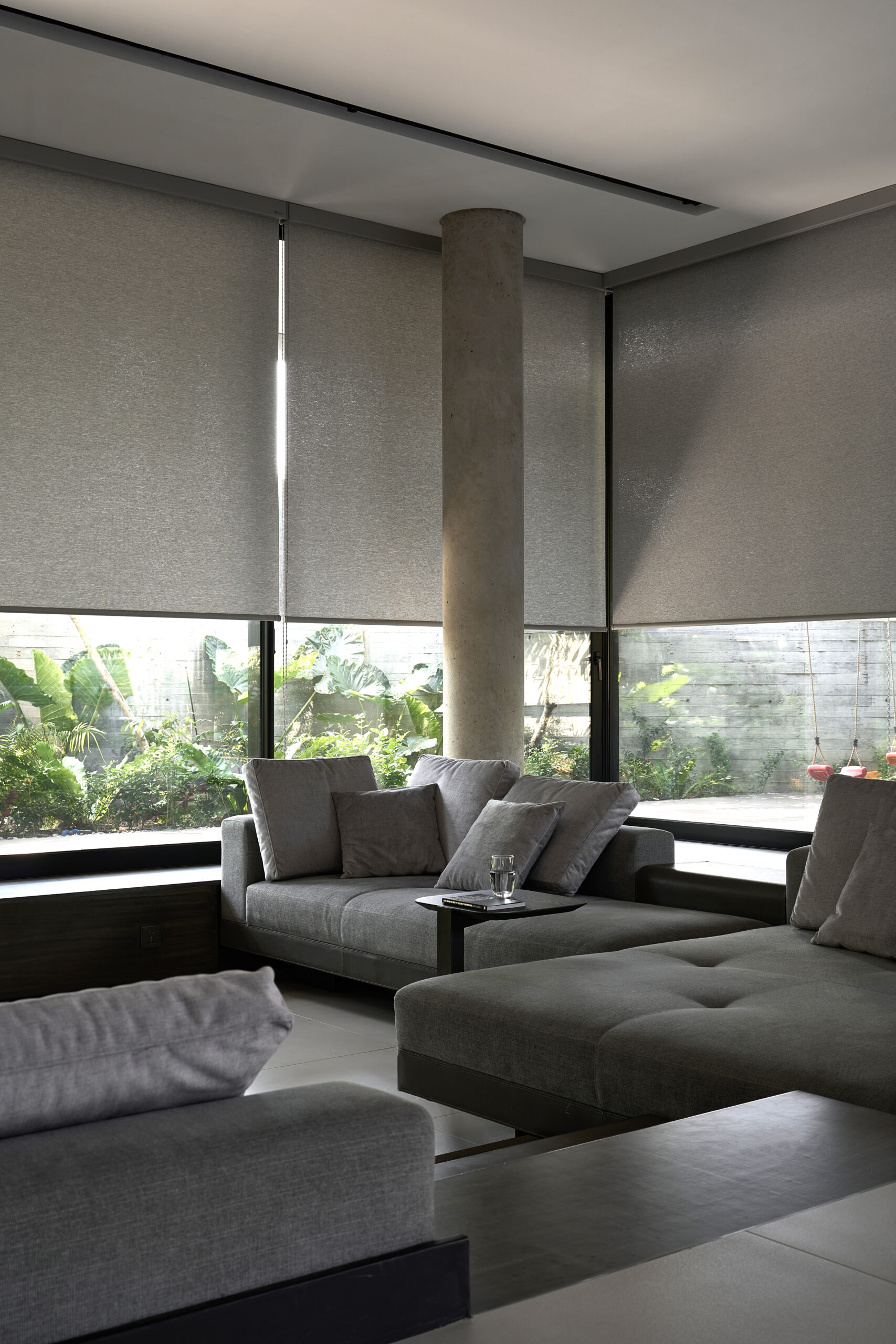
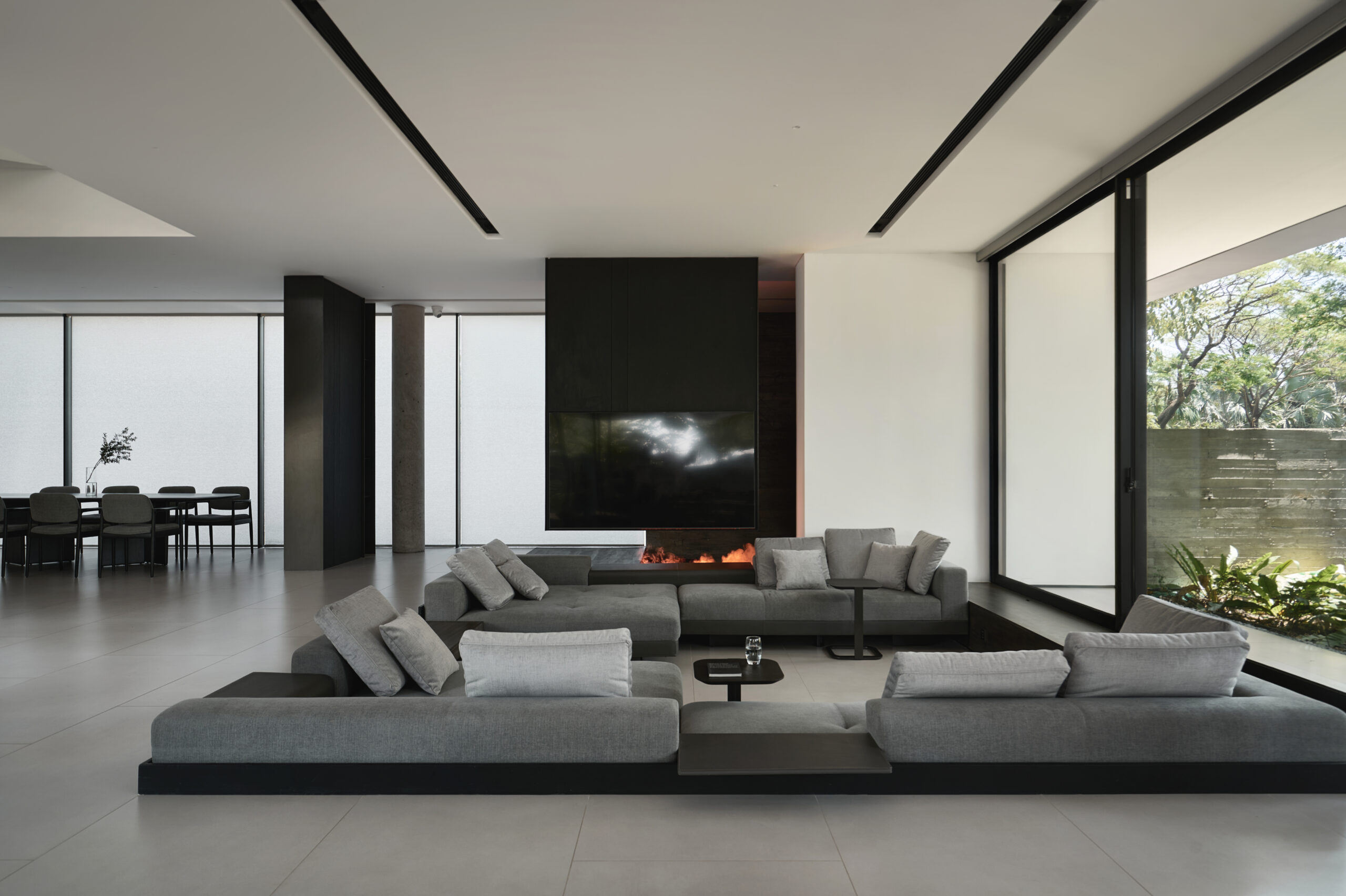
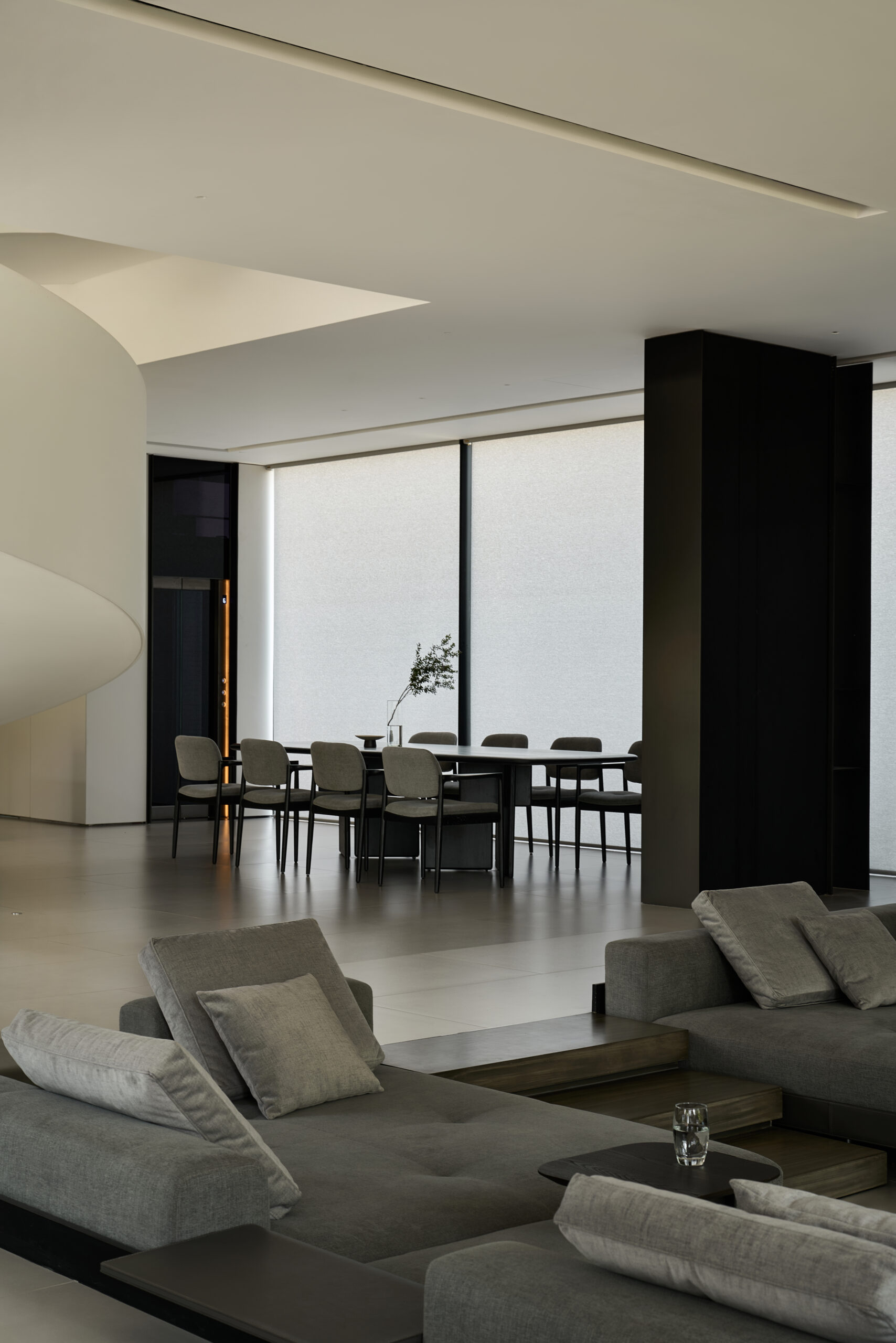
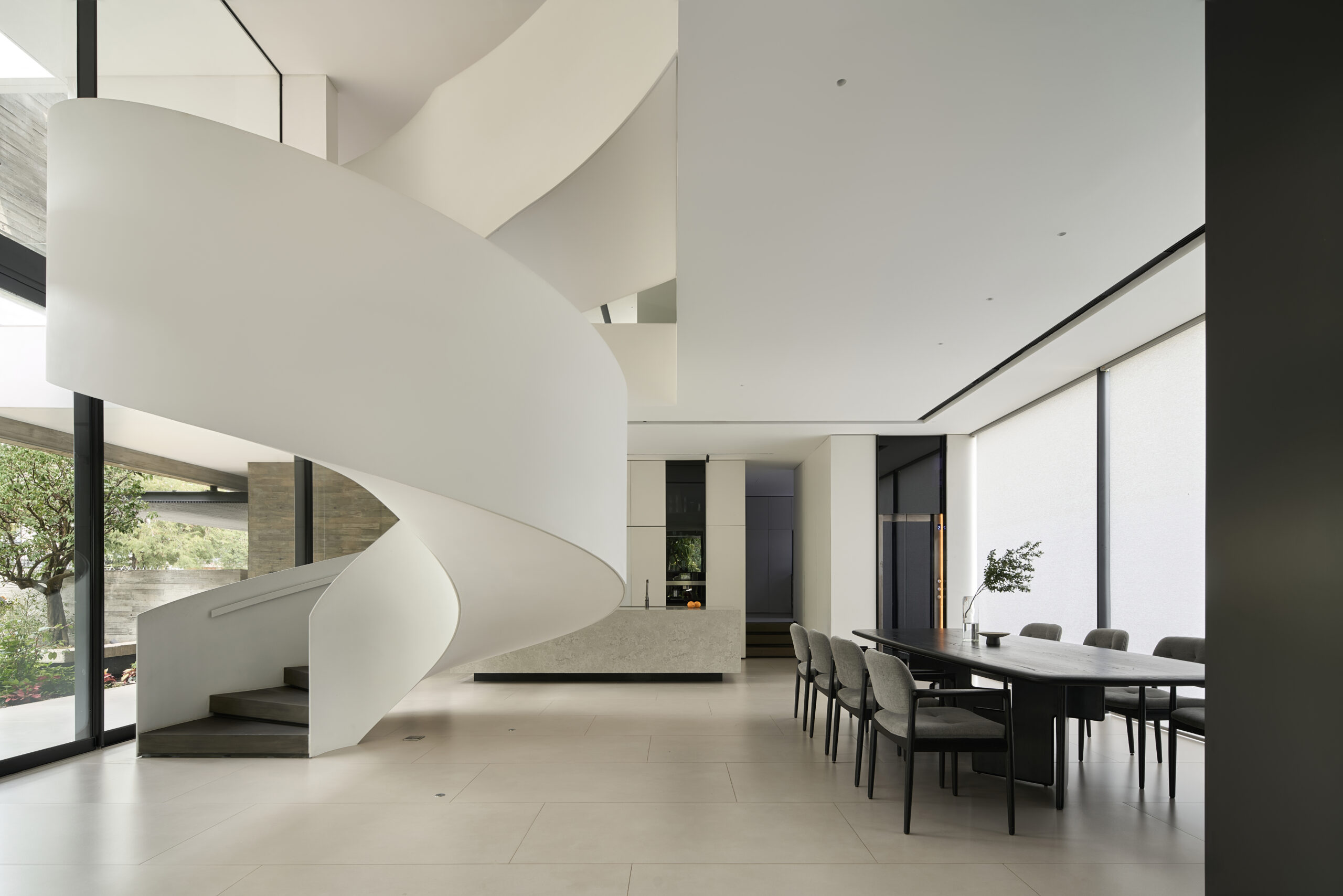
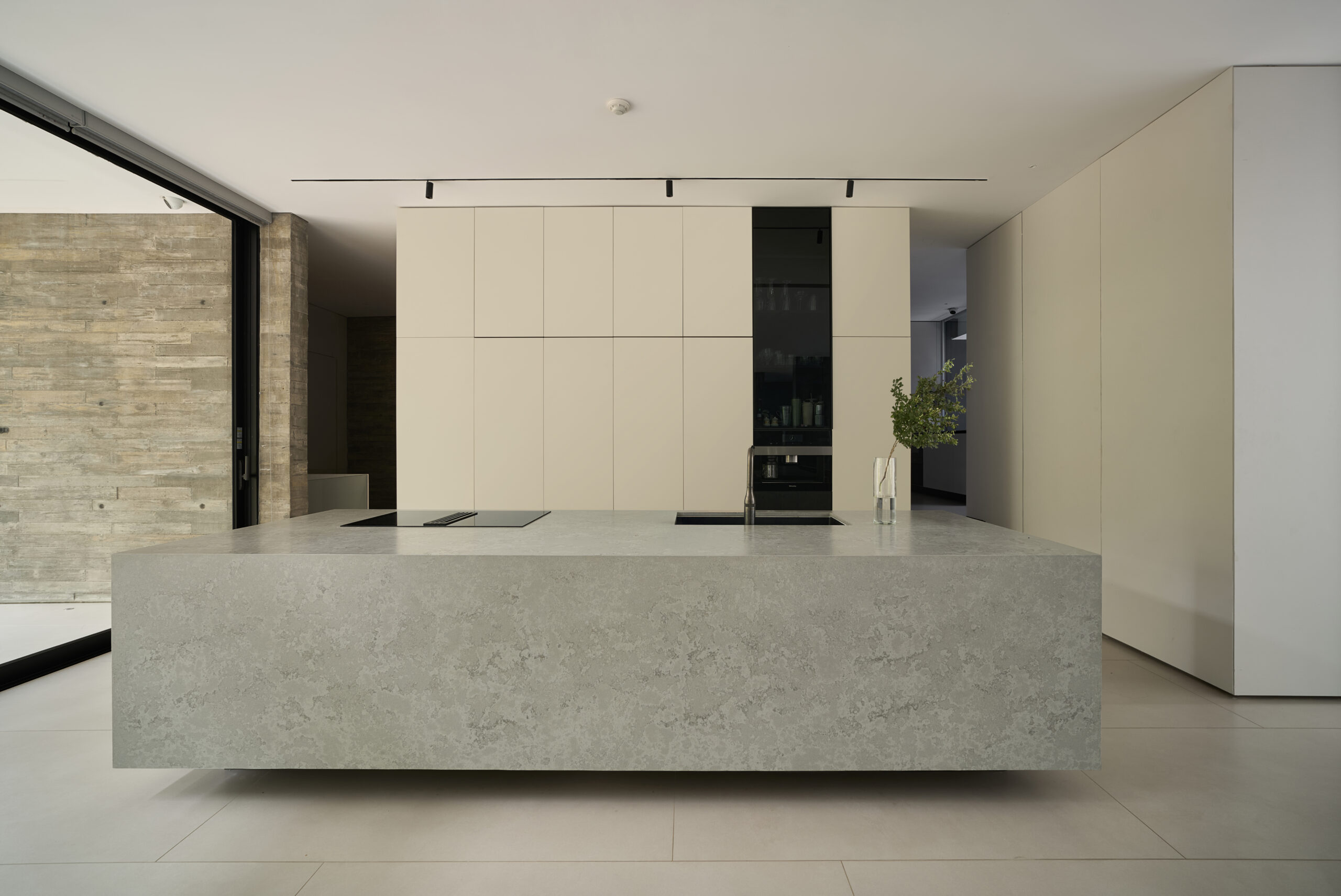
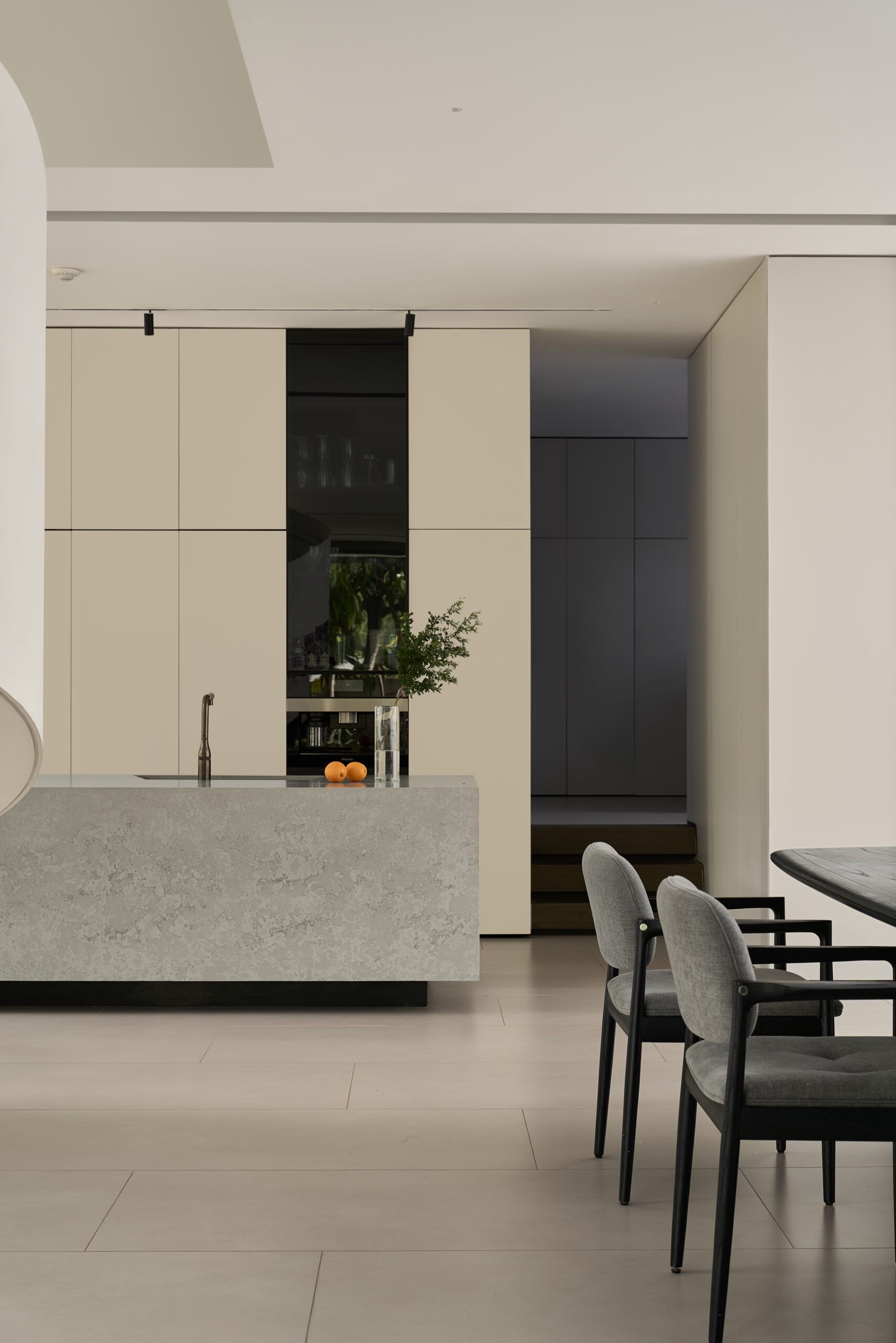
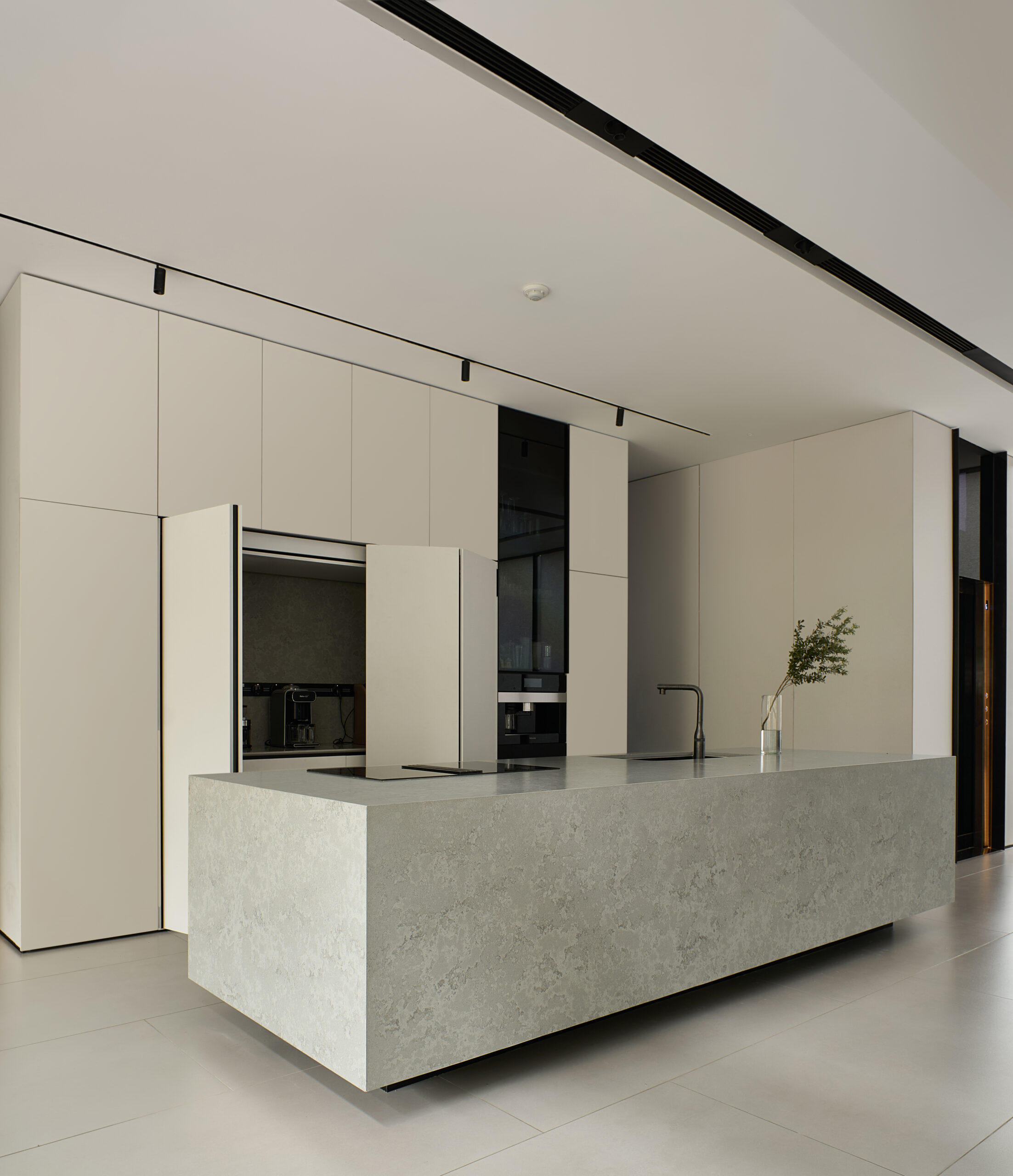
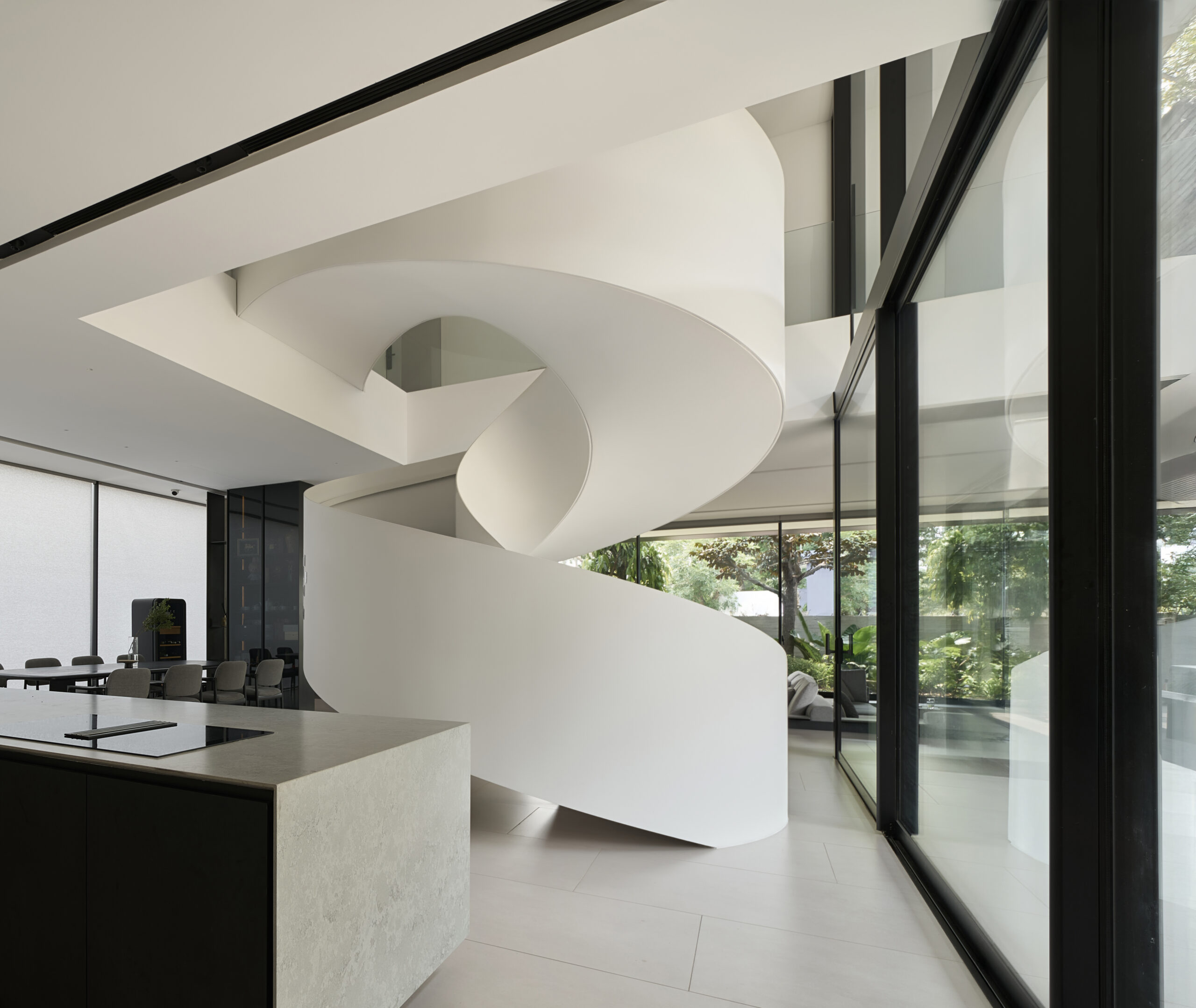
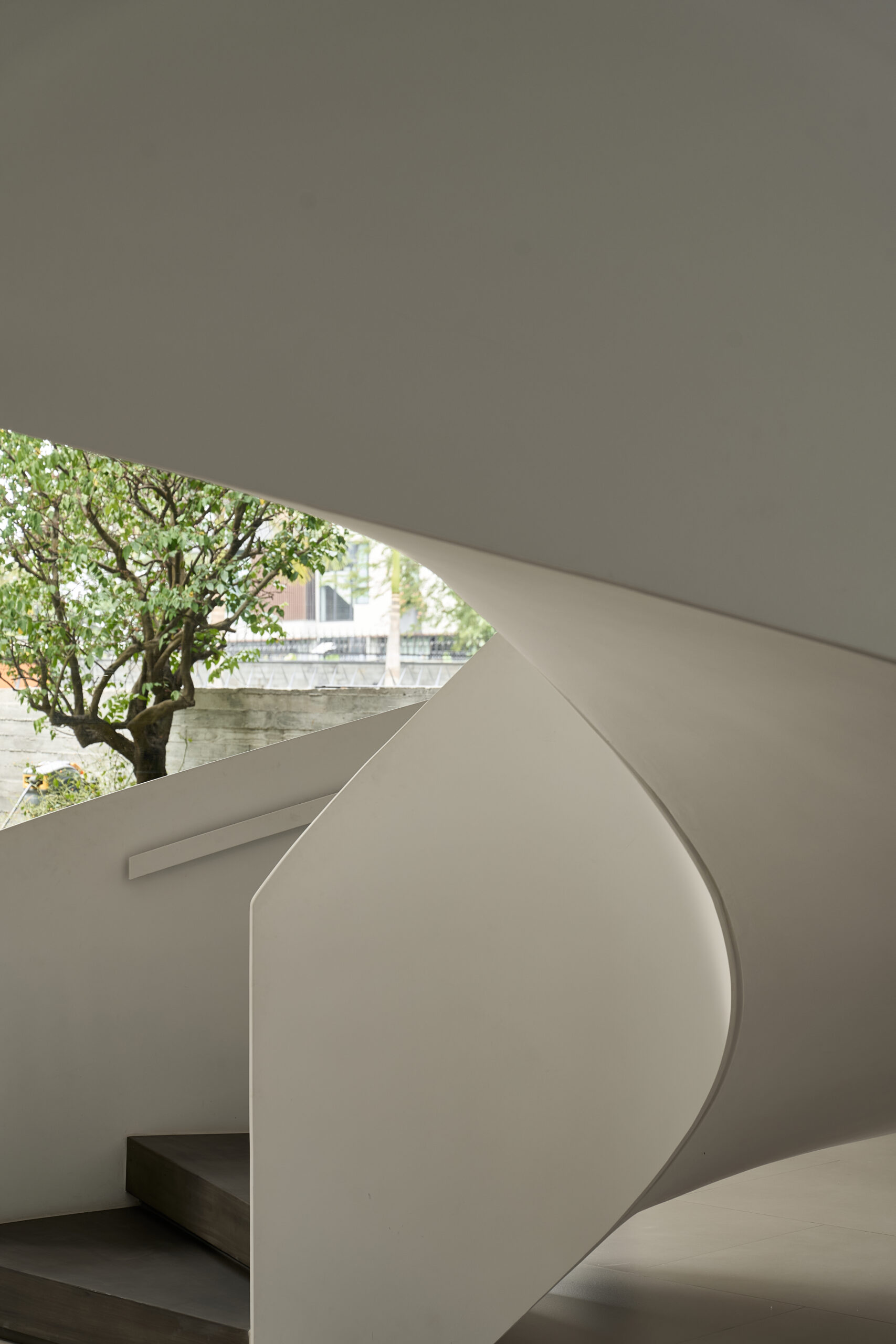
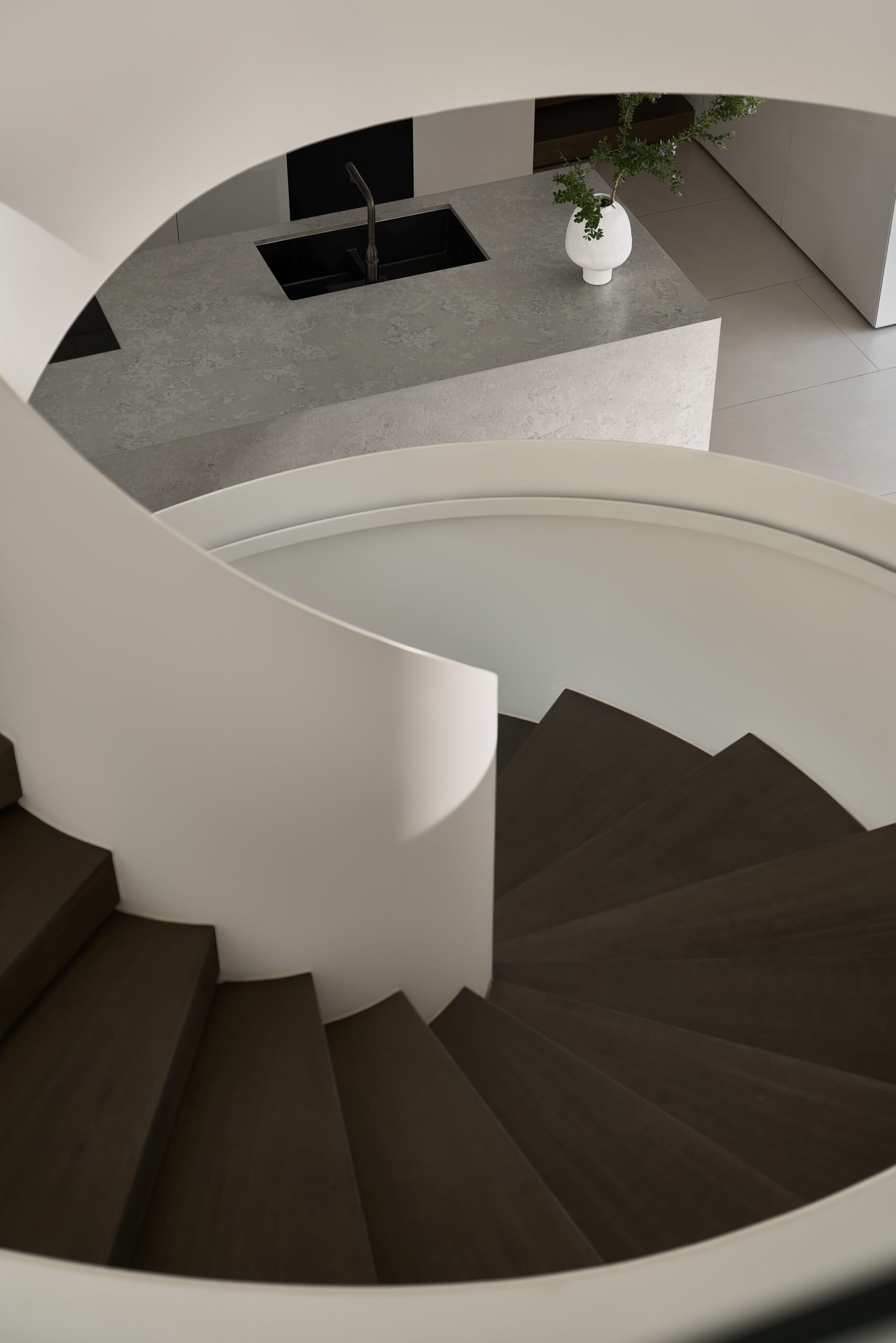
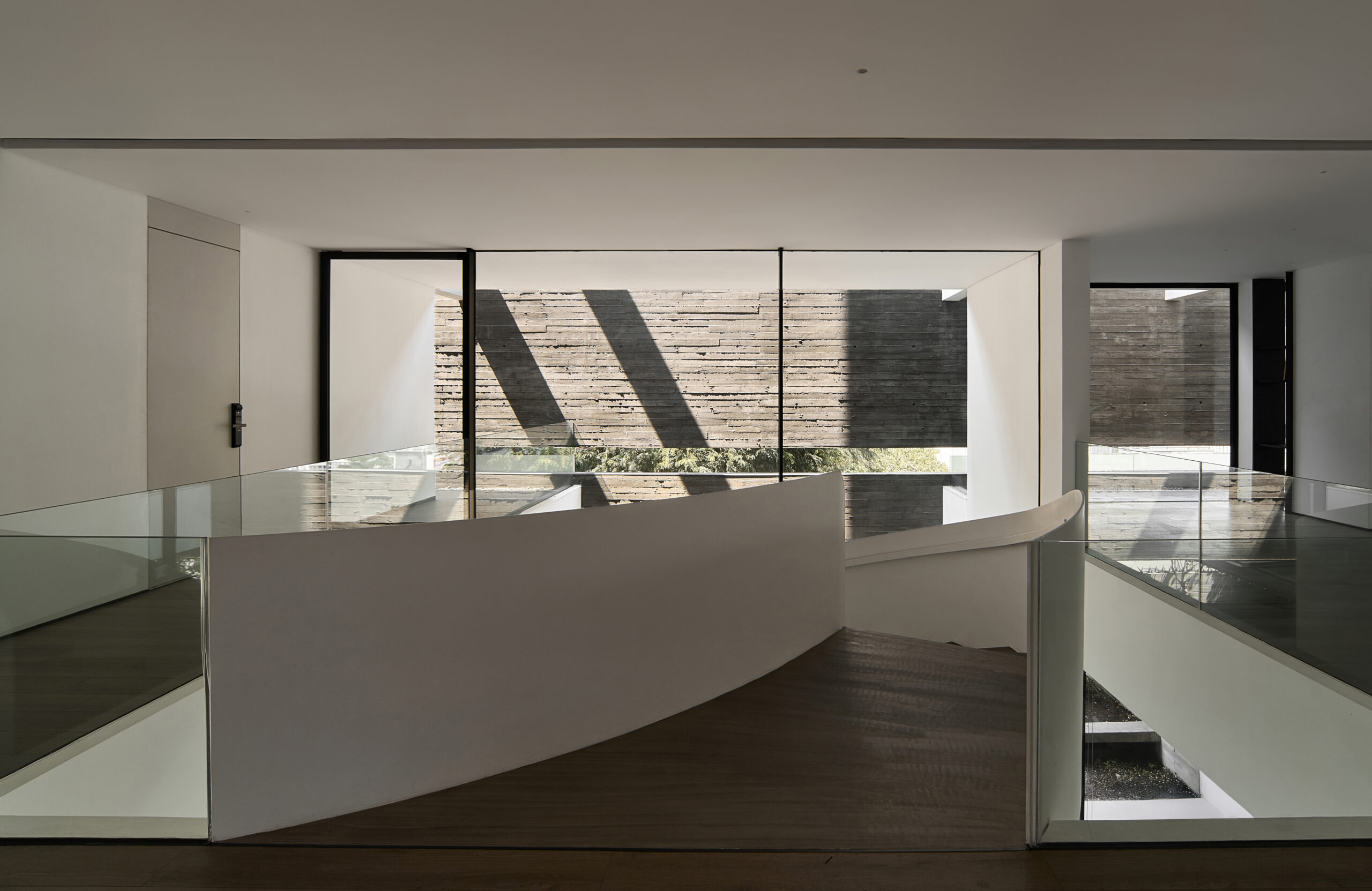
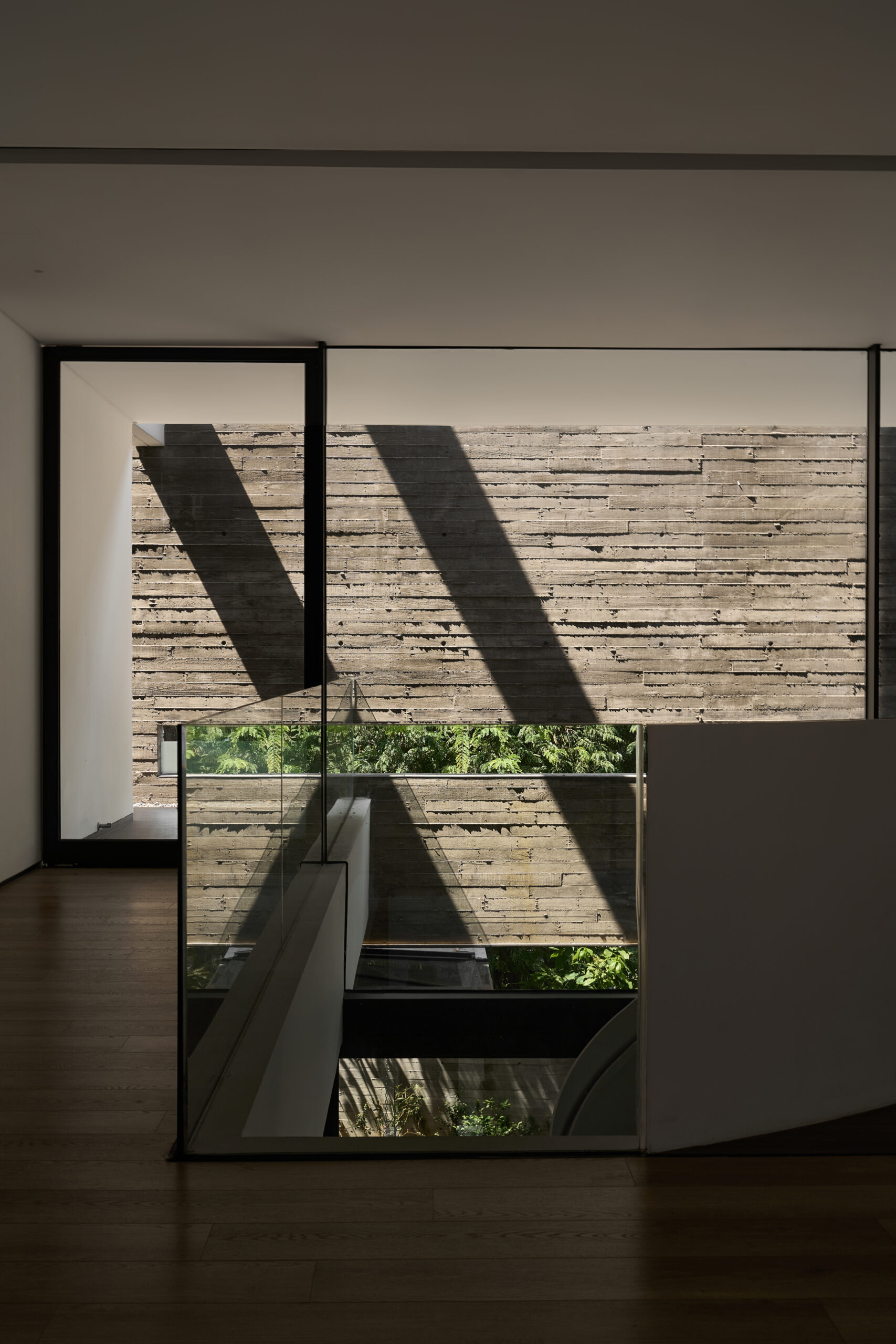
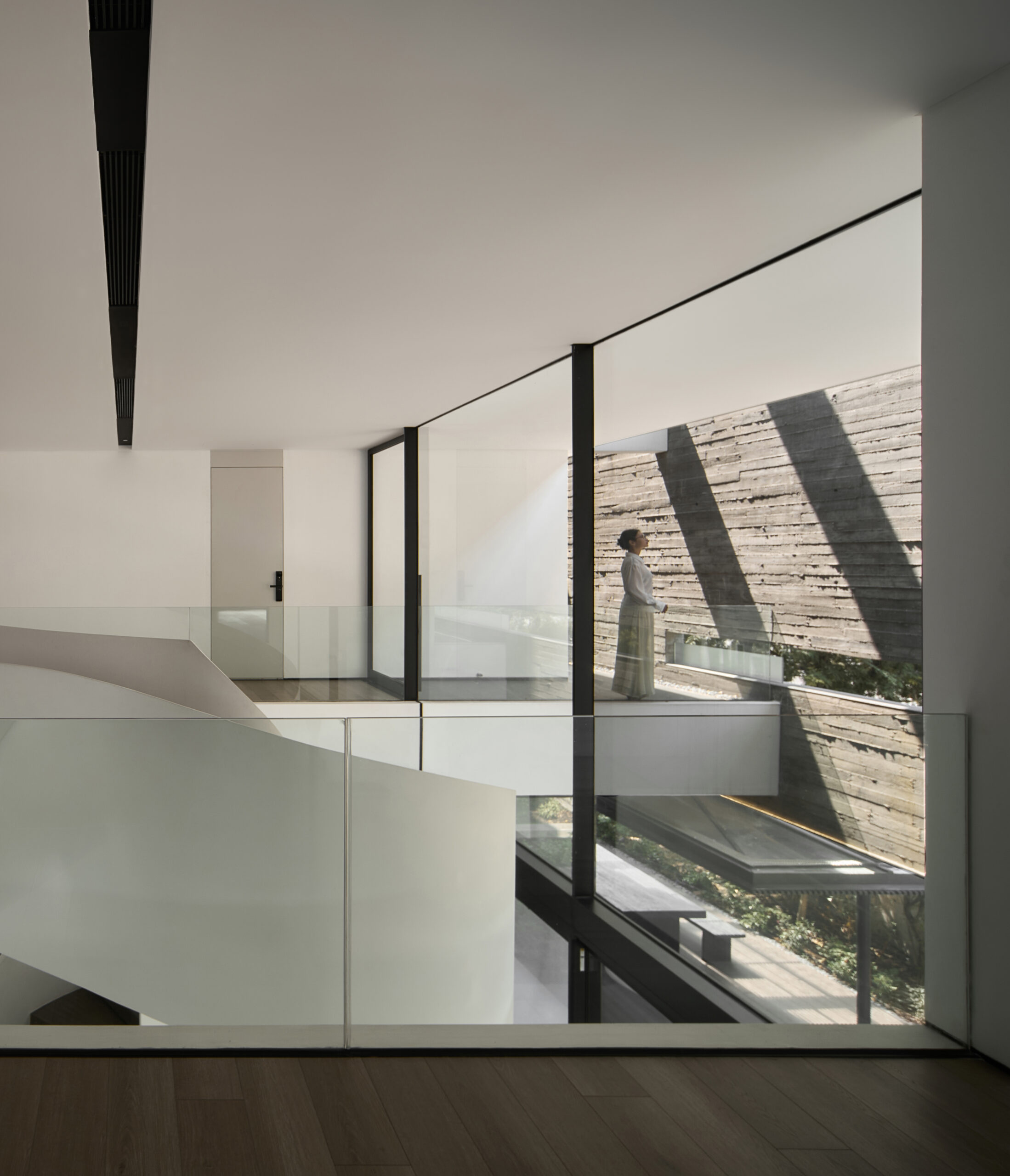
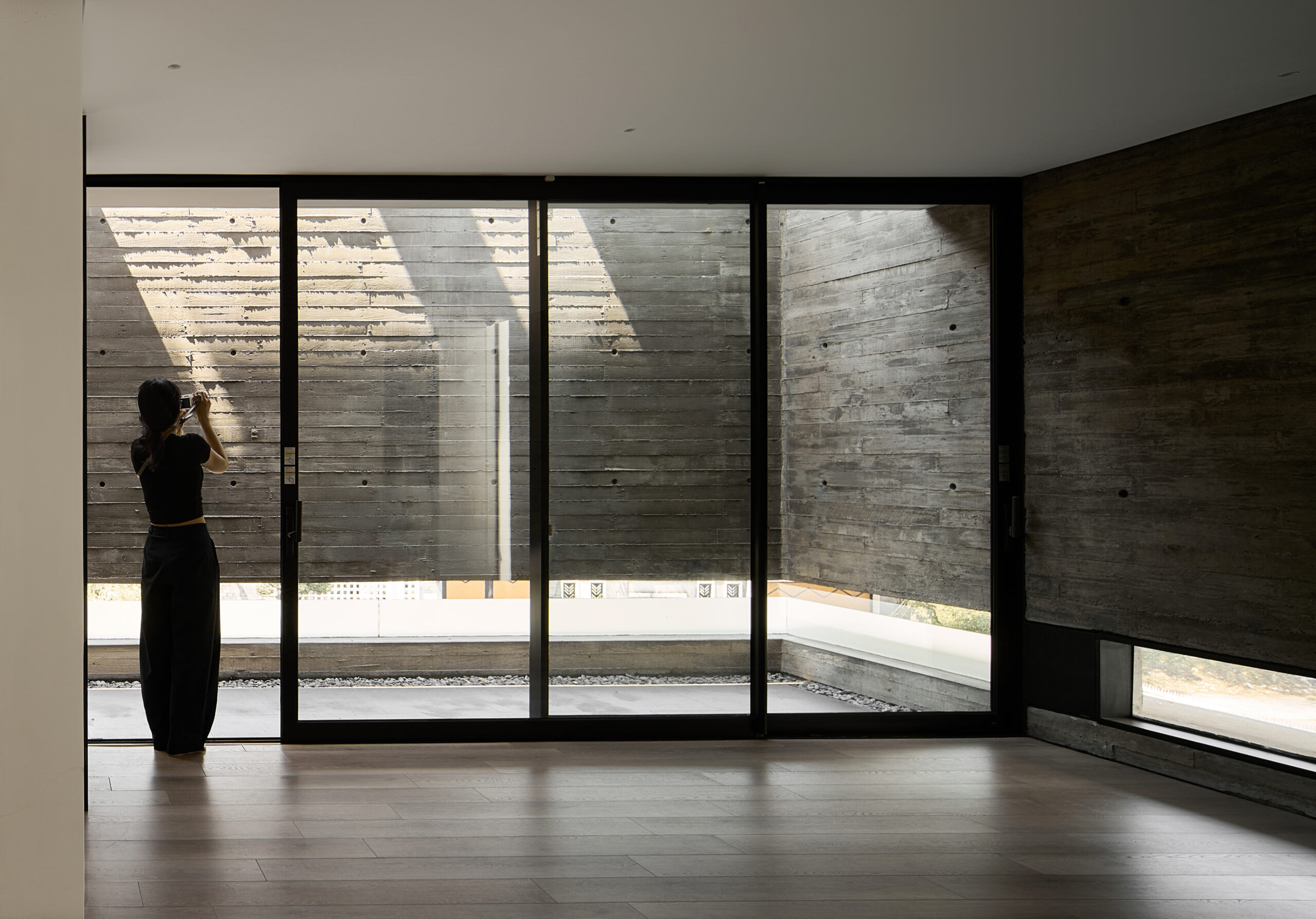
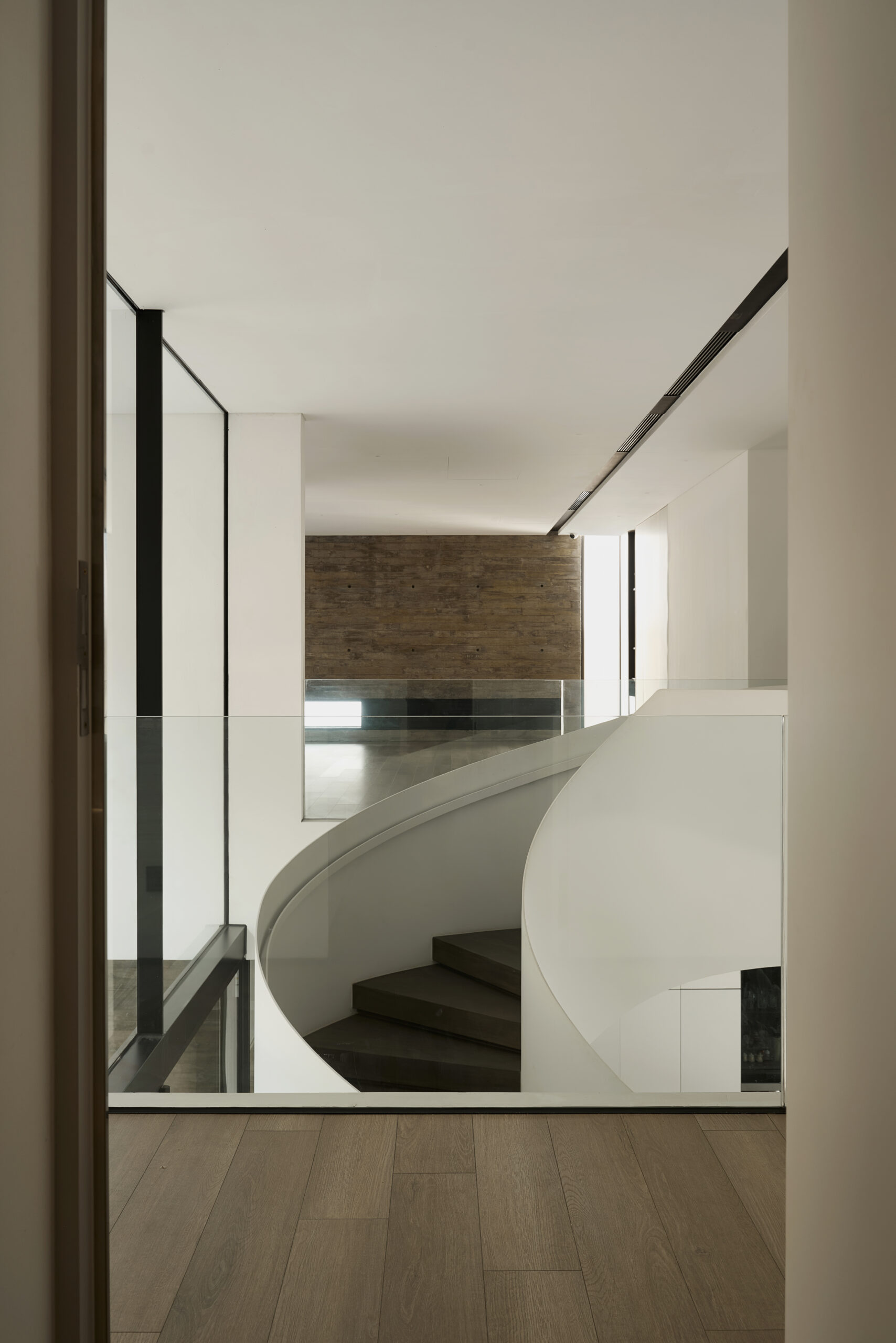
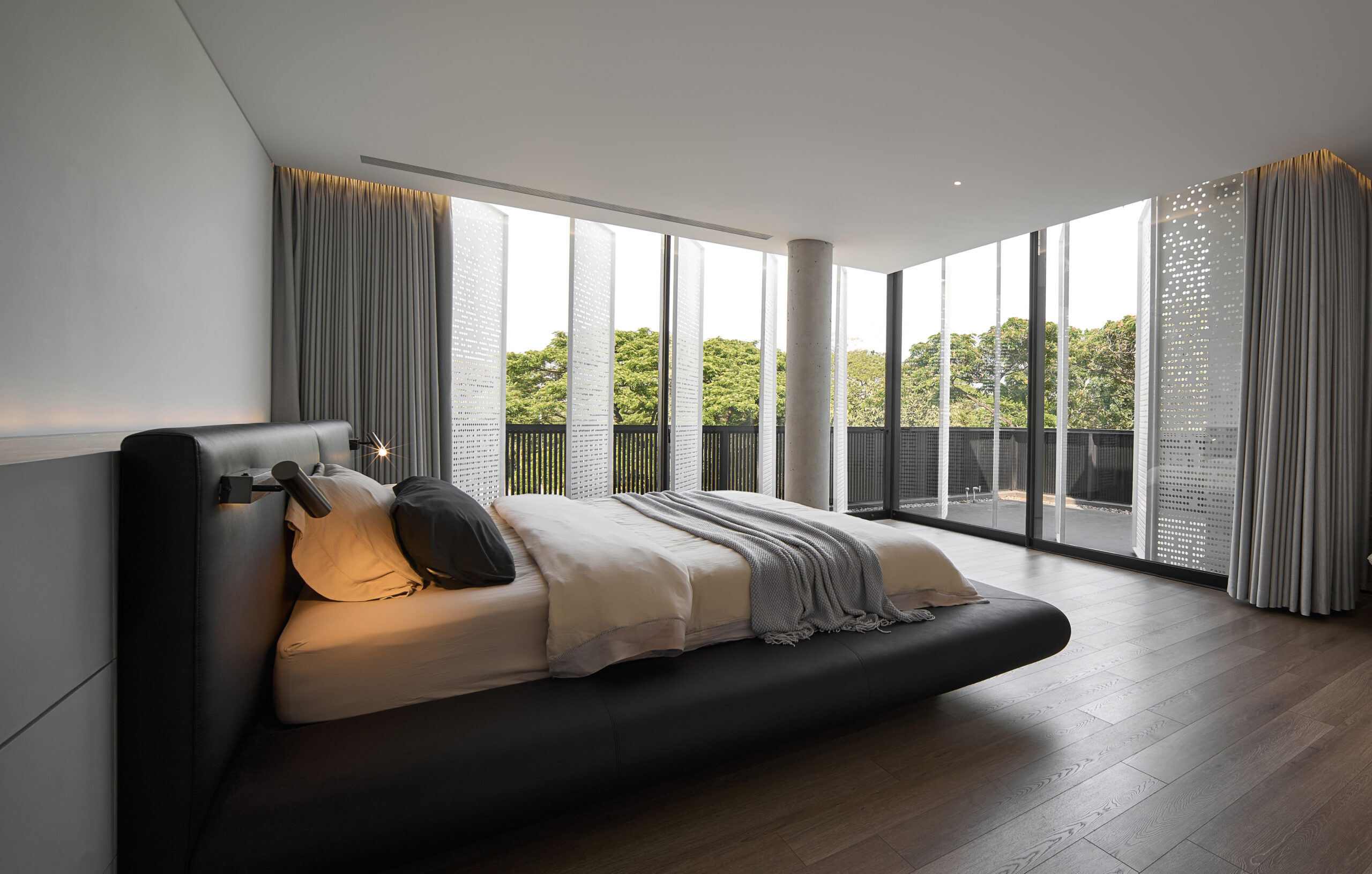
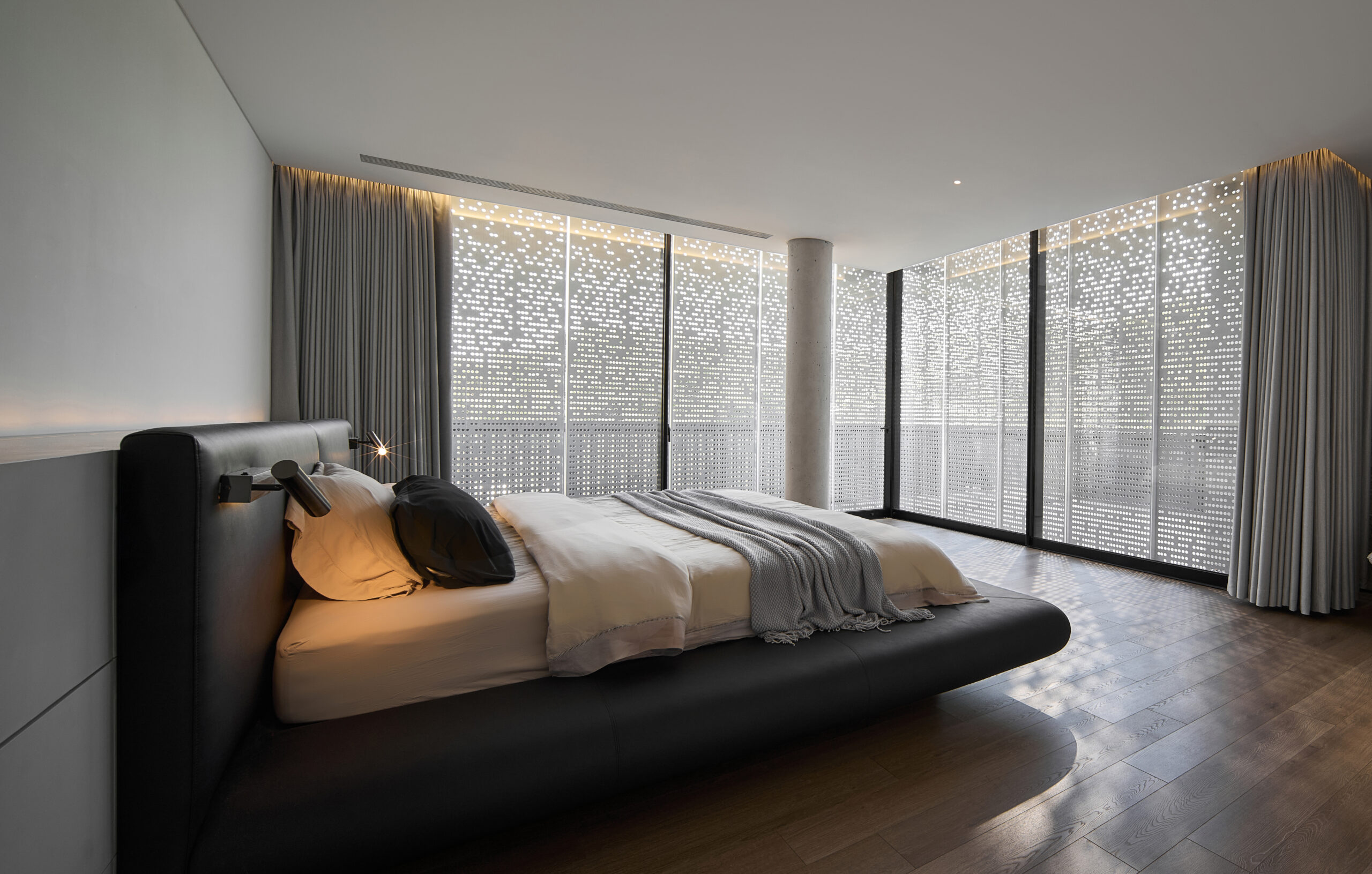
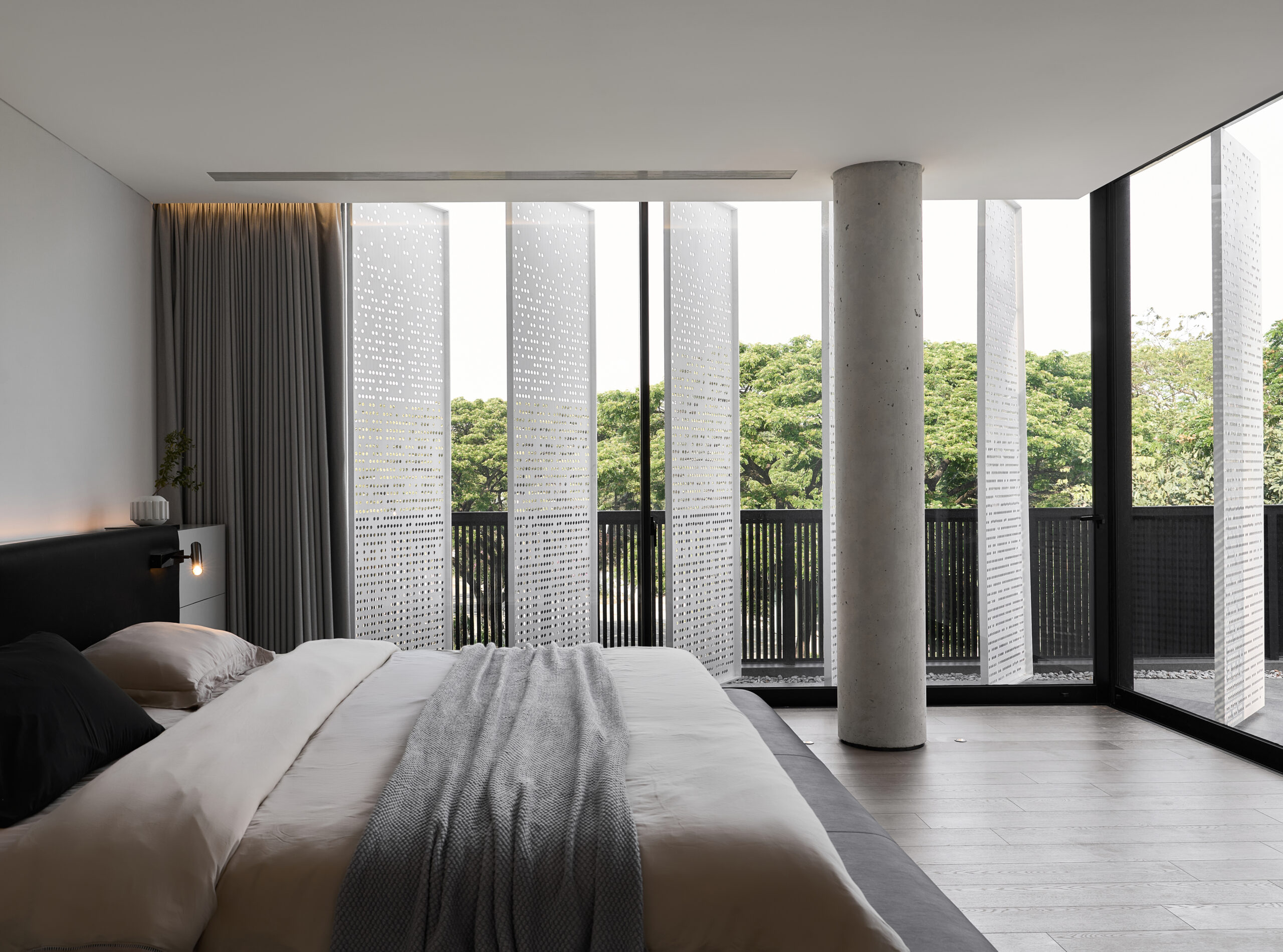
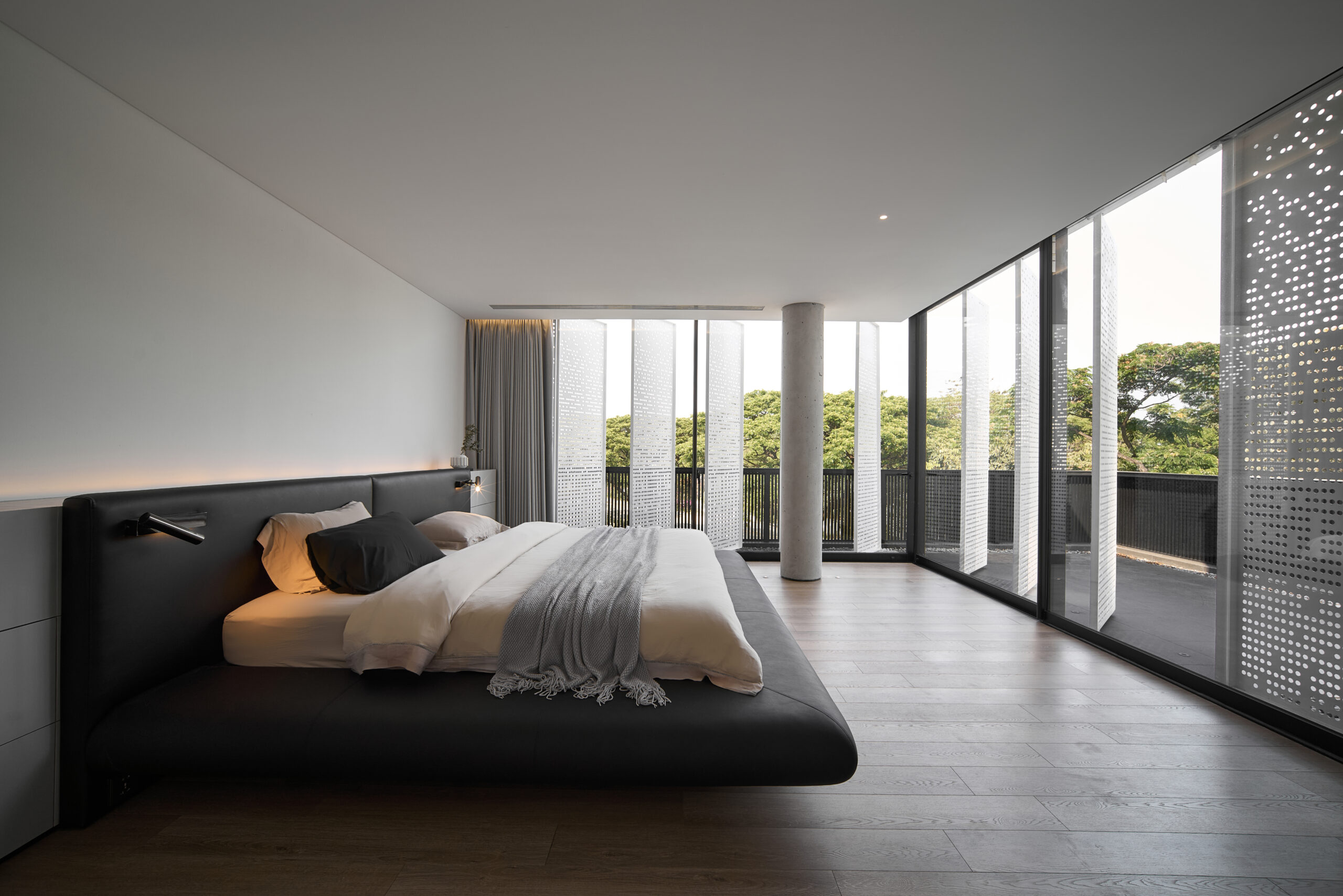
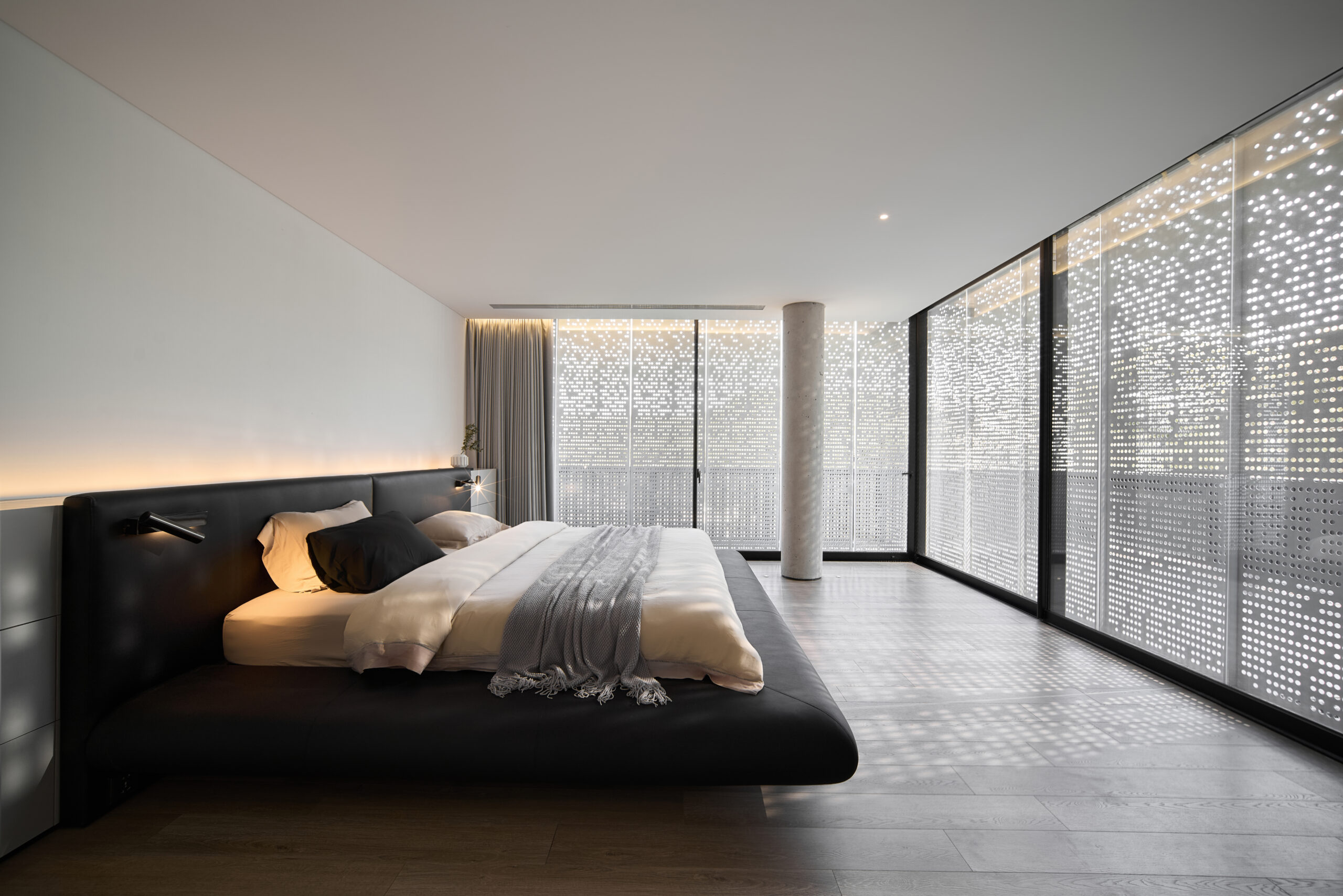
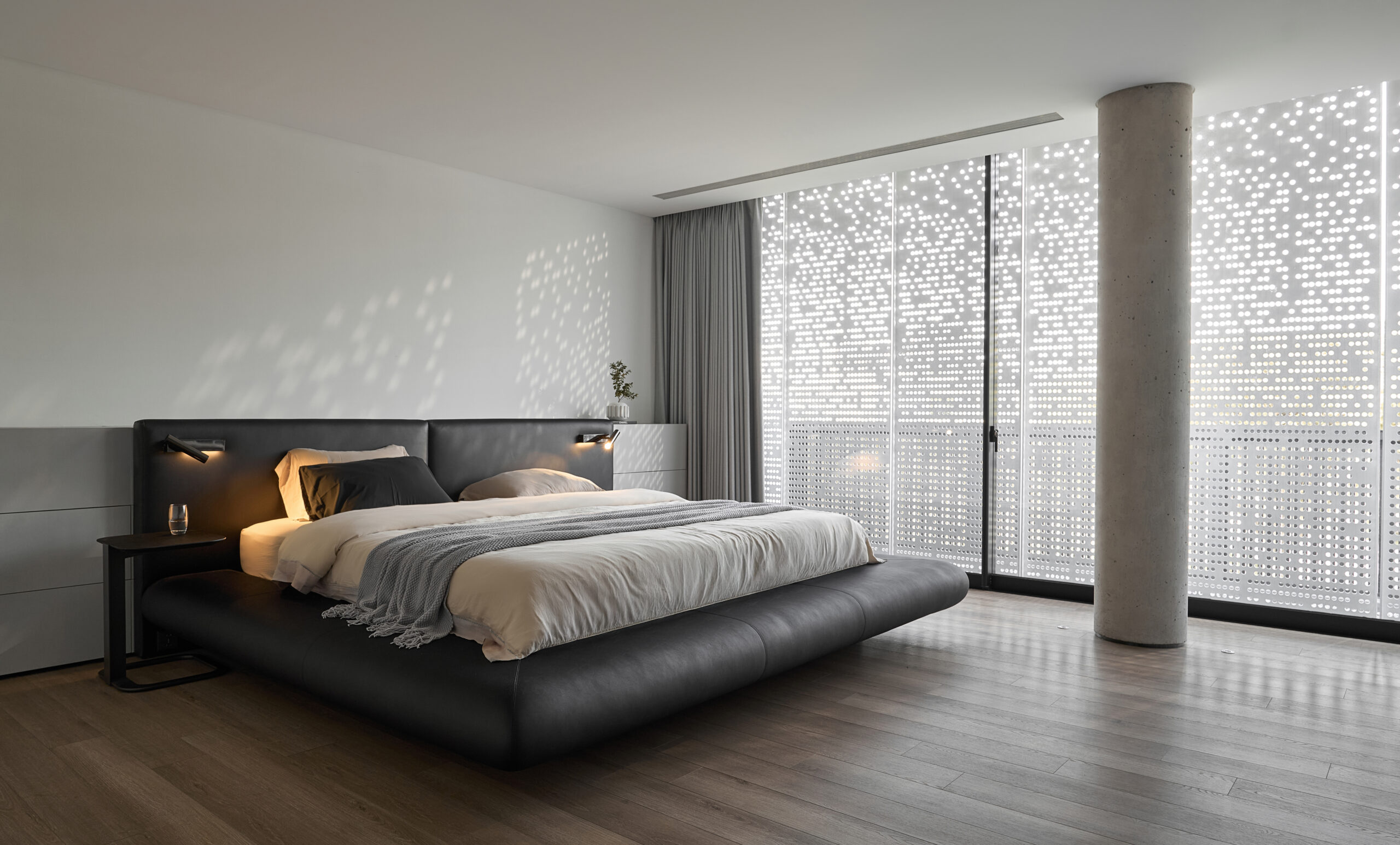
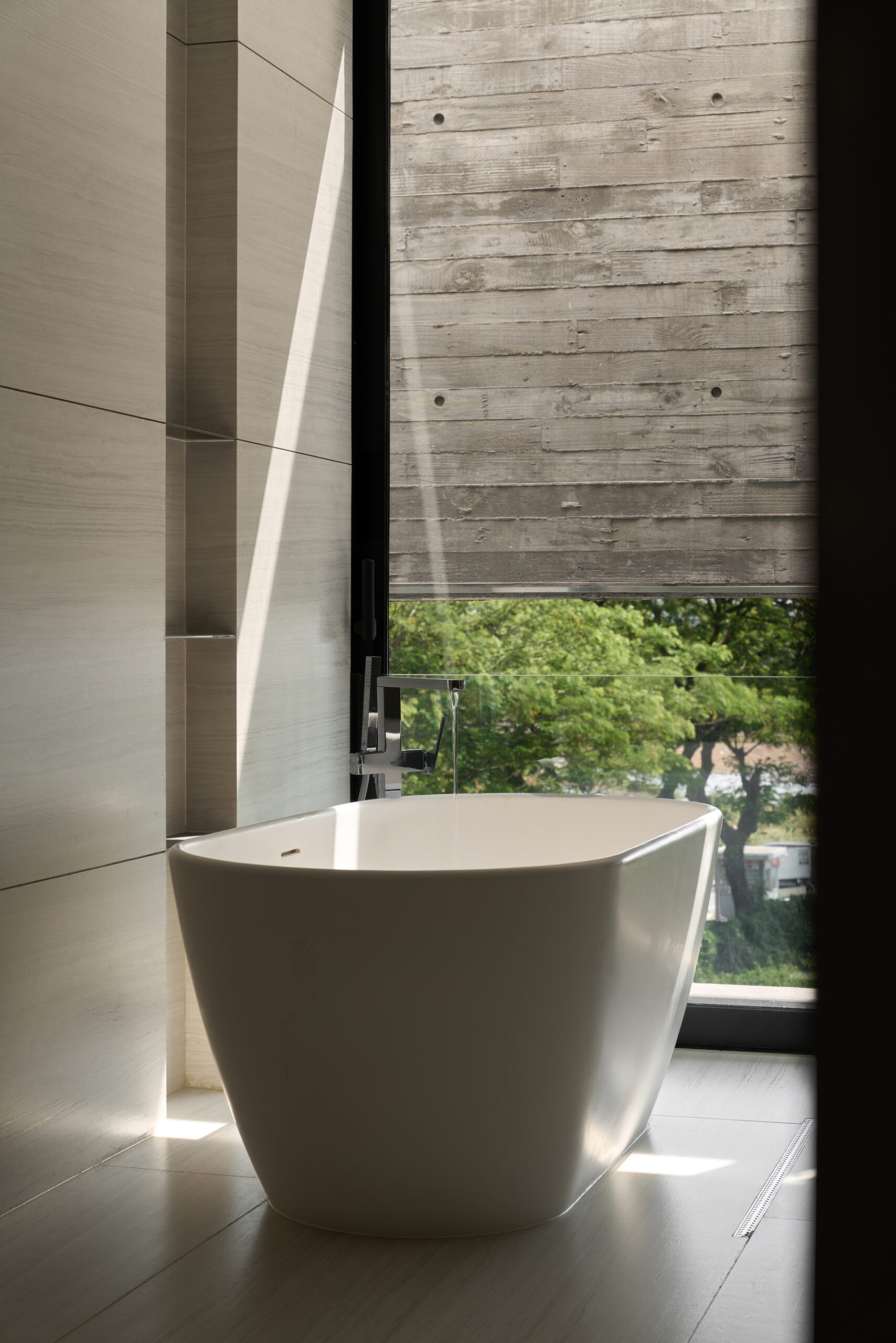
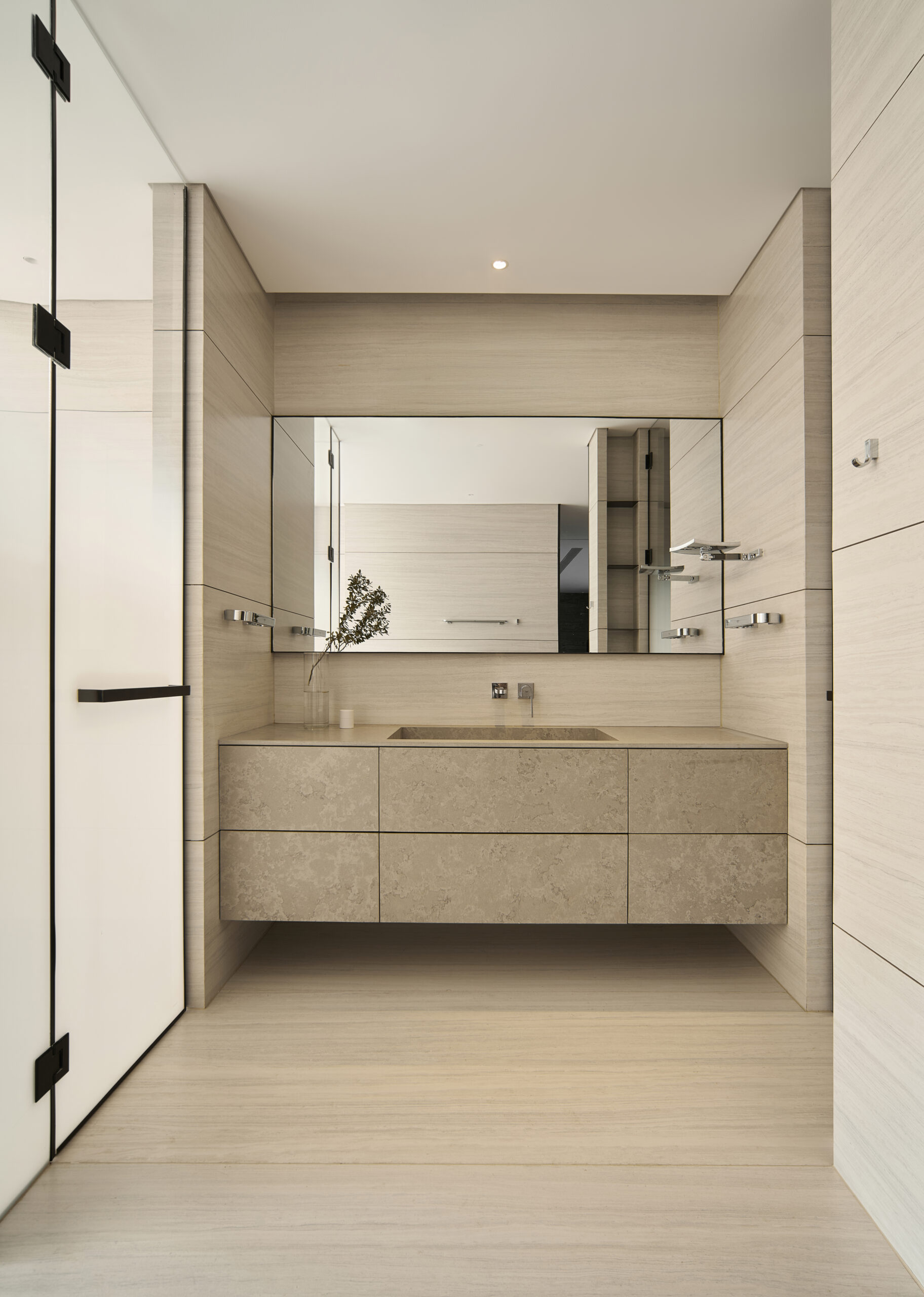
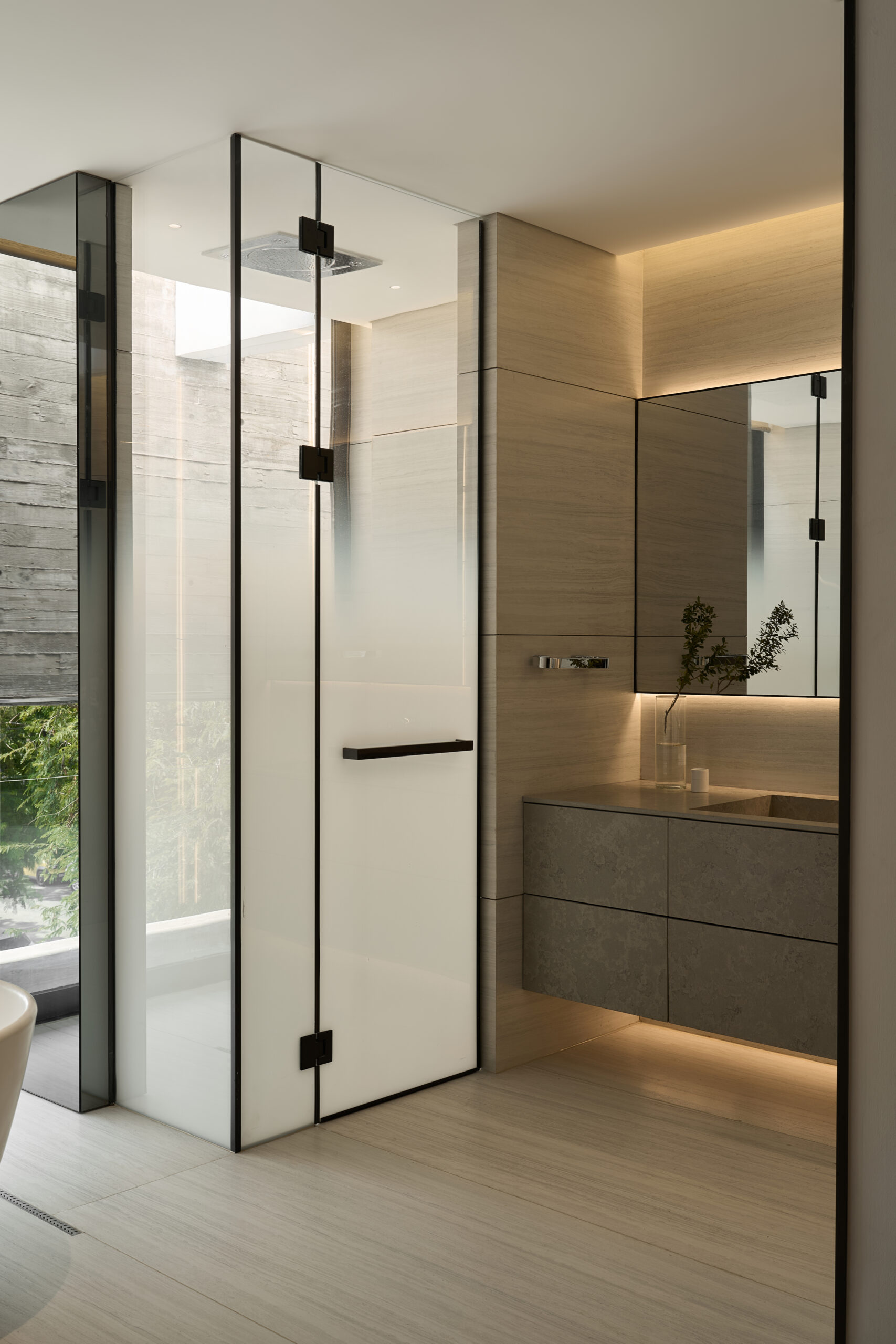
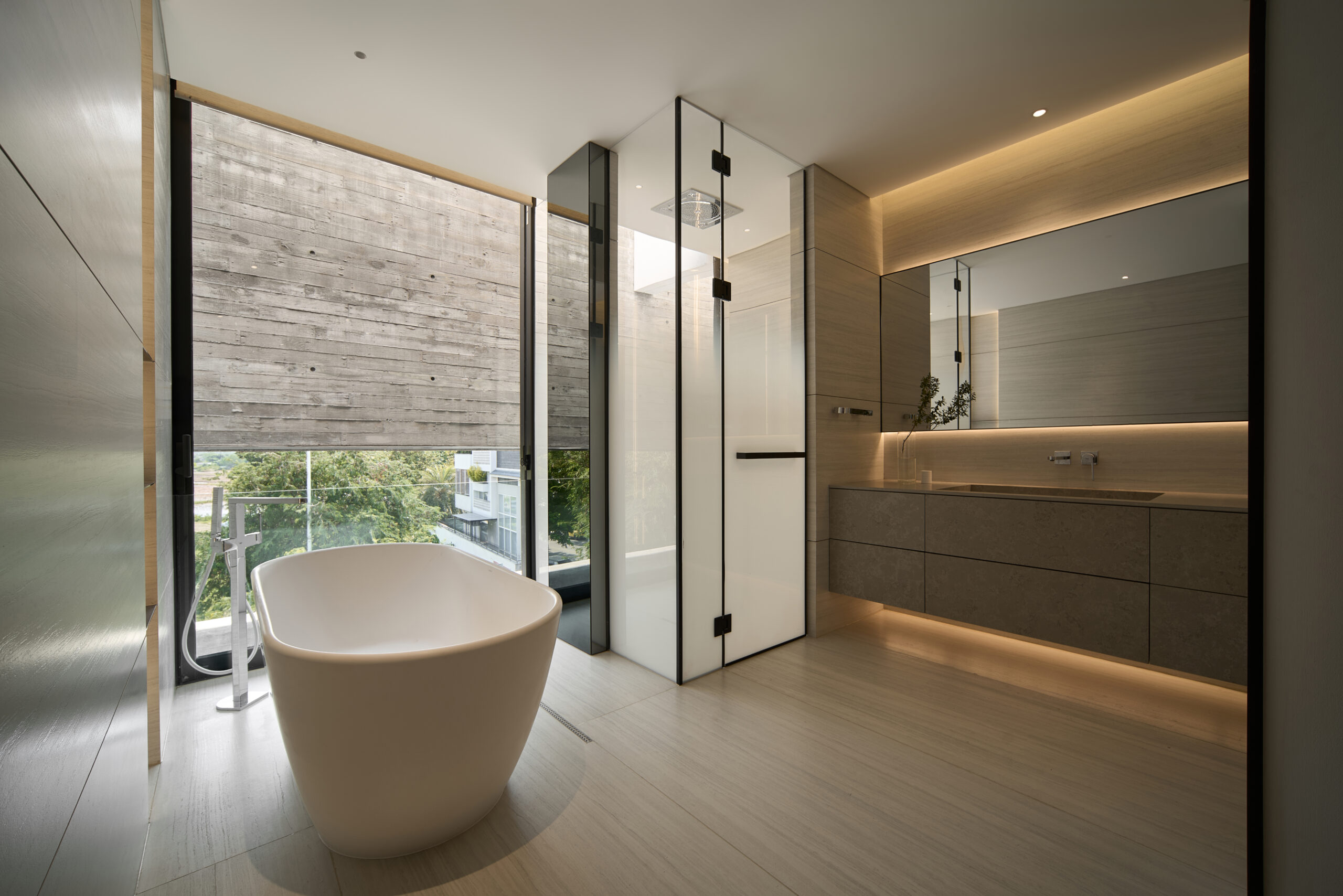
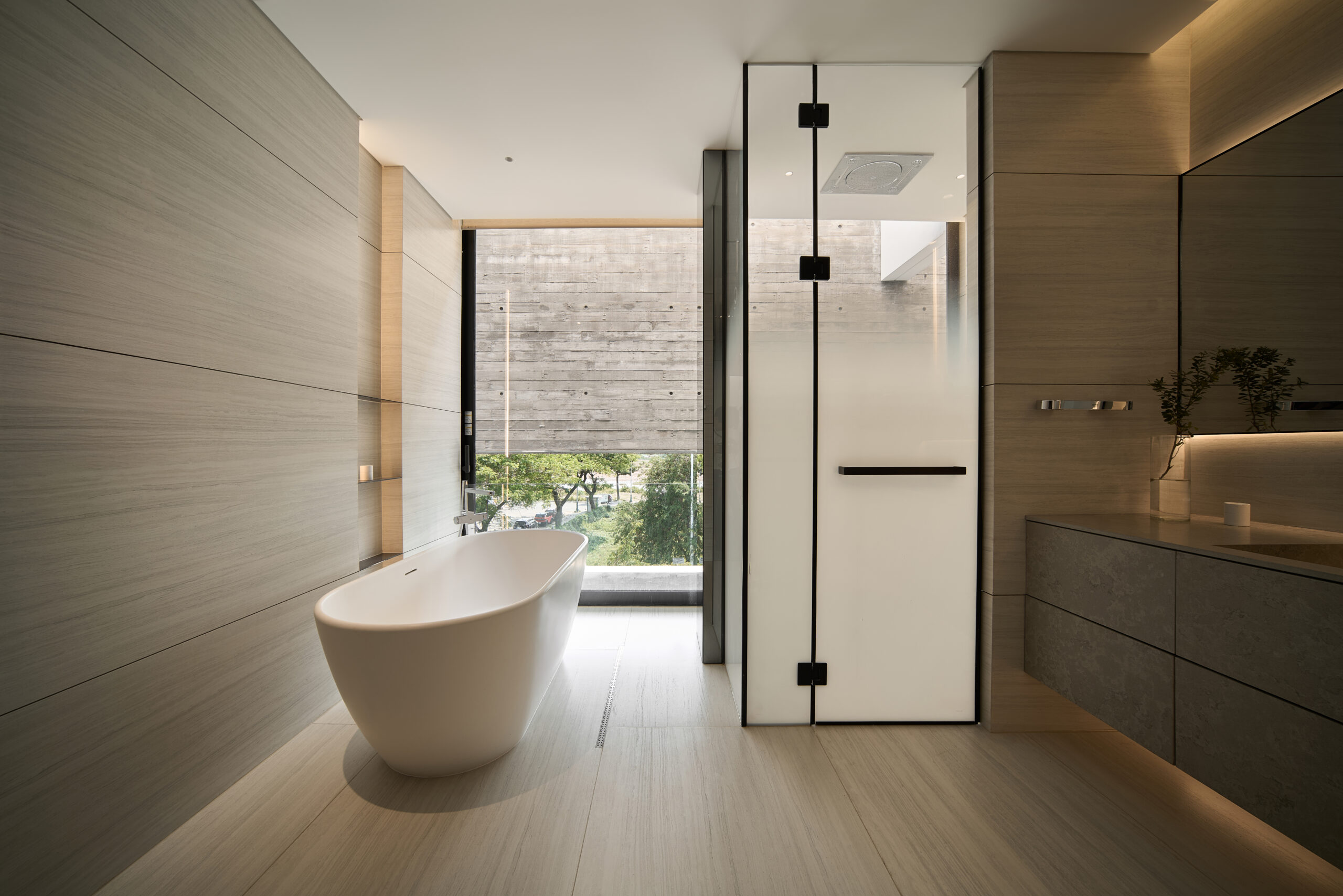
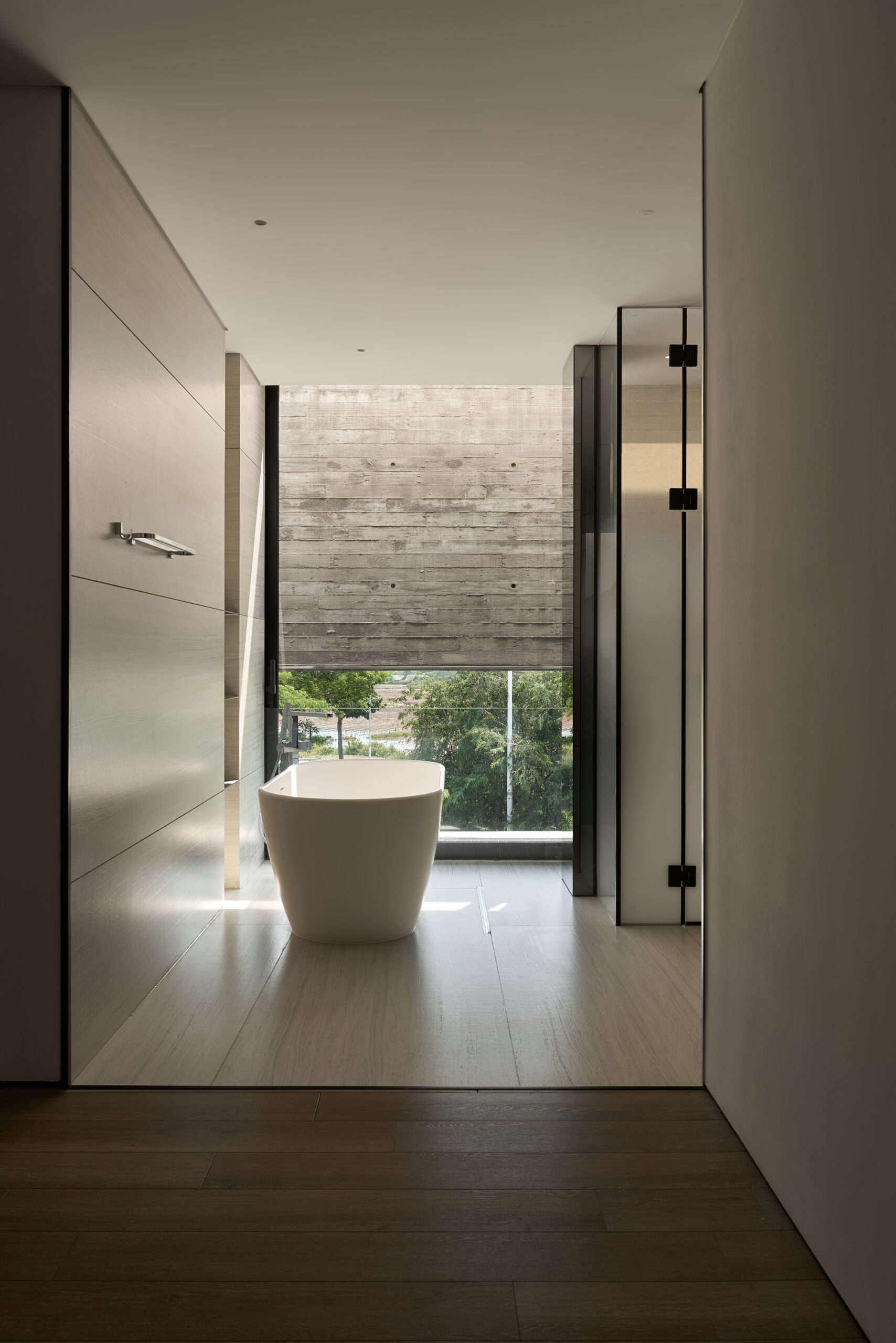
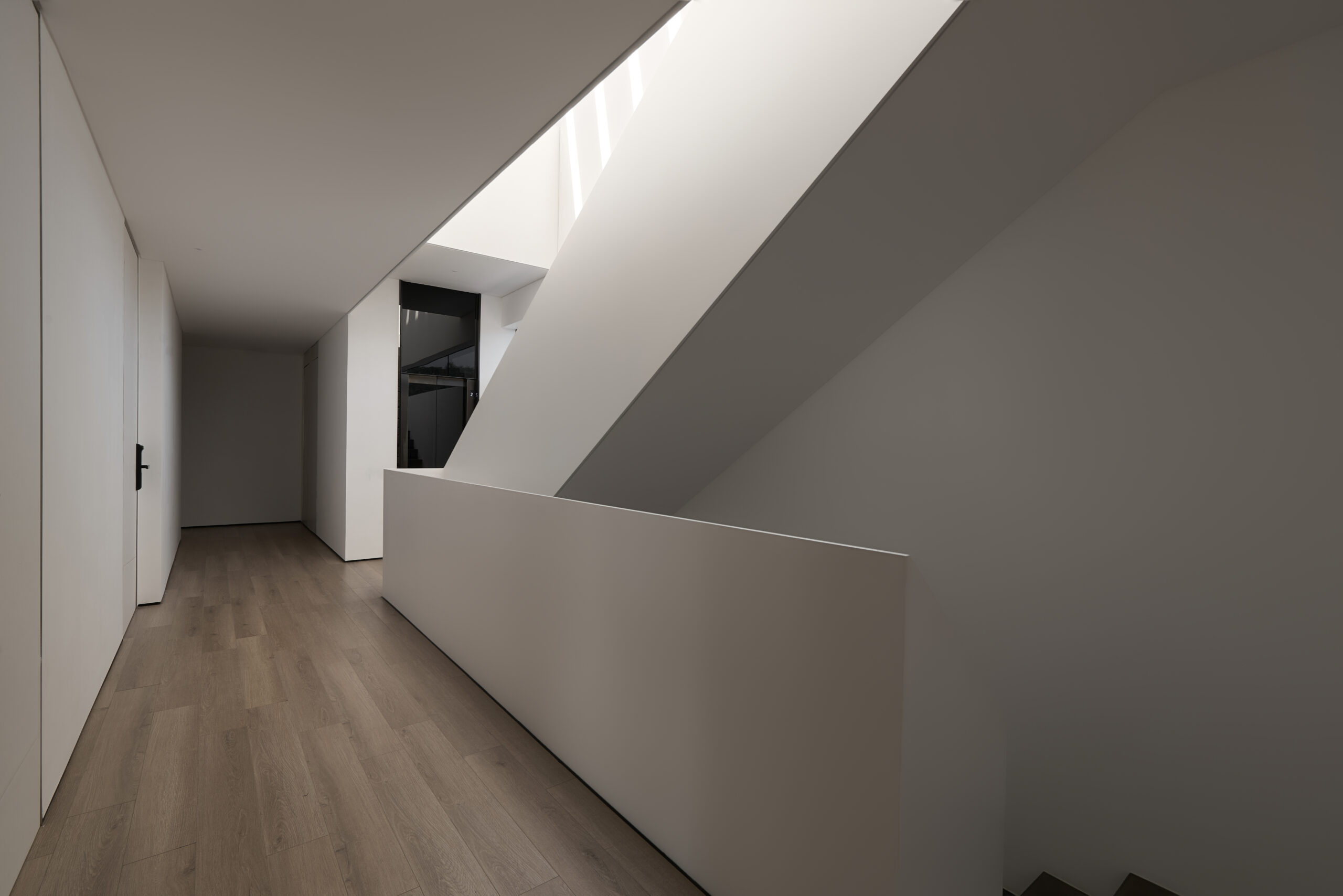
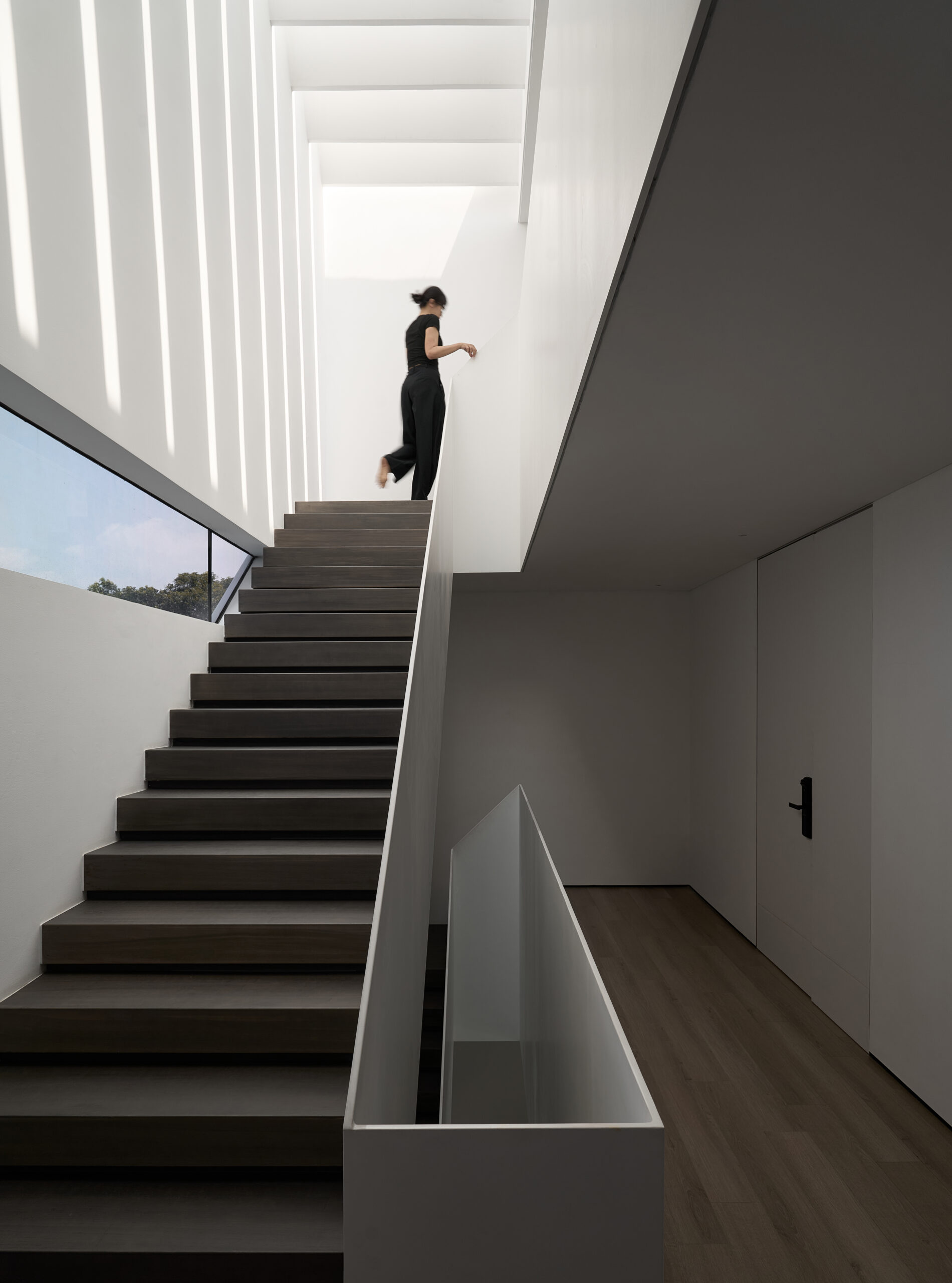
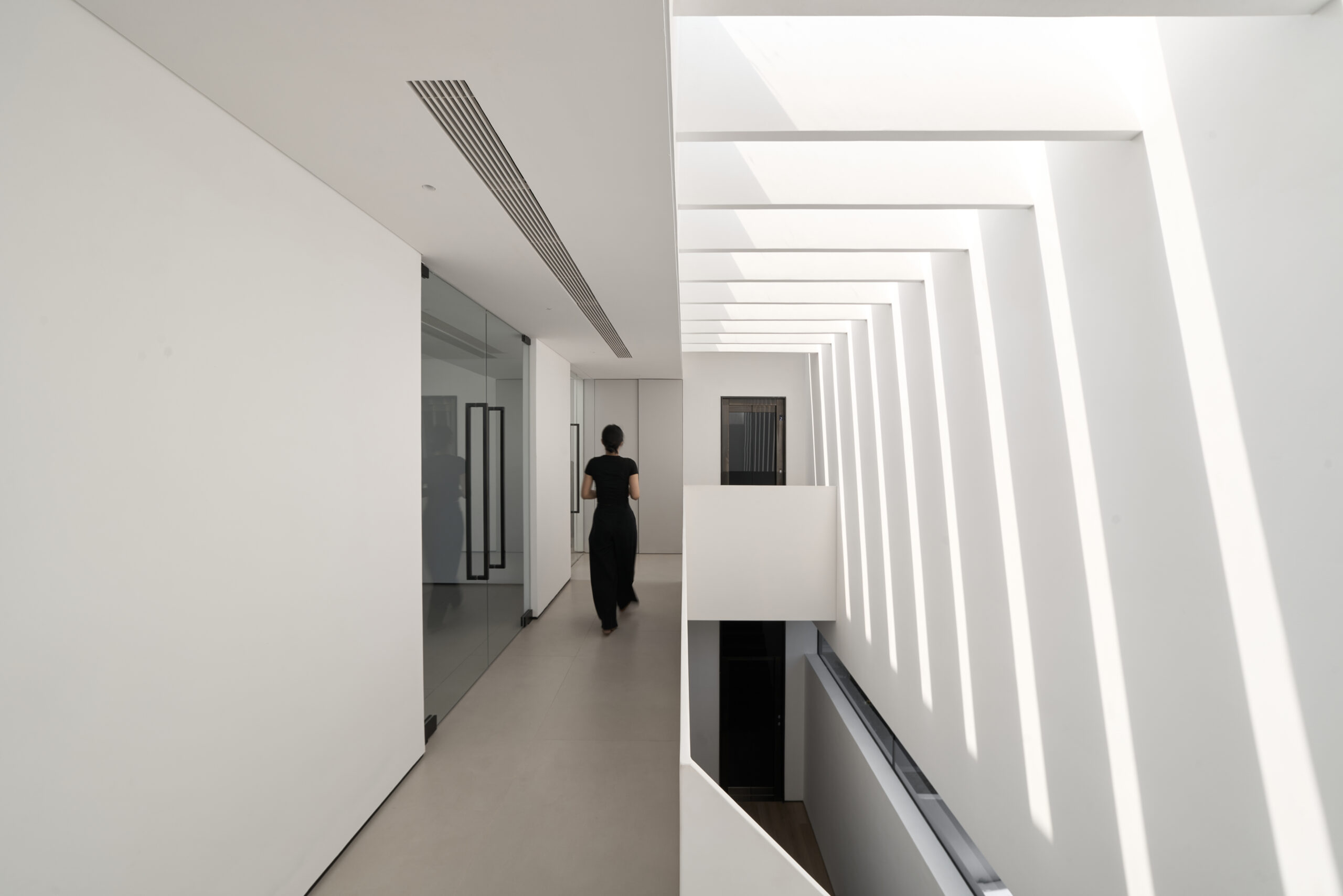
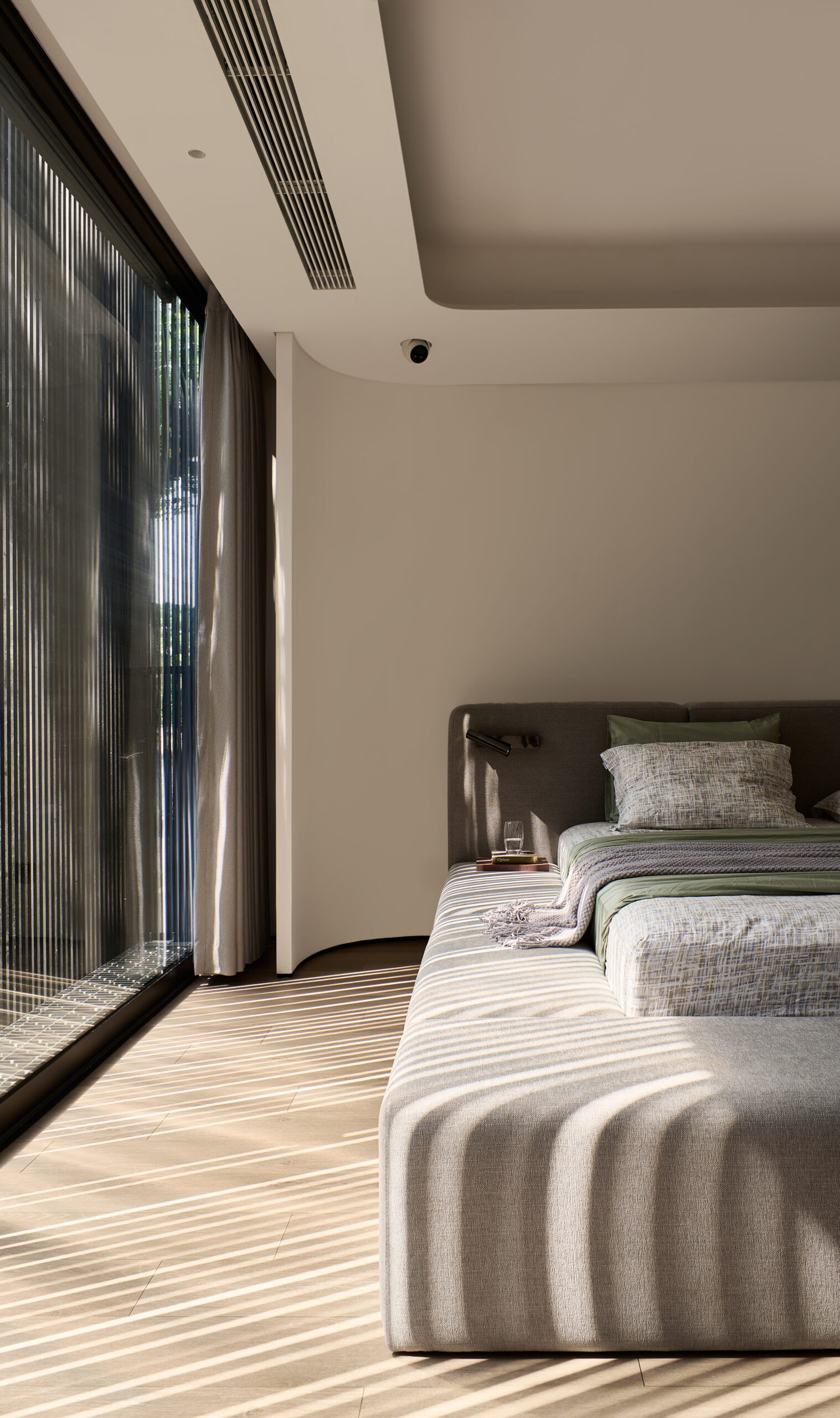
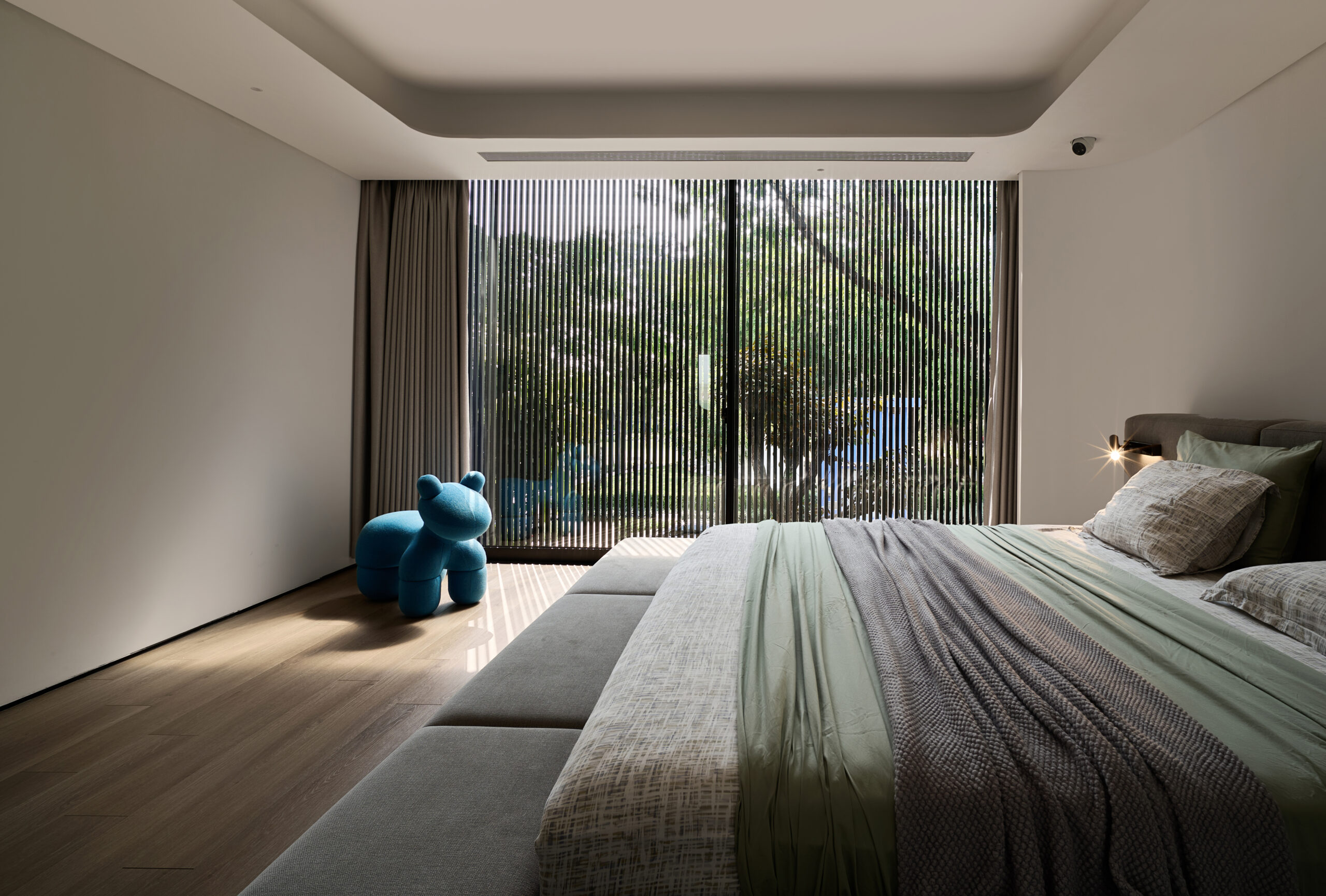
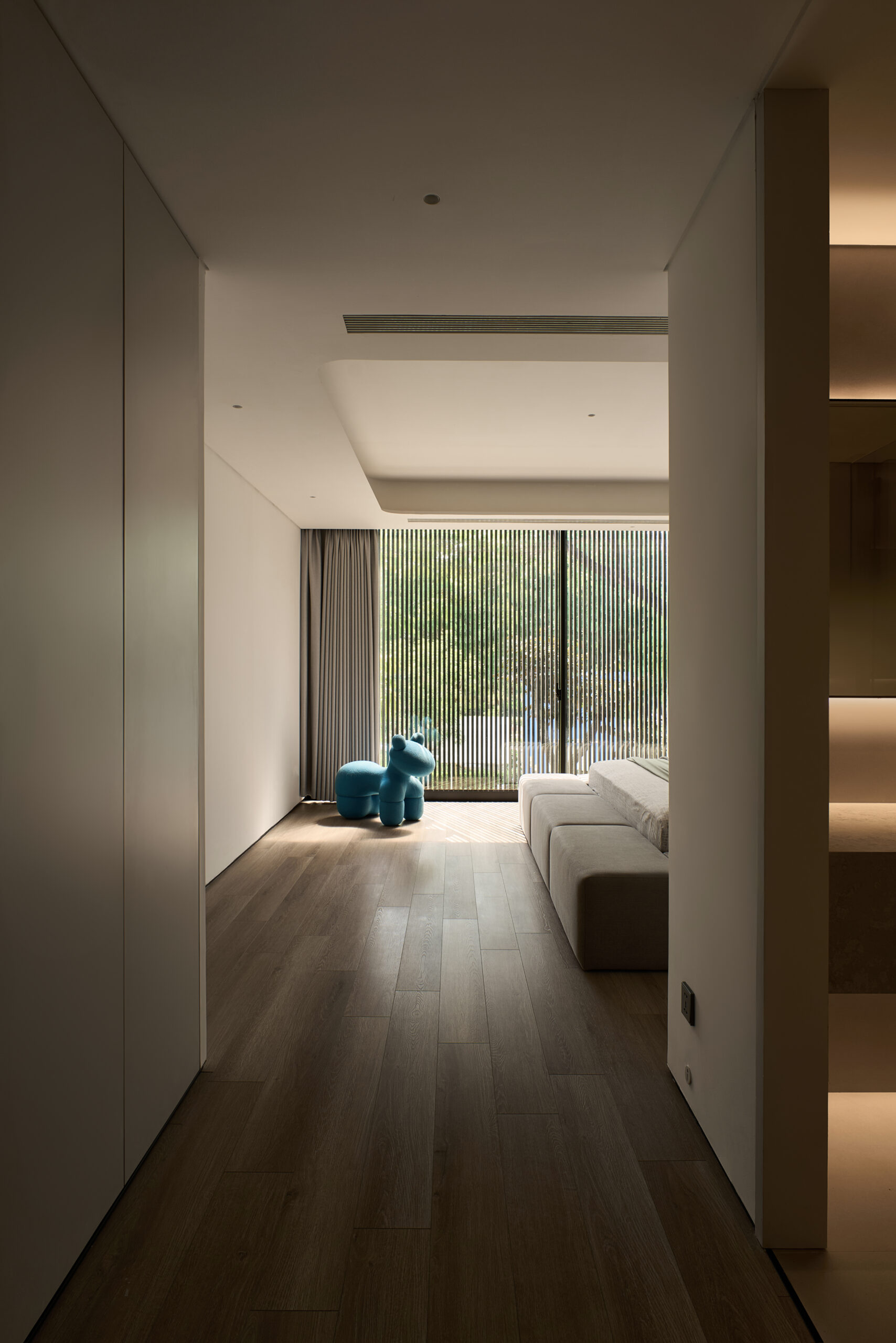
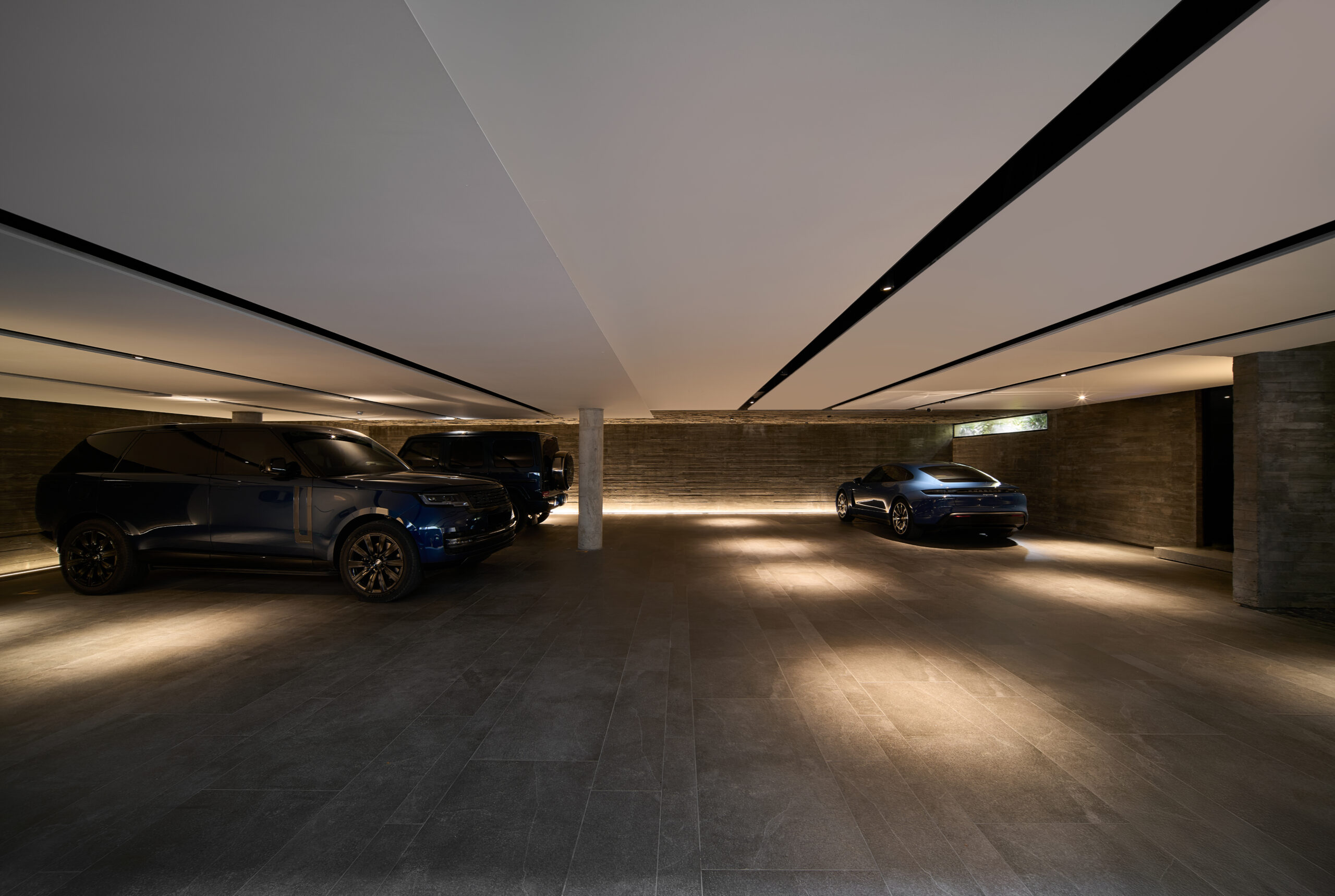
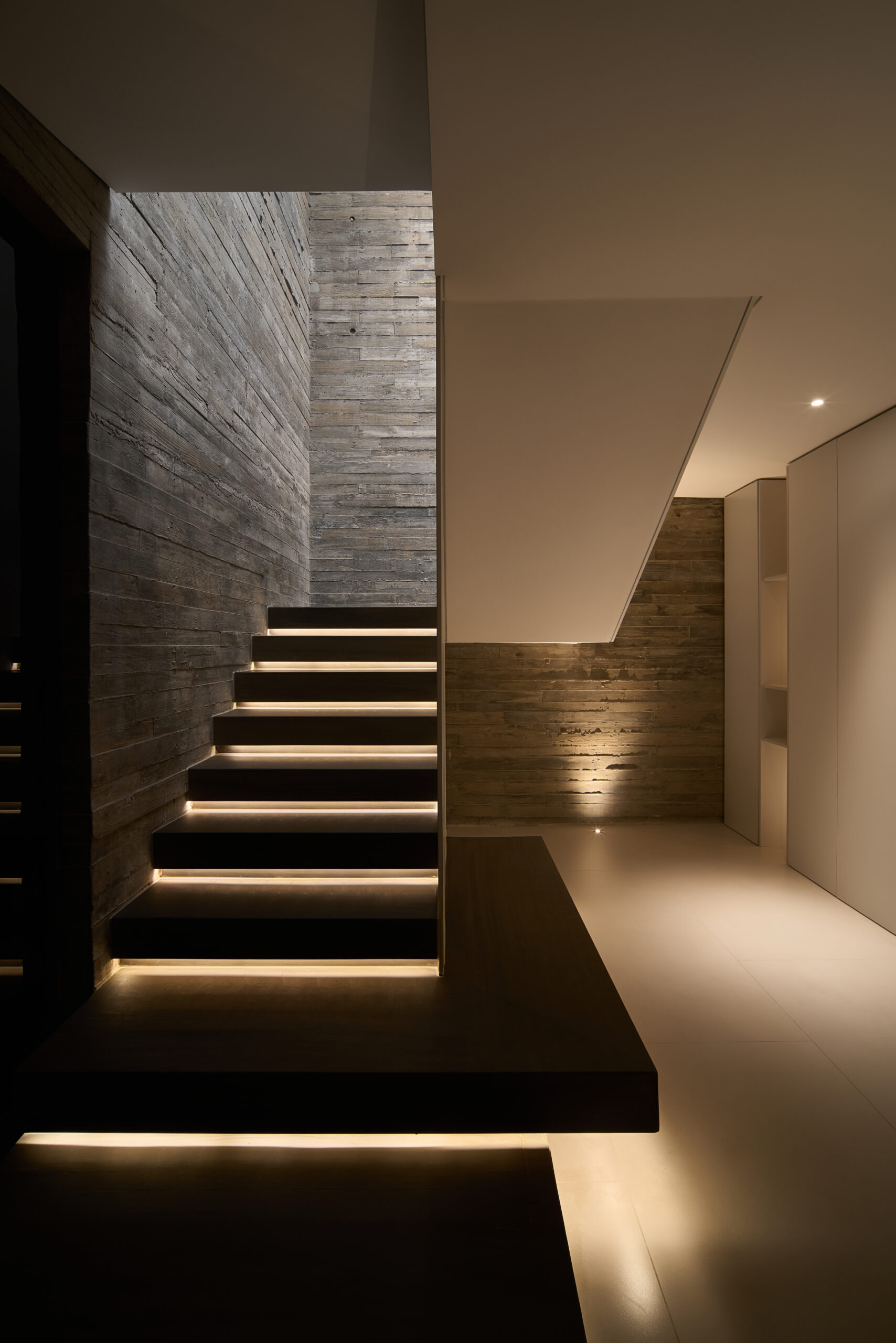
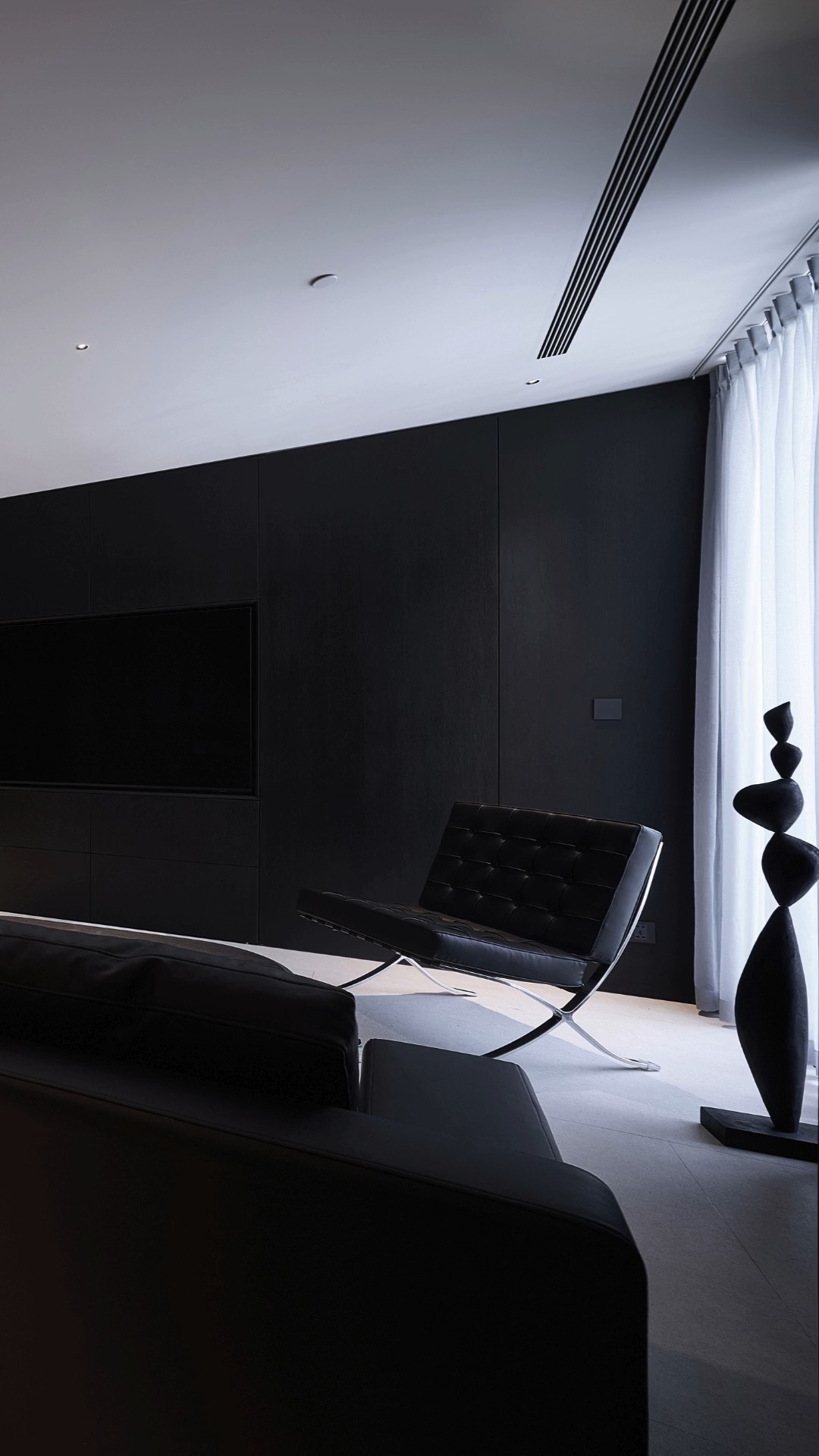
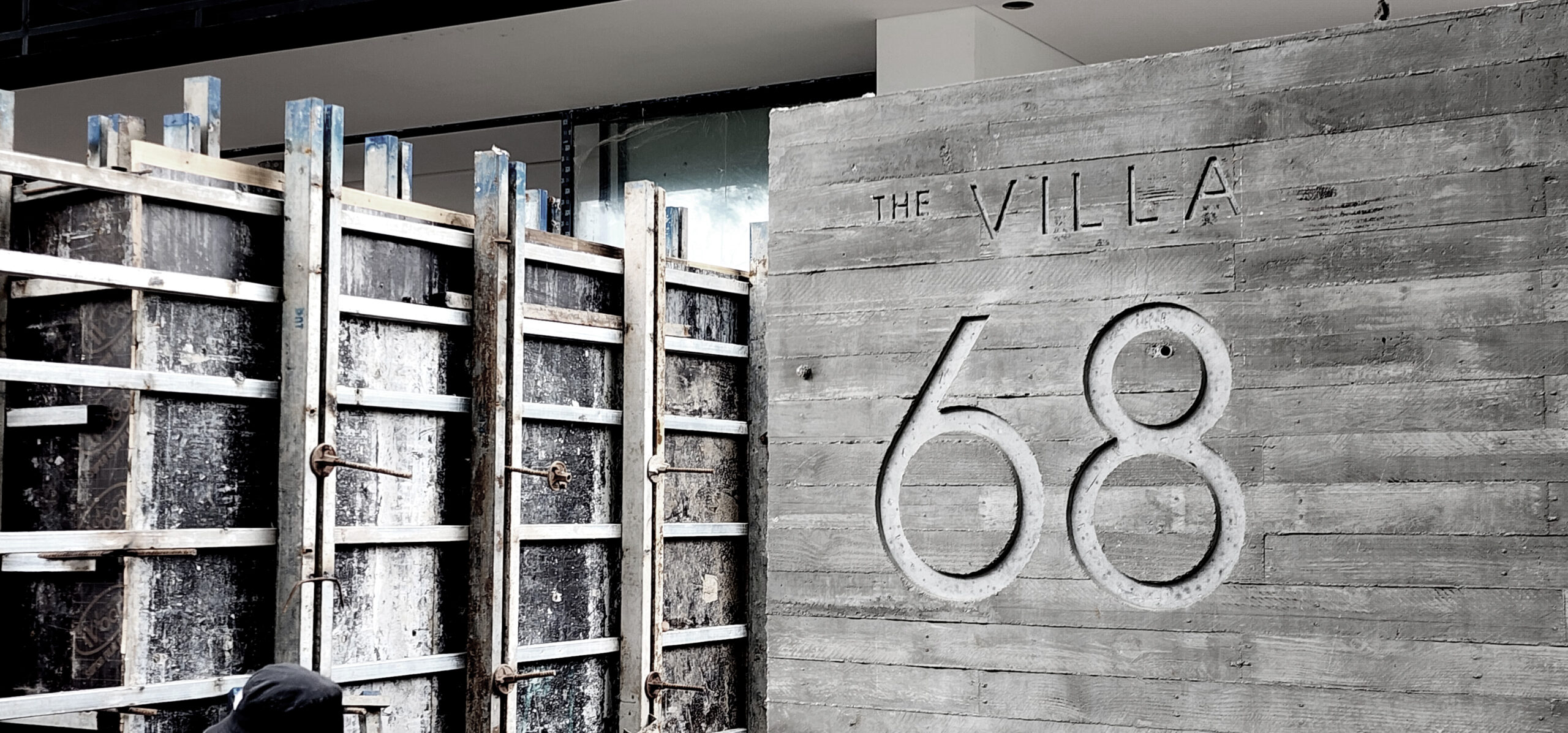
The spirit of the house is geared toward minimalism in both space and material design. The durable roughness of raw concrete layers combined with the lightness of modern interior materials that creates a harmonious contrast and balance in living experiences.
Build a nice lifestyle.
Articles at Archdaily.
Link: https://www.archdaily.com/1041138/villa-68-mas-architecture-workshop